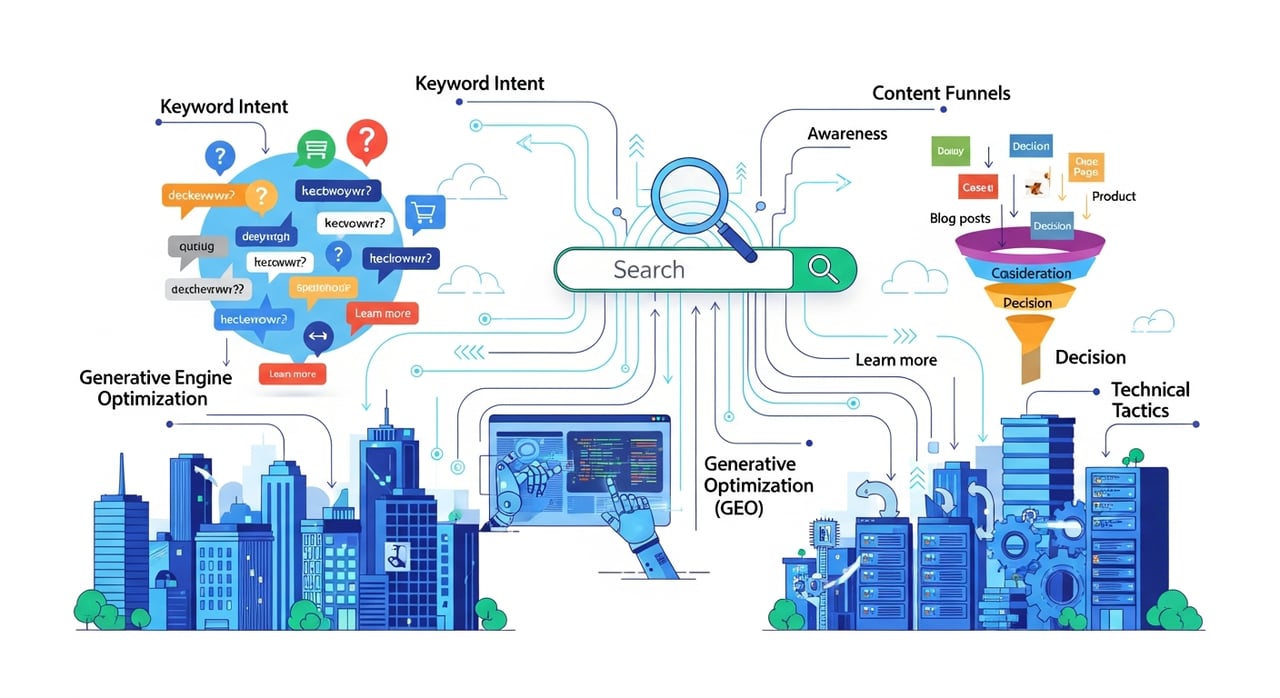
In 2026, the software market is busier than ever. The total value of these companies is over $250 billion. This means getting people to find you naturally is a huge deal if you want to survive.
Building a startup today is tough. You aren't just fighting other tools. You're fighting for the attention of users who use AI to find answers.
Software SEO has changed a lot. It isn't just about ranking for a few big words anymore. It's about a business model where keeping a customer for a long time is the most important goal.
We’ve moved past simple blue links. Now we live in a world where your brand must be the main answer for AI assistants.
This guide helps you through this new world. We’ll start with the basics of tech and content for software brands.
Then we’ll look at how to win over customers with helpful content. Finally, we’ll look at the numbers you need to show your bosses. Whether you just started or you're growing fast, this plan will help you grow.
Why SEO Matters for New Software Companies
The software world is hard on people who only use paid ads. Ads can give you a quick jump in users, but they cost a lot. As soon as you stop paying, the traffic goes away.
SEO is different. It’s a growth engine that builds over time.
Every good piece of content you write is like a small worker. It works 24/7 to bring in leads without costing you for every click.
SEO is now a must-have part of any growing business.
The Long Term Value of Free Traffic
When you put time into search, you're building value in your site. Social media posts disappear in a few hours. A good guide or page can bring in sign-ups for years.
In 2026, the winners are the ones who claimed their spot early. It’s the difference between renting an audience and owning your own channel.
Lowering Costs with Search
Making money is the goal for startups, and the cost to get a customer is the biggest hurdle. Data shows that getting a customer through search is usually 50-70% cheaper than ads over a year.
By the time someone sees your price page after reading your guides, they already know you're good.

This traffic leads to more sales and people sticking around longer. These users found you while they were looking for a fix to a problem. In a world where money is hard to get, this isn't just nice. It's a requirement.
How Software SEO is Different
Regular SEO is often for stores or local shops. They want a sale right now. If someone searches for "red shoes," they want to buy them.
Software is different. The sales take longer and the products are more complex. Your relationship with the user only starts when they sign up.
Dealing with Subscriptions
In software, we don't just want a one-time buyer. We want a partner for the long haul. This means your search plan must cover the whole journey, from learning about you to staying a customer.
- Teaching Focus: You need content that fixes problems, not just a list of features. Guide the user from knowing they have a problem to knowing you are the fix.
- Keeping Customers: Use "how-to" guides to help current users get more value. This stops them from leaving.
- Task-Based Thinking: Use words that describe what a user wants to get done with your software.
Being an Authority
The software market is full. Search engines in 2026 care about who really knows their stuff. You can't just write about one thing. You have to own the whole topic.
Search engines look for your brand to be linked to certain categories across the web. If you sell tax software, you need to be an expert on taxes and payroll.
You prove your skill with real data and case studies. Generic blog posts won't work anymore.
Picking the Right Keywords for the Future
In 2026, just looking for high search numbers is a mistake. For a startup, 100 people looking for a fix are worth more than 10,000 looking for a definition. We care about the "why" behind what people type.
The Jobs to be Done Framework
Instead of broad terms like "work software," look at the task. A user might search for "how to automate weekly reports" because they hate typing data.
- Situation over Words: Focus on the spot the user is in.
- Result Focused: Your content should promise a clear result.
- Lower Competition: These specific terms are easier to rank for and sell better.
Grouping Topics Together
You need to organize your site into groups that lead users along. Mailchimp is a great example. They don't just go for "email marketing." They write about things like "what is email automation?" to catch people early.
Building a group around one topic tells search engines you are a big resource. In 2026, having your pages connected well tells AI agents that your site is the best source for that topic.
Using Content to Guide Your Users
Mapping content correctly makes sure your work leads to money. You want to lead a reader to become a power user through teaching.
- Awareness: Use broad guides to help people with industry problems.
- Consideration: Use comparison pages and deep dives into features.
- Decision: Use price calculators and "Alternative to" pages for people ready to buy.
- Support: Help docs and "Quick Start" guides make it easy to start a trial.
- Retention: Advanced tutorials help current users find new ways to use your tool.

When you match content to how a user is thinking, they move from searching to paying. This makes your traffic a real tool for growth.
How to Win with AI Search
Search has moved from a list of links to one single answer. This is the time of AI search. If your brand isn't in the data AI uses, you don't exist to many buyers.
The Move to AI Answers
Search engines are now answer engines. People get their info right on the search page from AI summaries. To win, your content must be easy for AI to read and use.
If you aren't in the AI summary, you are invisible.
This isn't about using a keyword over and over. It's about being the "source of truth." You need to provide direct answers to hard technical questions.
Becoming a Trusted Brand
To get picked by AI, your startup needs to do more than blog. You need to be a known name. You get this by doing original research and getting mentioned on big sites.
AI models look for many trusted sites to say the same thing. When other big sites link you to a category, the AI starts to recommend you. Create content that nobody else can copy, like your own data studies.
Technical Basics for Software Sites
Before the creative work, your tech base must be strong. In 2026, search engines hate slow sites or bad code. AI bots need to read your site fast to know what your tool does.
- Check Your Basics: See if your site's setup matches the problems you solve.
- Focus on Speed: This measures how fast your site reacts when a user clicks a button.
- Shrink Your Files: Big screenshots can slow you down. Use tools to make images smaller before you upload them.
- Keep it Secure: Use the latest security rules. A safe site is a trusted site.

Site Speed and Reaction Time
Speed isn't just about the first image loading. It's about how fast your site moves when a user clicks a sign-up button. A slow site during a demo will lose you a customer fast. Keep your code light so it reacts quickly.
Strong Security
Security is for your tech team, but it helps SEO too. Search engines in 2026 want to see safe sites. If your help site is separate, make sure it is just as safe as your main app. This shows you are reliable to both bots and people.
Using Schema Markup for Software
Schema is a bridge between what people read and what machines read. Using it ensures your software is listed as a tool, not just another blog post.
Software Schema
To get noticed, use the SoftwareApplication tag. This tells search engines your price, category, and what devices you work on. It helps your search listing stand out with star ratings and prices.
{
  "@context": "https://schema.org",
  "@type": "SoftwareApplication",
  "name": "CloudScale AI",
  "operatingSystem": "Web, Windows, macOS",
  "applicationCategory": "BusinessApplication",
  "offers": {
    "@type": "Offer",
    "price": "49.00",
    "priceCurrency": "USD"
  }
}
Business Info
You also need to show who is behind the software. Using Organization tags builds trust. In a world of AI spam, having a verified profile proves you are a real company with real experts.
Building Authority with Better Links
Authority in the software world isn't about how many links you have. It's about who is linking to you. In 2026, one link from a big tech site is worth more than a thousand junk links.
One way to get links is to make something useful. Industry giants do this well. They offer free tools that everyone wants to use. For your startup, this could be a free calculator or a template that solves a common problem.

Smart Public Relations
Digital PR is about more than just news. It's about being an expert.
- Research: Do your own surveys and share the results.
- Guest Posting: Write for big tech blogs. Share things only you would know.
- Data Stories: Reporters love new data. If your software shows a new trend, tell them about it.
Building authority takes time. Focus on being helpful first.
Using AI to Make Content Faster
Making a lot of content used to mean hiring a lot of people. In 2026, it's about the workflow. Some startups grow from 25,000 to 500,000 visitors by automating their blog.
Automated Workflows
The trick is to stop staring at a blank page. Using Kitful.ai, you can handle the whole process from picking keywords to posting. It helps with links and making sure the text is ready for search engines.

Keeping a Human Touch
Automation gives you speed, but people give you value. Using too much AI without checking it is risky. Your users want real ideas, not just a repeat of the whole web.
Use AI for the heavy work, but have a person give it a soul. Have a product manager spend ten minutes checking every draft. They can add real stories that a bot wouldn't know.
Choosing your tools is about finding ones that work together. You need a mix of data and AI. Here are the tools we recommend:
- Kitful.ai: This is the best for making content fast. It helps you go from an idea to a live page in minutes.
- Ahrefs: This is the best for seeing what your competitors are doing.
- Semrush: Great for finding keywords and tracking where you rank every day.
- Flowlu: Good for project management. It keeps your content plan on track with your business goals.
- Google Search Console: You need this. It shows you exactly how Google sees your site.
- Clearscope: Good for one last check. It makes sure you didn't miss any important topics.
Measuring Success with Software Metrics
In 2026, just getting traffic isn't enough. You need to see if that traffic turns into money. Watch how visitors move from a search to a trial and then to a paid account.
Tracking Revenue
Good SEO should bring in 30-40% of your money. This happens when you focus on words for people who are ready to buy. These users usually stick around longer than people from social media ads.
Quality of Leads
Good leads are what keep a startup alive. We track how many people who sign up actually become sales. If nobody is buying, your content is probably too broad. Aim for a 2-5% signup rate.
Common Mistakes to Avoid
Founders often think more traffic always means more money. This is a mistake. It can waste your budget before you even get started.
The Volume Trap
Going for huge keywords is a common error. If you sell architecture tools, ranking for "business apps" won't help. It just brings in the wrong people who will leave your site immediately.
- Context: Find users with a specific pain.
- Quality: 100 people with a real problem are better than a million browsers.
- Answers: Make sure your page actually answers the question.
The AI Bubble
Using AI without any human help is a bad idea. AI is good for outlines, but it can't tell your brand's unique story.
- Boring Advice: Bots often give safe, boring advice.
- Losing Authority: If your blog looks like everyone else's, nobody will trust you.
- Fake Facts: AI can make things up. Real data needs a real person.
Ignoring your current customers is a huge mistake.
Use SEO to help people who already use your tool. Guides that show off new features will keep people from leaving.

Summary of the Path to Success
SEO is a tool that builds over time. Unlike ads that stop working when you stop paying, your content keeps working forever. It is like passive income for your marketing.
The world is moving toward AI and trusted brands. In 2026, the winners are the ones who are the top source for their topic.
Doing this every day is the hard part. Use Kitful.ai to help you scale your work. It makes the daily tasks much easier.
Think of your site as real estate. Every guide you post makes that property worth more. Own your channel. Build your future today.
Common Questions Answered
How long until I see results from software SEO?
It usually takes 6 to 12 months. You might see small wins early, but the big drop in costs takes a year of work.
How is software SEO different from regular SEO?
Regular SEO is for one-time sales. Software SEO covers the whole customer life, from learning to staying a user for years.
Is SEO still worth it with AI search?
Yes, but you have to change. You want to be the source that the AI uses for its answers.
 Kitful