 Kitful
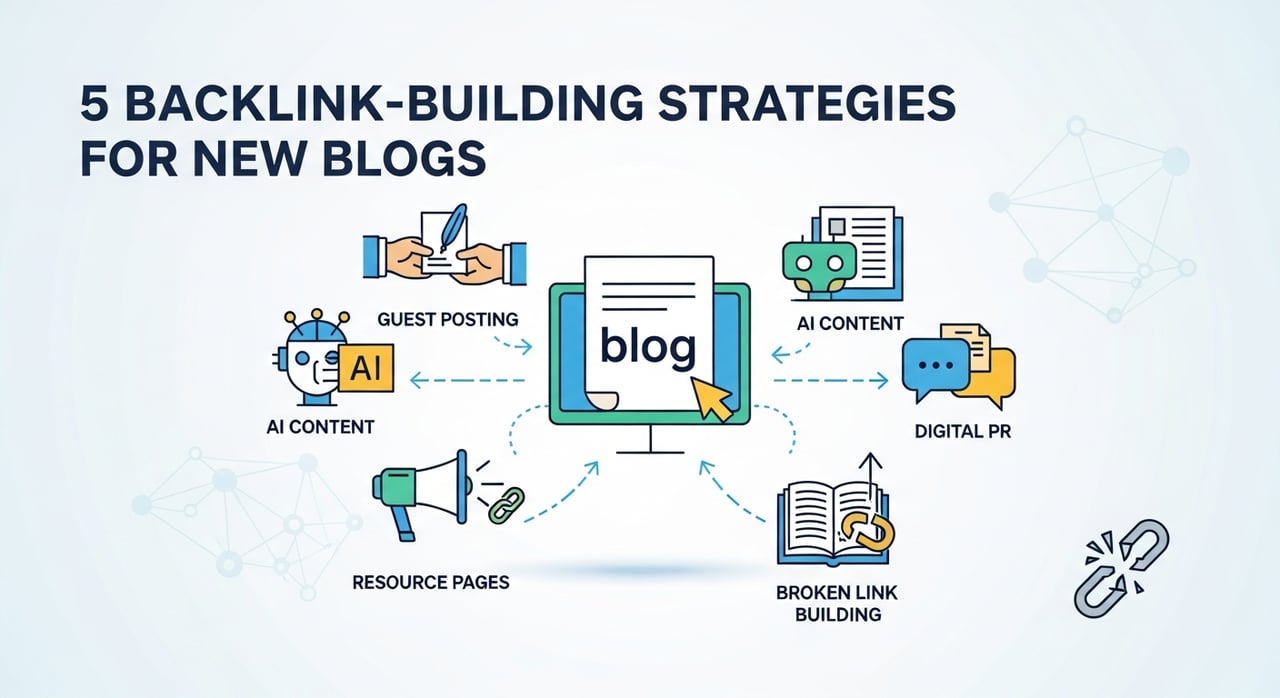
5 Backlink-Building Strategies for New Blogs
Establishing authority for a new blog requires more than just good writing; it requires the right connections. Discover five essential backlink strategies tailored for the modern SEO landscape, from digital PR to AI-powered content promotion.
Blogging is tough right now. About 90.63% of all content gets zero traffic from Google. Usually, this happens because the site doesn't have enough backlinks.
Think of a backlink as a vote from one website to another. When a trusted site links to yours, they tell search engines that your content is good. It's a sign that people can trust you.
By 2026, things have changed. You can't just collect as many links as possible anymore. Search engines are smart enough to find spam.
Now, quality matters way more than quantity. One link from a big site helps more than a thousand bad ones. Here is a five-step plan to help your new blog get the right attention.
What Backlinks Mean for Search Engines Today
Backlinks are like online referrals. When a site links to you, they're saying you know your stuff. This helps you build a name that search engines and AI can't ignore.
Sites with strong links usually get 3.8x more traffic. That is a huge difference.
Trust and Authority
Backlinks used to be the main way Google ranked sites. They show that your blog is a hub of info. This helps you move up in search results by proving you're a reliable source.
Citations in the Age of AI
Tools like ChatGPT Search use backlinks as citations. When these AI tools look for answers, they pick sites that other people mention a lot. If nobody links to you, the AI might not even know you exist.
Why Quality Beats Quantity in 2026
A lot of new bloggers fall for the $50 link package trap. You see these offers everywhere. They promise hundreds of links for a small price.
It sounds like a shortcut. But it’s actually a fast way to get banned or ignored. Search engines care about where the link comes from.
- The Myth: Buying big link packages helps you get traffic fast.
- The Fact: One link that fits your topic is better than a hundred random ones.
Relevance is what matters most now. A link has to make sense.
If you write about weddings, a link from a bridal magazine is gold. A link from a tech news site won't help much. Always look for links from sites your readers actually visit.
Getting Your Blog Ready for Links
You can't ask for a favor if you have nothing to give. Before you email anyone, your blog needs to be worth linking to. You need to offer something real.
First, look at what you know. Use your own experiments or unique ideas. This gives other writers a reason to mention you.
Next, build stuff people want to use. This could be a free tool, a calculator, or a big guide. These things act like magnets for links.
Finally, check your content for AI. Make sure you answer hard questions clearly. This proves your site is a good source for automated search tools.
Using Guest Posts to Build Trust
Some people think guest posting is just for spam. But if you do it right, it still works great. It helps you reach new people and build your name.
It isn't just about the link. It's about the audience.
Finding Good Partners
Don't just post anywhere. Look for high-quality blogs in your niche. You want to be on sites where readers already care about your topic.
Making Real Connections
Treat every guest post like a partnership. Don't just try to get something out of it. Focus on helping their readers first.
The links that help your rank are the ones that make sense to a real person. If a reader clicks your link because they want more info, Google sees that as a good sign.
Writing Emails That Get Opened
Sending a cold email can feel like talking to a wall. But a few small changes can help a lot. Editors are busy. You need to be quick and show you aren't just using a template.
- Make it personal. Mention a specific article on their site that you liked. This shows you actually read their stuff.
- Offer something new. Give them data or a view they don't have yet. If you fill a gap in their content, you become a help instead of a bother.
- Make it easy. Tell them exactly where your link could go. If you do the work for them, they are more likely to say yes.
Using Digital PR for Expert Links
Digital PR isn't just for huge companies. If you have a new blog, it's a fast way to get links from big news sites. The secret is helping reporters who are already writing stories.
Use a site like Connectively to find people looking for quotes. This builds your brand as an expert.
By 2026, search engines also notice when people talk about you, even without a link. These "silent" mentions are very valuable. They prove you matter in the real world.
You should also check out Featured.com. It is a great way to get your name into expert lists. It helps you go from being a "new blogger" to a known voice in your field.
Tips for Success on Connectively
Winning a PR pitch is about being fast. Journalists have tight deadlines and way too many emails. If you make their job easy, you'll win.
- Be fast. Try to reply within 30 minutes. The first good answers usually get picked.
- Look professional. Include a good photo and a short bio. This proves you're a real person with real skills.
- Write for them. Give them a unique answer they can just copy and paste. Don't use fluff or long intros.
Partnering with Other Creators
Building a blog shouldn't be a solo job. Partnerships let you reach new people. This helps you get links that look totally natural.
Look at how big names got famous. They spent years appearing on other people's shows and blogs. This builds a web of links over time.
Why Case Studies Work
If you want links without asking, post your own data. Case studies are great because other writers need proof for their own stories. When you run an experiment, you become the source everyone has to cite.
Interviews and Webinars
Hosting a joint video or interview is another way to get noticed. When you make content with someone else, you both link to it. It's a win-win for everyone involved.
Types of Partnerships for New Bloggers
Relationships with other creators don't always have to be about guest posts. Diverse partnerships often work better. Focus on projects that help both of your audiences.
- Shared Research: Partner with another blogger to look at data together. This creates a resource that news sites will want to link to.
- Expert Lists: Ask leaders in your field for their thoughts on a topic. When you feature them, they will likely share your post with their fans.
- Being a Guest on Podcasts: This is a great way to get people searching for your name. Usually, the host puts a link to your blog in the show notes.
Promoting Content with AI
Search engines want more than just basic info. Good content made with the help of AI can drive a lot of links. But you have to use it to make your own ideas better.
Don't just make generic summaries. Use AI to help organize deep guides that people can't find anywhere else. If your blog has the best data, the links will come on their own.
AI puts more weight on how useful your content is. Focus on being the most helpful source on a topic. People will naturally use your site as a reference.
Growing Your Blog with Kitful.ai
The hard part for new bloggers is keeping the quality high. To get links all the time, your site needs to look professional. This is where tools can help you bridge the gap.
Reaching More People
Tools like Kitful.ai help you make more content without losing quality. You can create SEO-optimized articles in over 100 languages. This helps you get links from sites all over the world.
Using Pictures and Video
Visuals make people want to link to you. Automated images and videos make your posts look much better. A page with good media is shared way more than just a wall of text.
Easy Publishing
If you want to automate publishing to WordPress or Ghost, this tool does the hard work. This lets you focus on reaching out to people while your blog stays active.
How to Use Resource Pages
Resource pages are lists of helpful links that editors keep for their readers. Since these pages are meant to point to other sites, they are great for new blogs.
To find them, use special searches like "topic + useful links." This helps you find hubs that already share content like yours.
For business blogs, getting on sites like Crunchbase is important. It proves your blog is a real business.
When you find a page, don't just ask for a link. Explain how your guide fills a gap in their list. You're helping them make their page better for their readers.
Tools for Building Your Link Profile
Doing everything by hand is tiring. You need a few tools to help you see what's working. These help you find targets and keep your site healthy.
- Ahrefs: This is the best tool for seeing who links to your competitors. It gives you a list of people who might want to link to you too.
- Kitful.ai: This helps you make the kind of deep content that people love to cite.
- Moz Link Explorer: Use this to check your link health. It helps you see if bad sites are hurting your reputation.
Mistakes New Bloggers Should Avoid
It is easy to get worried when traffic is low. But cutting corners usually leads to trouble. Search engines are too smart for old tricks now.
- Don't buy $50 link packages. Google's AI can spot these from a mile away. These links come from "link farms" that only exist to sell links.
- Avoid bot software. Blasting your URL into random places is a waste of time. These links don't make sense and make your site look like spam.
- No generic AI emails. Editors can tell when a bot wrote an email. If you don't make it personal, it goes straight to the trash.
Real trust is built through real connections. Your content needs to deserve a link.
How Links Affect AI Search Results
Search is changing from links to answers. But AI models like Perplexity and ChatGPT Search don't just know things. They look for sources they can trust.
When an AI gives an answer, it looks for expert voices. This is where your links matter most. They act like a digital reputation score.
About 76.1% of AI search citations match up with regular backlinks. If a trusted site links to you, the AI thinks you're worth mentioning. It isn't just about being #1 on a page anymore.
Your personal brand is your best defense against changes. When sites link to you as a person, you build a "moat" around your blog. AI models recognize these patterns of trust.
Building Your Name One Link at a Time
Building links isn't a project you finish in a weekend. It takes time and patience. You don't have to do everything at once.
Just pick one thing to start. Maybe find one resource page or send one PR pitch. Consistency beats intensity every time.
Think of every new backlink as a person at a party pointing toward you. One person pointing is just a hint. Twenty people pointing is a consensus.
To make this easier, you can try Kitful.ai for free. It helps you make the kind of high-quality content that people want to cite. Every big site started exactly where you are today. Just keep building.