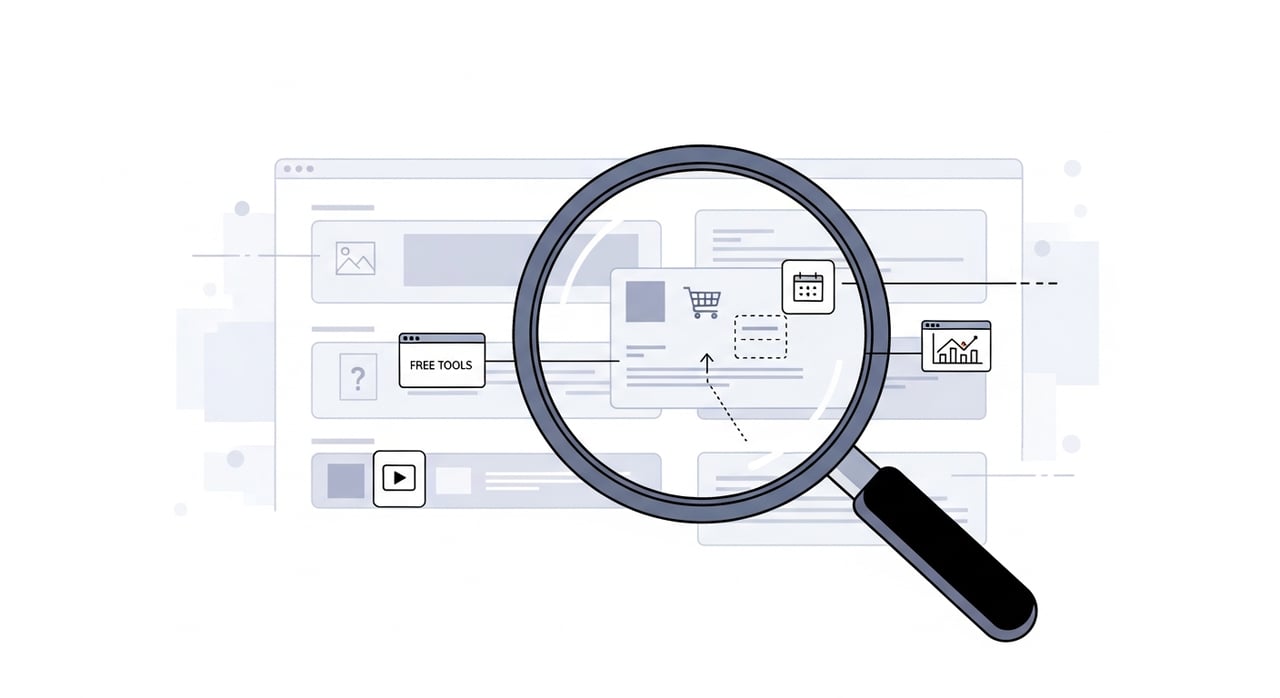
You spent 10 hours writing a guide that currently sits on page five of Google. This happens because most creators guess what Google wants instead of looking at what it is already rewarding.
Relevance often beats authority in 2026 because Google prioritizes precise intent matching over domain power. You do not need a massive backlink profile to rank if your content fits the search results better than the giants.
The most valuable competitive opportunities hide in plain sight on search results pages. By decoding these signals, you can find the content gaps that allow smaller sites to outrank industry leaders.
The Bottom Line Up Front
Analyzing the search results is the only way to ensure your content has a chance to rank before you start writing. Focus on the intent and format that Google currently favors for your specific keyword.
- Start with a clear intent category for every keyword.
- Use a free tool like the Kitful SERP Content Analyzer to save time.
- Identify the specific questions users are asking in the People Also Ask section.
- Look for outdated content in the top 10 results to find easy wins.
- Content gaps are the most efficient way to outrank industry giants.
What Is SERP Analysis And Why Should You Care?
SERP analysis is the process of examining top-ranking pages to understand why they rank. It moves beyond high-level metrics like volume to look at content format, structure, and quality.
10 blue links are a relic of the past search era.
Modern search results are complex layouts filled with AI overviews, video carousels, and rich features. If you ignore these elements, you are only seeing half the picture.
SERP analysis is about finding the meaning behind your target keywords, beyond what your SEO tools can show you.
Manual analysis provides nuance and strategic depth that automated scores can miss. You can see the actual user experience, the quality of the images, and the tone of the writing.
This process ensures your content is not just good, but relevant to the current algorithm. Understanding the 'why' behind a ranking page is the secret to replicating its success.
- Look at the publication dates of the top results.
- Check for the presence of AI-generated summaries at the top.
- Relevance is the new authority in the eyes of Google.
- Note how many images or videos appear in the main results.
- Observe if the results are mostly from large brands or independent blogs.
Before you write a single word, you must understand why the user is searching. Google categorizes every query into a specific intent, and your content must match it perfectly to rank.
Intent-optimized content generates better engagement from the start. If a user wants to buy something but you give them a 4,000-word history lesson, they will bounce immediately.
- Informational: The user wants to learn something (e.g., how to fix a leak).
- Transactional: The user wants to buy a specific product.
- Navigational: The user is looking for a specific website or brand.
- Commercial: The user is comparing options before a purchase.
Decide your content format based on these rules:
- If the top results are listicles, then you should write a listicle.
- If the top results are product landing pages, then do not write a blog post.
- If the results show mostly video content, then prioritize a video version.
- If the results are long-form guides, then aim for a comprehensive resource.
Step 2: Scout Competitors And Identify Content Gaps
Visit every page in the top 10 to see what they are doing right and where they are failing. Pay attention to word count, use of media, and the unique angles they take.
Identify content gaps by looking for unanswered questions or poor user experience. If every competitor has old data from 2022, providing 2026 data is your easiest path to the top.
Consider an indie founder named Leo who targets the keyword 'affordable CRM for startups' with a standard guide. He realizes the top results are all comparison tables and price checklists, which his draft lacks. By pivoting his format to match these expectations, he climbs from page four to page one in less than a month.
- Check Google Search Console to see what terms your site already ranks for.
- Look for 'thin' content that lacks depth or original research.
- Relevance is the new authority for smaller websites.
- Note if competitors are missing helpful visual aids like charts or infographics.
- Evaluate the mobile loading speed of the ranking pages.
Tip: Look for results from over two years ago to find easy opportunities for fresh content.
Smaller sites often win by being more specific than the generic advice found on high-authority domains. Find the one thing they missed and make it the centerpiece of your article.
Step 3: Map Google SERP Features
Google's layout includes more than just links; it includes features designed to keep users on the page. Identifying these features allows you to format your content to occupy more 'real estate' on the screen.
Targeting Featured Snippets can put you at position zero even if you rank lower. Use clear headings and concise definitions to make it easy for Google to pull your text.
- Featured Snippets: Often a paragraph, list, or table.
- People Also Ask: The specific questions Google thinks are related.
- AI Overviews: Summaries generated by Google's language models.
- Image and Video packs: Visual results that appear mid-page.
Incorporate missing topics and high-signal formatting found in the analysis. Use tools like AnswerThePublic to find every variation of the questions people are asking.
Rule: If the top five results are all the same format, do not try to be different with your format.
By answering the questions found in the PAA boxes, you increase your chances of appearing for multiple long-tail keywords. This builds a topical map that proves your expertise to the search engine.
Manual analysis is free and deep, but it takes time that most founders do not have. Automated tools provide structured data quickly, allowing you to scale your content production.
Manual analysis provides nuance and strategic depth that automated scores miss. It is the best choice if you are only targeting a few high-value keywords.
Manual Analysis
- Pros: 100% free, detects tone and quality, finds creative gaps.
- Cons: Slow, prone to human error, hard to repeat at scale.
- Verdict: Best for deep dives on cornerstone content.
Paid Tools (Surfer SEO, Ahrefs)
- Pros: Massive data sets, automated word count averages, keyword density maps.
- Cons: Often cost $99/mo or more, can lead to over-optimization.
- Verdict: Best for high-budget marketing teams.
The 10-Second Shortcut: Kitful Free SERP Content Analyzer
If you want the data without the manual labor, specialized free tools are the answer. The Kitful SERP Content Analyzer automates the entire scouting process in about 10 seconds.
This tool is built for bloggers and founders who want to skip the $99 monthly fee. It scans the top results and tells you exactly what you need to include to compete.
- No signup or credit card required to start.
- Instant breakdown of average word counts and intent.
- Generates a list of headers based on current top performers.
- Identifies the common themes across the first page of results.
Automated analysis saves you hours of clicking through competitor sites. You get a clean summary of what is working right now so you can focus on the writing.
Instead of guessing if you need 1,000 or 3,000 words, you get a data-backed target. This level of precision is how you build a content engine that actually moves the needle.
How To Verify Your Analysis Before You Hit Publish
Before you publish, you must verify that your page actually solves the user's problem better than the current results. A final check ensures you did not miss a critical formatting signal or a popular question.
- Does the content match the dominant format like a listicle or guide?
- Are all the People Also Ask questions addressed in your headers?
- Is the content fresher than the oldest page in the top 3?
- Does the page meet the average word count of the top-ranking results?
Verification prevents you from wasting time on content that was doomed from the start. If you check these boxes, your content is structurally ready to compete for the top spot.
Ranking is not a mystery; it is a game of matching patterns. If your page matches the pattern Google likes, you will eventually find your way to page one.
Build Content That Google Can’t Ignore
Content that ignores the search results is just a diary entry. To grow your business, you must build content that Google cannot ignore by prioritizing relevance over everything else.
Intent-optimized content generates better engagement from the start. When you give users exactly what they are looking for, your rankings will follow naturally.
Relevance is the new authority. Start your next article by analyzing the SERP first and let the data guide your creativity.
 Kitful