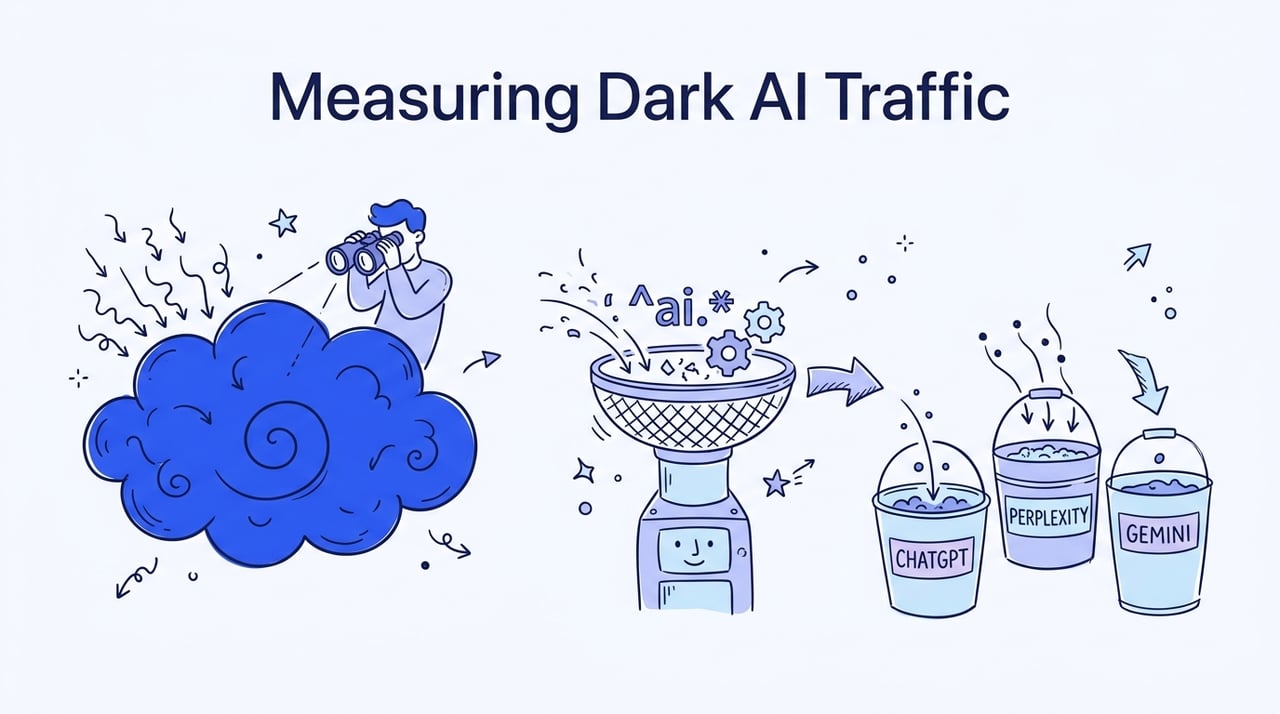
Your analytics are lying to you about where your traffic actually comes from.
By late 2025, monthly AI referrals hit 1.13 billion across the top 1,000 websites, yet most of this data is buried in the Direct bucket.
When AI assistants like ChatGPT strip referrer headers, your GA4 reports essentially go blind to your most valuable visitors.
This attribution gap hides a brutal reality: 38% of pages cited in Google AI Overviews do not even rank in the top 10 organic results.
You are likely losing half of your referral data to this dark funnel.
Traditional rank is no longer a proxy for visibility because users are finding your solutions inside the chat interface instead of the search results page.
Solving this requires a shift in how you categorize incoming sessions.
The 2026 AI Attribution BLUF
- AI traffic converts at a staggering 14.2%, which is significantly higher than the 2.8% average from traditional Google organic search.
- ChatGPT currently dominates the referral market with a 77.9% share, followed by Perplexity at 15.1%.
- Google introduced a native ai-assistant medium in May 2026 to help automate this tracking process.
- Sustainable growth requires moving from keyword density to entity-based content that AI models can easily parse and cite.
The default setup in Google Analytics 4 often groups AI traffic as generic referrals or direct hits.
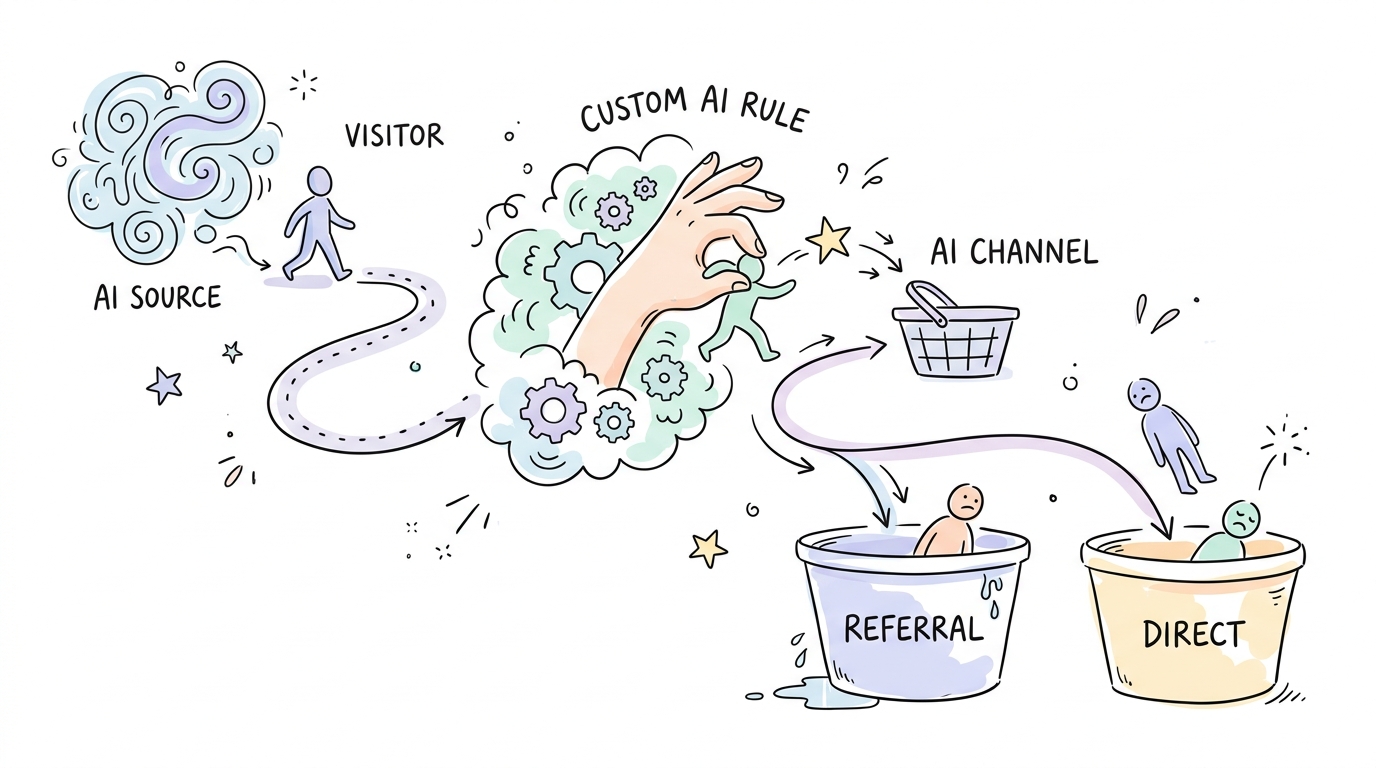
To fix this, you must build a custom channel group that intercepts these sources before they are mislabeled.
Follow these steps to clean up your data:
- Open your GA4 property and navigate to Admin, then Data Display, then Channel Groups.
- Create a new channel group by copying the Default Channel Group to ensure you do not break existing data.
- Click Add new channel and name it AI Referrals.
- Set the condition to Source and select the regex option.
- Paste the standardized AI assistant regex pattern into the field.
# GA4 Source Regex for AI Assistants
^(?:chatgpt\.com|chat\.openai\.com|perplexity\.ai|claude\.ai|gemini\.google\.com|bing\.com/copilot)
You must drag the AI Referrals channel to the very top of the priority list to ensure it evaluates before standard Referral rules.
If you leave it at the bottom, the system will categorize the traffic as a standard referral before it ever reaches your custom rule.
- Save the group and wait 24 to 48 hours for the data to populate in your Traffic Acquisition report.
Rule: Always use lowercase for your regex patterns because GA4 is case-sensitive and most source strings arrive in lowercase.
Check the Direct traffic percentage after implementation to see it drop as AI sessions are correctly identified.
This visibility allows you to prove the ROI of your Answer Engine Optimization efforts.
Native Tracking Vs. Custom Regex: Which Do You Need?
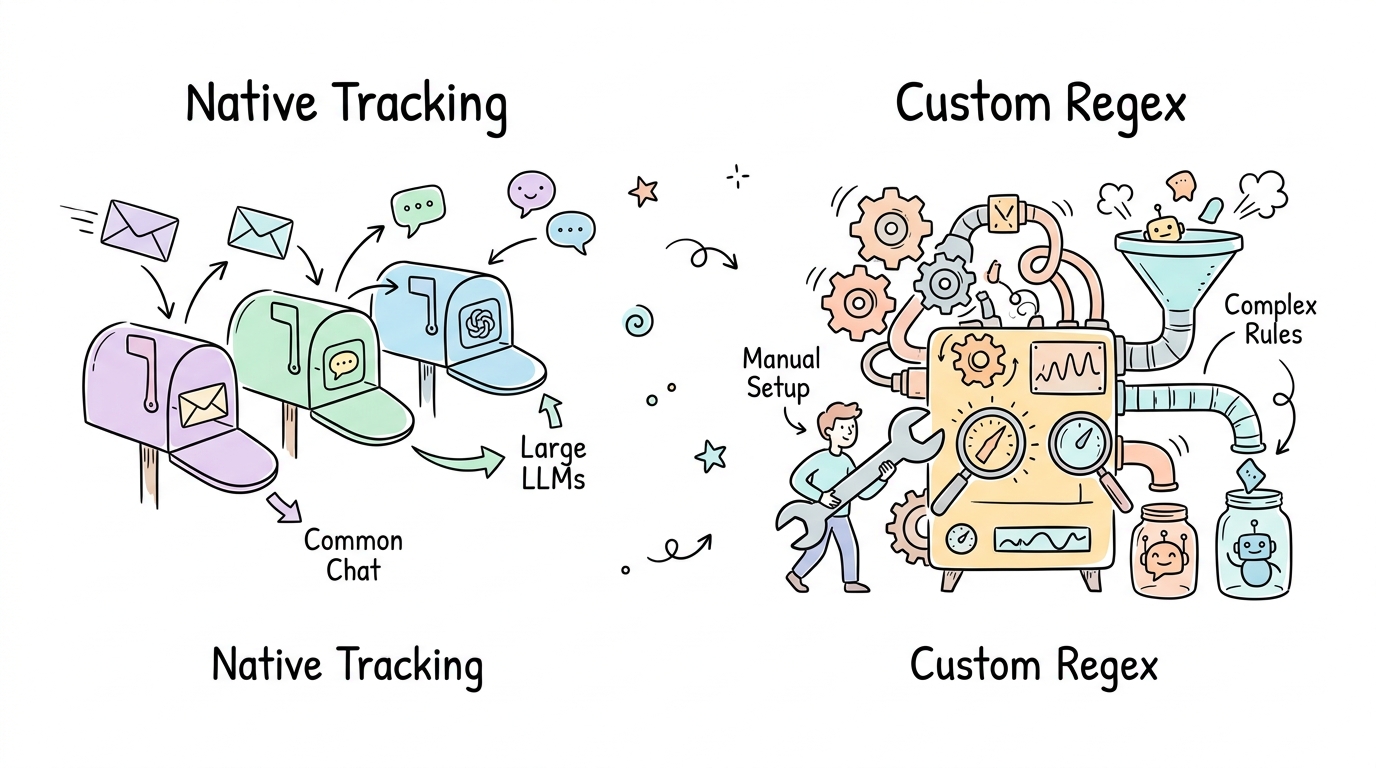
Deciding between native features and manual setups depends on how much granular detail you need for your reporting.
- Native AI Assistant Channel: This Google Analytics feature handles the basics for ChatGPT and Gemini automatically.
- Custom Regex Channel: This manual approach is necessary for tracking Perplexity and smaller LLMs like DeepSeek that are not yet natively supported.
- Landing Page Pattern Analysis: This method acts as a backup by identifying traffic to AI-focused content where the referrer is completely stripped.
- If you only care about the major players, then the native May 2026 GA4 update is sufficient.
- If you rely on Perplexity citations for lead generation, then you must maintain a custom regex channel group.
- If your direct traffic exceeds 20% of your total site volume, then you should implement landing page pattern analysis.
The native update is a gift for transparency, but it still misses about 22% of the diverse AI search market.
Maintaining a custom layer ensures you stay ahead of new entrants in the AI space.
Optimizing For The Citation: Schema And EEAT Frameworks
Getting cited by an AI is the new winning the featured snippet.
AI models are inherently risk-averse and prefer to cite sources that they can verify as authoritative and trustworthy.
You can increase your citation rate by using technical markers that connect your brand to the global knowledge graph.
- Implement the sameAs property in your JSON-LD to link your authors to verified LinkedIn profiles.
- Use specific entity names rather than generic pronouns throughout your technical content.
- Map your brand name to existing Wikipedia or Knowledge Graph IDs using Schema.org documentation.
- Create a dedicated fact-sheet section on high-traffic pages to provide machine-readable summaries for LLMs.
Linking your founder's profile to a verified entity helps the AI assistant trust your content during its verification phase.
Moving from keyword-stuffing to entity-linking satisfies the AI agent's need for certainty and clear expert sourcing.
This framework ensures your site is seen as a primary source rather than a secondary scraper.
Scaling To 1,000+ Pages Without Google Penalties
Generating content at scale is easier than ever, but doing it safely requires a human-in-the-loop approach.
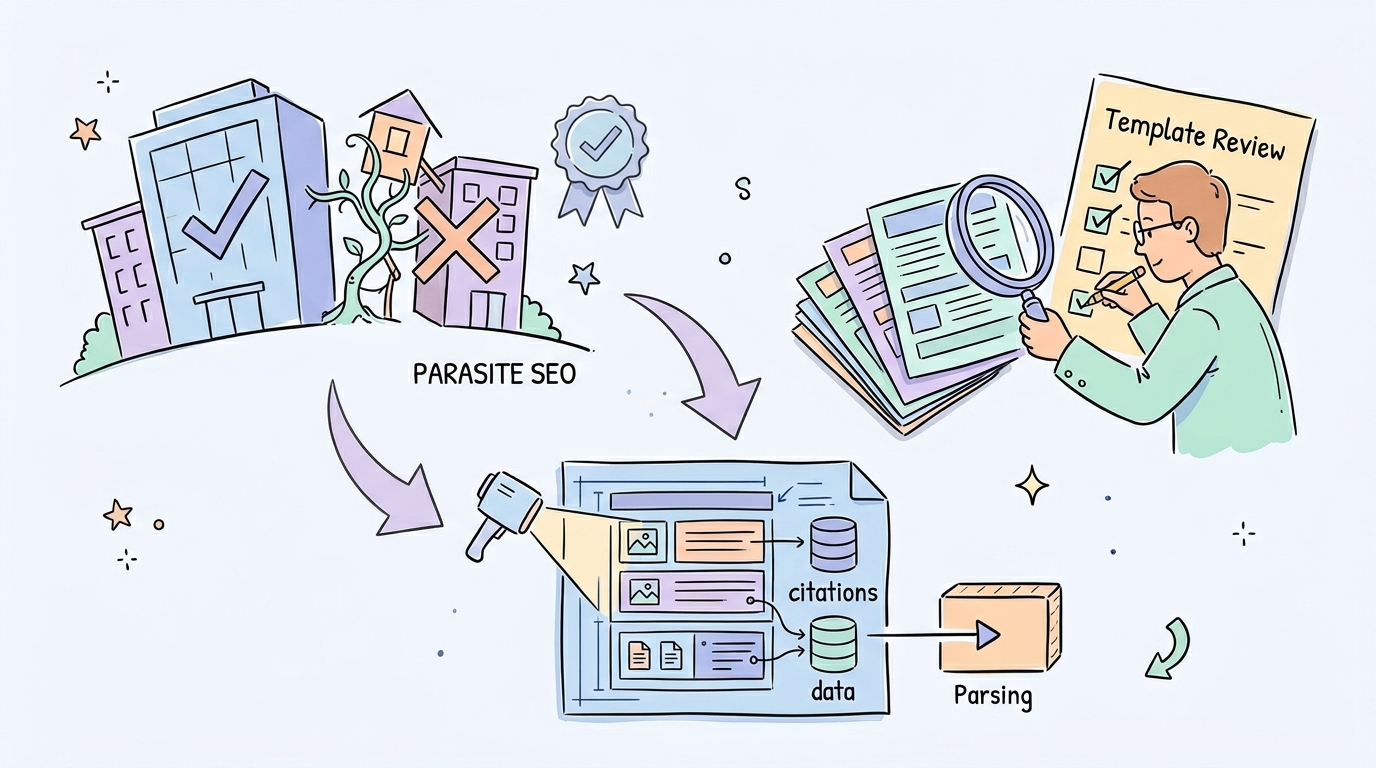
The 2026 Google Site Reputation Abuse policy is a continuous compliance requirement that targets low-quality programmatic dumps.
80% of searches now trigger some form of AI-generated overview or summary.
To scale successfully without risking a manual penalty, focus on these core pillars:
- Use a tool like Kitful AI to generate research-backed articles that maintain a natural, humanized tone.
- Build programmatic templates that use verified database facts rather than pure AI imagination.
- Audit your internal linking logic to ensure AI agents can crawl your site hierarchy without getting lost.
- Assign a real subject matter expert to review and sign off on every batch of 100 pages.
Pitfall: Avoid scaling AI content without oversight because the 2026 spam update is designed to catch and de-index repetitive, machine-generated layouts.
Success in 2026 is about creating machine-readable content blueprints that provide actual value to a human reader.
By following Google Search Spam Policies, you protect your long-term organic visibility while harvesting AI referrals.
Summary Of AI Attribution Methods
Using a combination of these methods provides the most accurate picture of your true AI referral volume.
The Future Of SEO Is Attribution
Fixing your attribution isn't just about cleaning up your spreadsheets.
It is about validating your AEO strategy and proving that your content is actually being consumed through the next generation of search.
AI referrals convert five times better than traditional search because the user is already deep in the consideration phase.
Stop letting your best leads hide in the Direct traffic bucket.
Start your GA4 configuration today to claim credit for your AI visibility.
AI Tracking FAQs
Why does regex matter if GA4 has a native AI channel?
The native channel only covers the most popular models and can lag behind new market entrants. A custom regex allows you to track specific challengers like Perplexity or Claude that might otherwise be lumped into general referrals.
How long does it take for AI referral data to show up?
Once you apply the custom channel group, it usually takes 24 to 48 hours for the new categorization to appear in your reports. This change is not retroactive and will only apply to traffic moving forward.
Why is my Direct traffic still so high after implementation?
Many AI mobile applications strip referrer data completely before sending a user to your site. You can identify these sessions by looking for traffic to specific deep-link pages that lack any other obvious source.
 Kitful