You might rank at the very top for a massive keyword, but if your traffic report looks like a flat line, you've hit the reality of 2026. AI Overviews and answer engines now give people what they need before they even think about clicking a link.
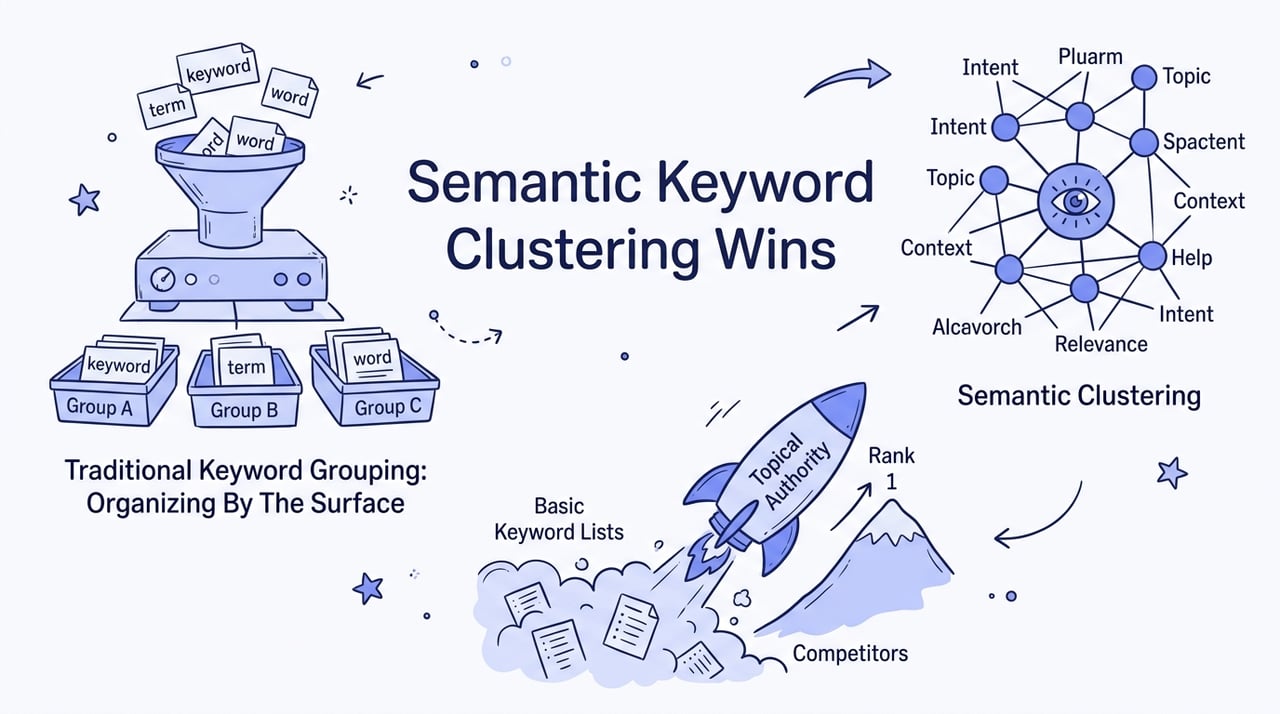
Back in the day, SEO was about using specific strings of text to fool a bot. Now, things are different. When we look at semantic keyword clustering vs traditional methods, we see that search is no longer just about words. It's about how ideas connect and how much detail you actually provide.
If you still build your content around word patterns instead of what people actually want, modern algorithms won't even see you. Winning a single ranking isn't the point anymore. You need to build a topical footprint that AI has to notice. That means moving past basic groups and getting into semantic clustering.
The Bottom Line: Strategy Snapshot
ChatGPT actually cites pages from position 21 or lower about 90% of the time, skipping the top 10 entirely.
- Regular grouping helps you stay organized, but semantic clustering is how you build real authority.
- AI systems care more about how well your content fits the context than where you sit in old-school rankings.
- You need semantic clustering if you want to win at Generative Engine Optimization (GEO).
- Being a topical expert creates a shield that is much harder for competitors to break than just a single page.
Traditional Keyword Grouping: Organizing By The Surface
Traditional grouping, or looking for lexical similarity, is just sorting terms by how they look. It uses a method where you put keywords together because they share the same roots or endings.
Imagine a list with blue scarf, buy blue scarf, and warm blue scarf. These get put together because the letters match, not because they help the user at the same point in their journey.
According to the Americaneagle Semantic SEO Guide, grouping keywords is basically just putting terms into lists to stay tidy. It uses a word-match method that looks for exact tokens instead of figuring out the human reason for the search.
This way of working is fast for computers and works for huge lists of part numbers, but it misses the point. In 2026, if you only look at how often a word appears, your content will look like tiny, lonely islands to an AI search engine.
Semantic Keyword Clustering: Organizing By Intent
Semantic clustering doesn't care about specific letters or patterns. It looks at why someone is searching in the first place. It uses Natural Language Processing (NLP) to figure out how different topics actually fit together.
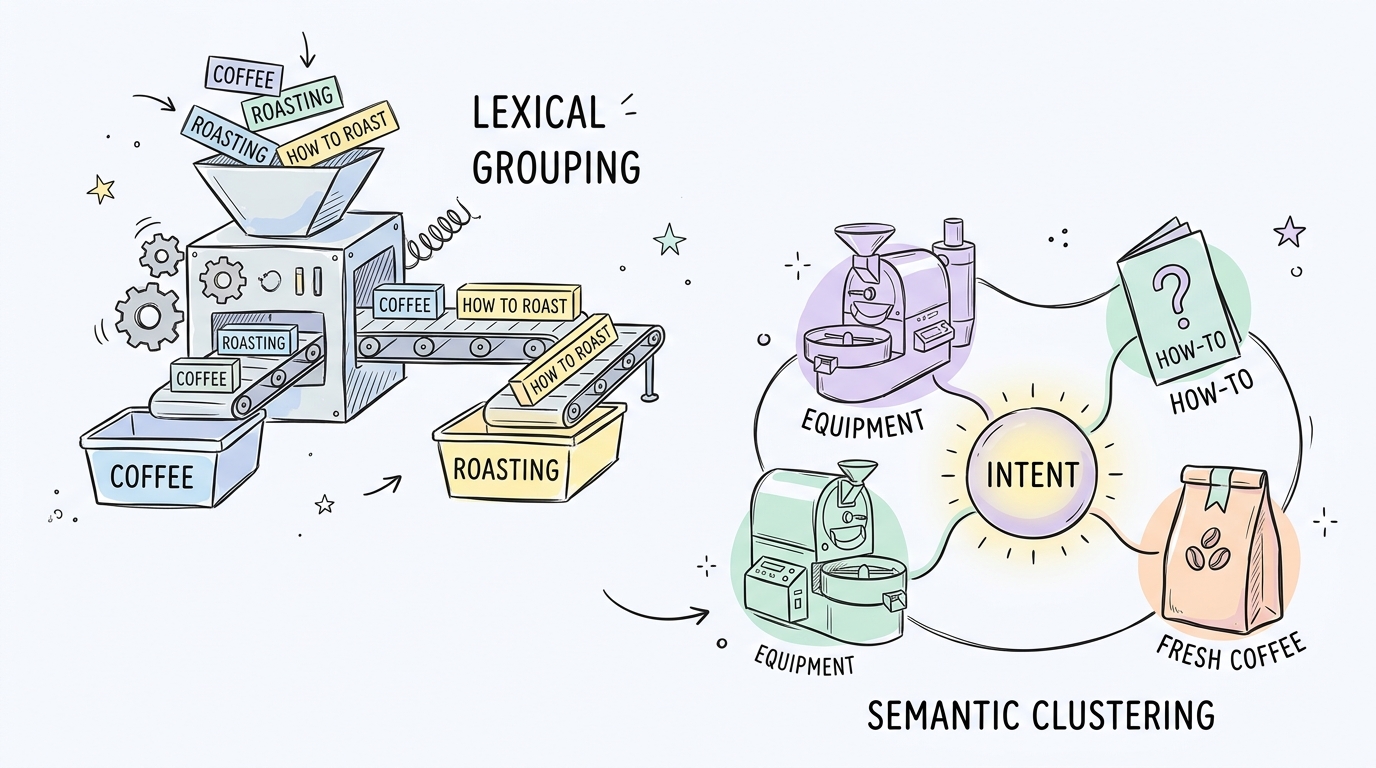
You might put how to roast beans at home together with best home roasting equipment. Even though the words are different, the goal for the user is the same.
This plan uses entity clustering. It sorts topics around real things like people, brands, and specific ideas. Tools in 2026 are 67% better at finding these links than the ones we had in 2024.
When you cluster this way, you aren't just writing a post. You are building a web of knowledge. This shows search engines that you actually know the whole subject instead of just a few popular phrases.
Head-To-Head: Lexical vs. Semantic Strategy
Strategy Comparison
Selecting the right approach depends on your specific goals. If you need long-term authority and E-E-A-T, semantic clustering is the mandatory strategy for the current landscape.
How To Build A Semantic Cluster That AI Engines Love
Building a cluster like this means you have to stop writing in a straight line and start planning like an architect. You aren't just making content. You are building a network of signals.
- Pick a Core Topic. Choose a big pillar theme that has plenty of searches and acts as a home base for what you know.
- Find 100+ Related Questions. Look for long-tail keywords and conversational phrases like "tell me about" that are popular in 2026.
- Group by Shared Goals. Use an NLP tool to link synonyms and related ideas into smaller articles or side pages.
- Use the Golden Rule. Every side page must link to the main pillar, and the pillar has to link back to every side page.
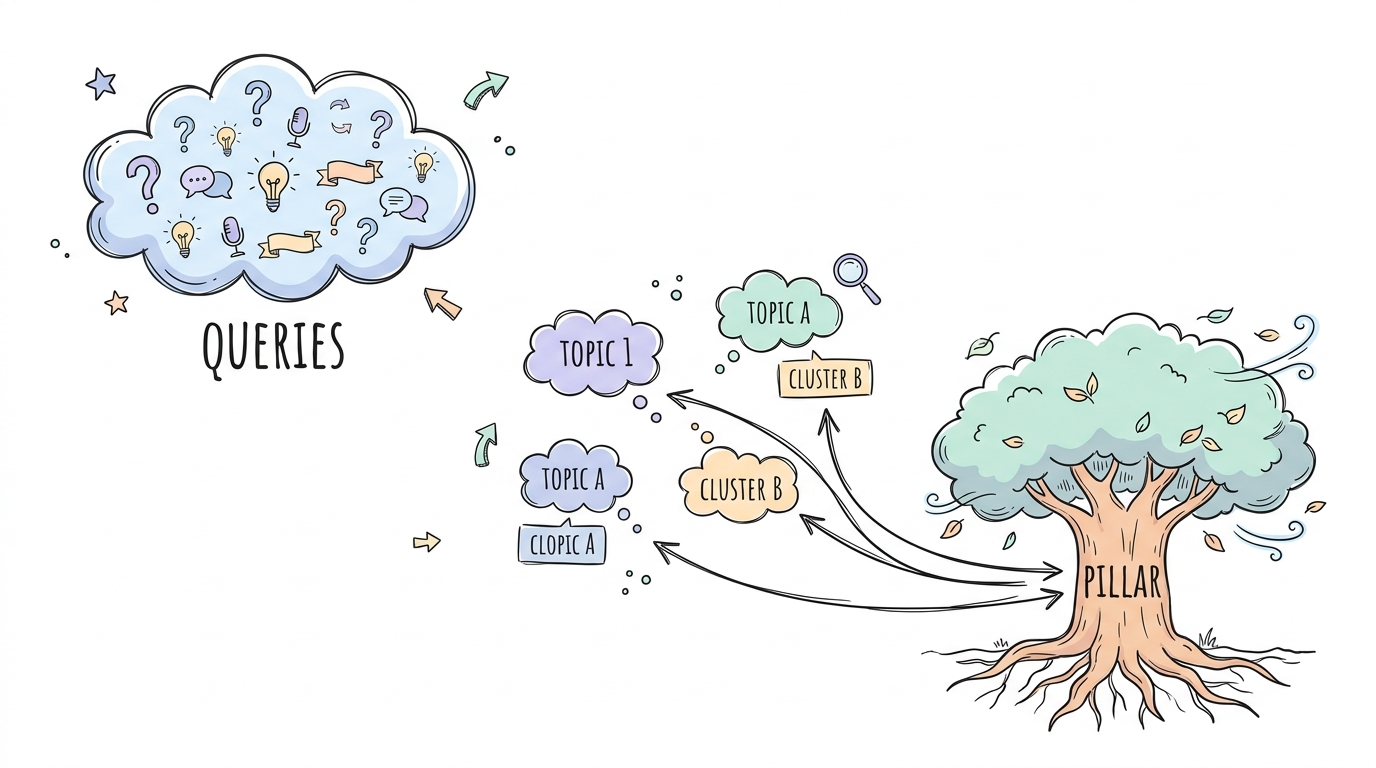
A small coffee roaster once struggled to rank for a big term like coffee beans. Instead of fighting for that one word, they built a cluster around DIY home roasting and linked six detailed guides together. Within a few months, they started showing up everywhere in AI Overviews because they became the go-to source for that niche.
- Find the main idea (the product or concept).
- Use Keyword Insights to group queries based on what is actually on the search results page.
- Give each cluster its own URL so your pages don't fight each other.
- Check your links to make sure every page is just one or two clicks from the main pillar.
- Watch your Topical Footprint to see if you rank for most of the terms in your group.
Tip: AI tools are now 67% more accurate at clustering, so use them to find links between keywords that you might miss on your own.
Essential Tech For Your 2026 SEO Stack
Semantic Tech Stack
- Topical Map AI: This tool is great at mapping out authority by showing how different ideas connect across your whole site. It works well if you like to plan visually, but it might be too much for tiny websites.
- SEOcluster.ai: This one focuses on why people search. It can group thousands of keywords in seconds. It does the heavy lifting, but you still need to check it for brand tone.
- PageOptimizer Pro: A top choice for semantic checks that compares your writing against the best pages in your niche. It is a bit more technical and takes some time to learn.
- Keyword Insights AI: This uses live data to group keywords based on what is ranking right now. It makes sure your clusters match what Google wants today, though it works best when search results are steady.
- Kitful AI: An all-in-one setup that finds keywords and makes clusters for you. It uses a credit system, so it's easy to grow if you make a lot of content.
Common Clustering Pitfalls To Dodge
Even with great tools, it is easy to mess up your authority with a bad setup. The biggest error people make is trying to build too many clusters at the same time. One finished cluster is much better than five that are half-done.
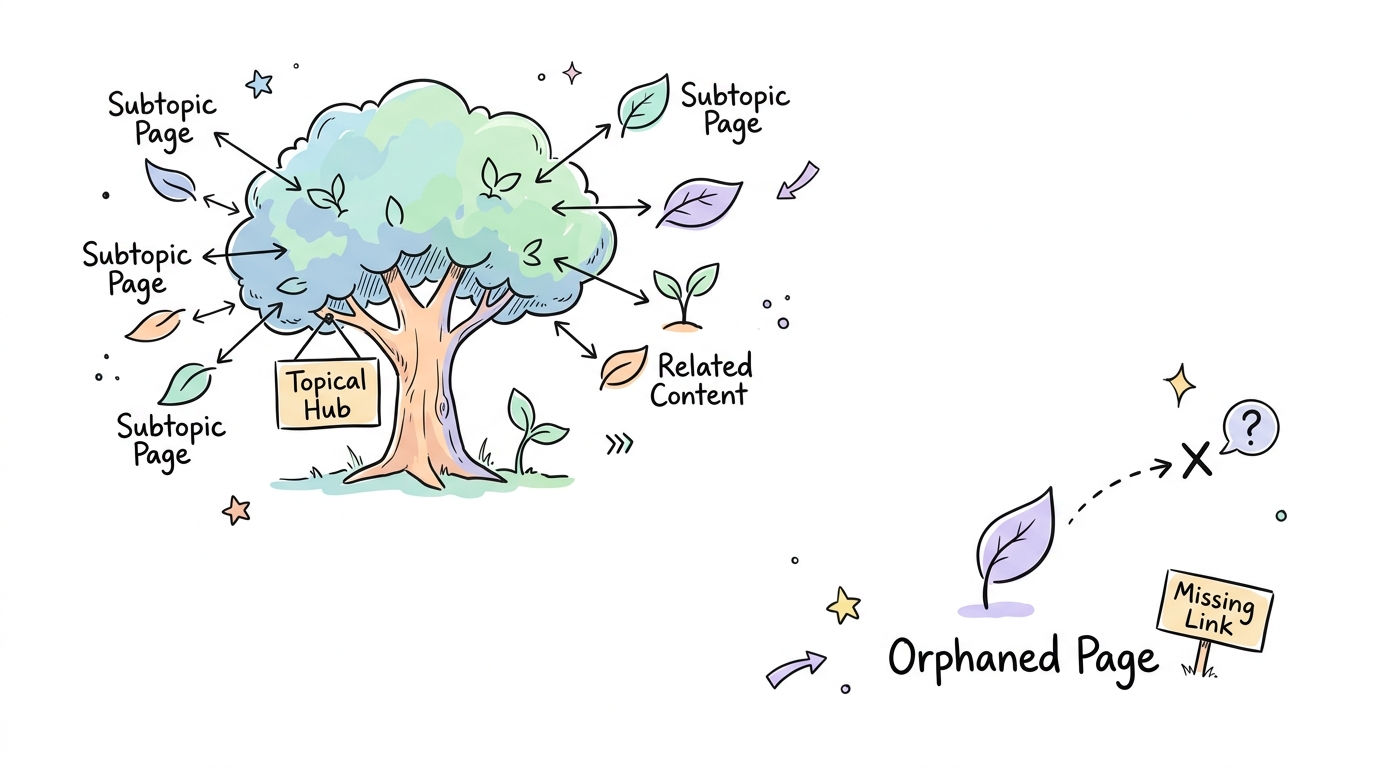
- If you need to hit exact part numbers or IDs, stick to Lexical methods to stay precise.
- If you want to show up in AI Overviews, use Semantic Clustering to show you have depth.
- If you have a huge list of data and a slow server, Lexical grouping is faster.
- If you want people to trust you for a long time, Semantic clustering is the way to go.
You also have to think about Query Fanout. This happens when someone asks an AI a question and then asks three more things right after.
Pitfall: If you don't answer those natural follow-up questions in your side articles, you leave gaps that your competitors will fill.
Future-Proofing Your Authority
Being the go-to expert on a topic creates a gap that competitors can't easily close. Regular SEO might get you started, but semantic SEO keeps you visible as AI takes over.
The W3era 2026 report shows that search is now about context, not just words. Your last step is to make sure you are getting indexed fast. Clusters that are linked tightly together usually get found faster and stay in the rankings longer than random posts. Stop chasing one keyword and start building a place where people find all the answers.
 Kitful