Blog7 Steps to Get Your Brand Cited in Google AI Overviews and Perplexity AI
7 Steps to Get Your Brand Cited in Google AI Overviews and Perplexity AI
Traditional ranking is dead; citation is the new currency. Learn the exact 7-step framework to make your brand the primary source for Google Gemini and Perplexity AI.
•6 min read
Old school search traffic is tanking. By 2026, getting on the first page of Google isn't the final win anymore.
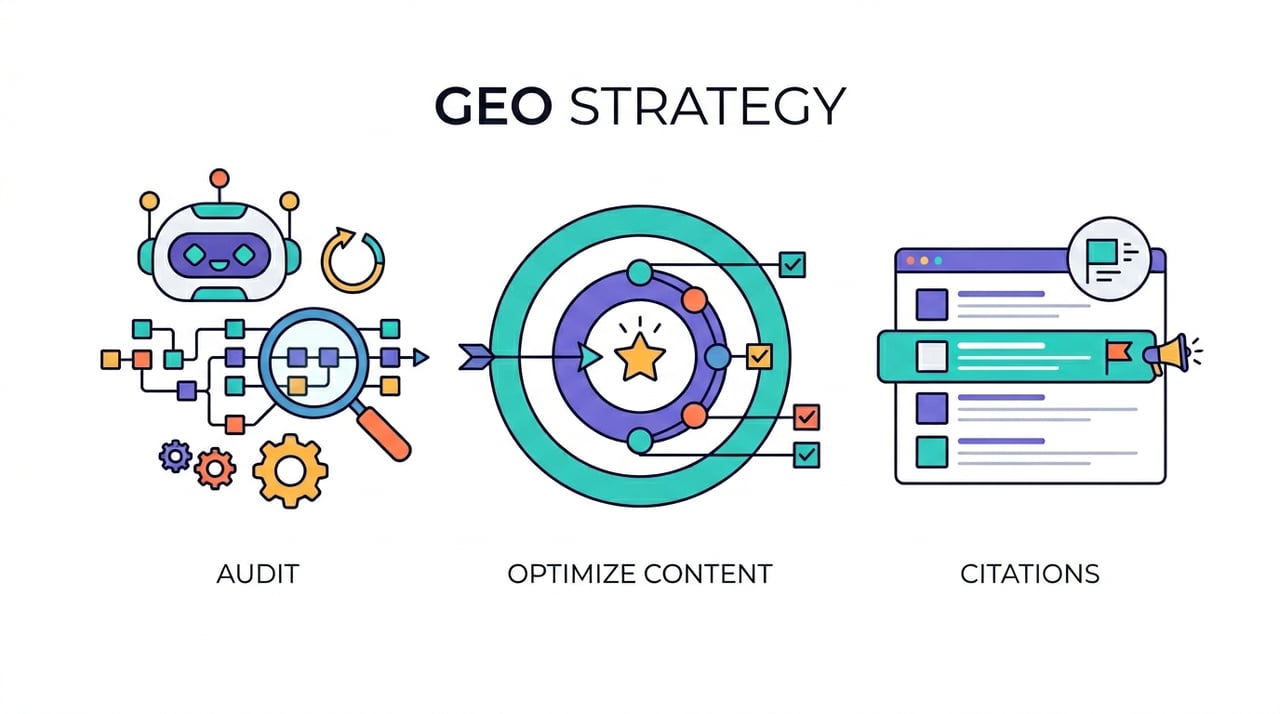
AI summaries are stealing clicks before users ever see your link. If you aren't the source for that summary, you're basically invisible. To stay ahead, you have to rank in google ai overviews or you'll be left behind. This shift to GEO, or Generative Engine Optimization, is the new way to survive.
Moving from ranking documents to getting cited is the biggest change in search history.
The 2026 AI Citation Playbook: Key Takeaways
AI engines want clear, short, and very new content. You need to stop worrying about keyword density and start focusing on entity mapping.
About 25% - 48% of US searches now show AI Overviews.
Keep content fresh. Update your main pages every 30 days.
Getting cited often goes along with using both video and text.
AI models care more about figuring out who you are than how old your site is.
You can't fix what you aren't tracking. Start by figuring out your AI Share of Voice (SOV) to see your current spot.
Use test prompts on Perplexity and Google to check your brand's visibility. Treat your Citation Rate like your new Click-Through Rate.
Run searches for your main service categories.
See which competitors the AI picks instead of you.
Check the specific claims the AI makes using their content.
Find spots where the AI doesn't cite any source for a key fact.
Note: Use a tool like Otterly.AI to track your visibility across different AI engines automatically.
Step 2: Fix Technical AI Crawlability and Entity Mapping
AI models don't just read your words. They try to figure out your brand as a single entity. If your robots.txt file blocks them, you've lost before you even started.
Make sure PerplexityBot and GPTBot can get to your best pages. Using the same brand name on your site, LinkedIn, and Wikipedia is a must.
Check your robots.txt for rules that block AI agents.
Keep your facts the same everywhere to avoid confusing the AI.
AI models use these signals to figure out who you are. If your LinkedIn says one thing and your site says another, the AI will probably pick a source that stays consistent.
Step 3: Restructure Content with the BLUF Inverted Pyramid
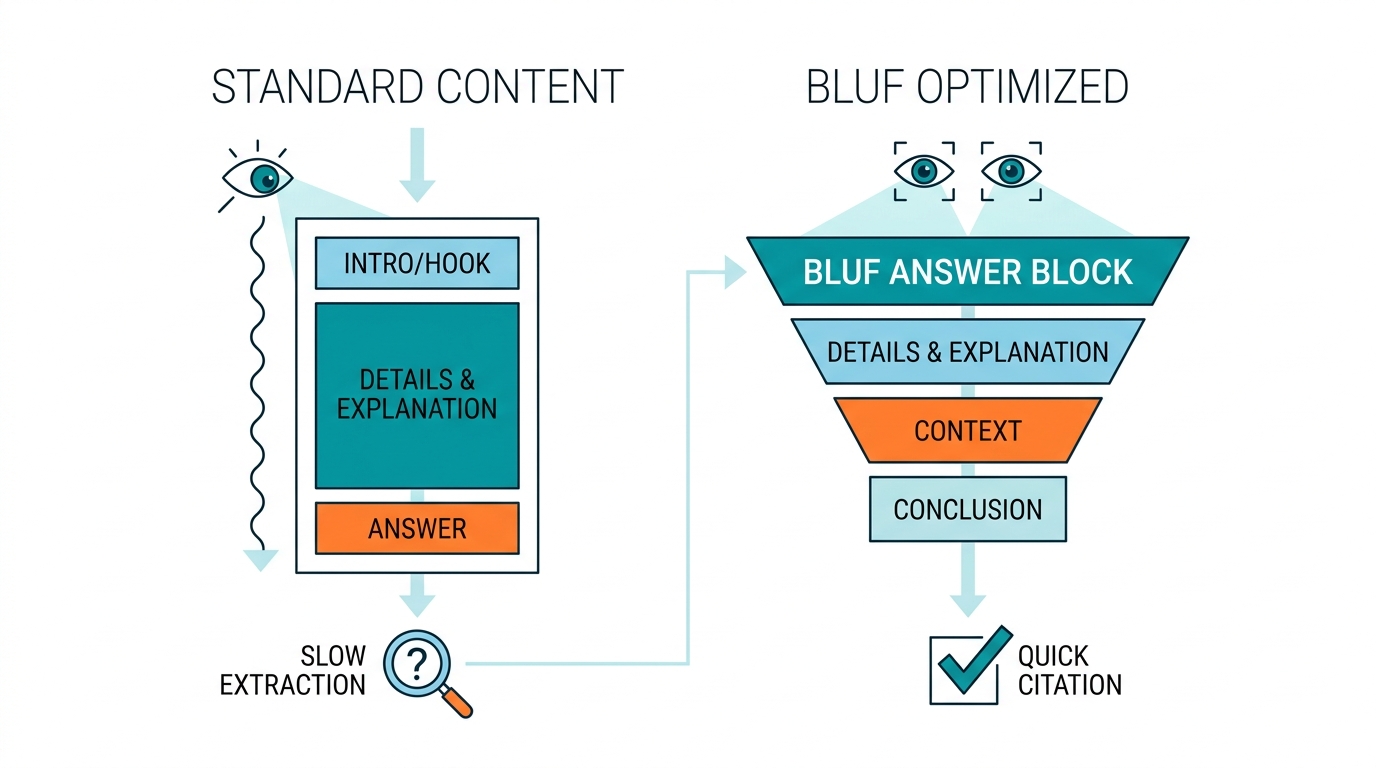
AI engines scan rather than read. They want chunks of info they can pull into a summary response easily.
Use the Bottom Line Up Front (BLUF) rule as your new standard. Put a direct answer right after every H2 heading.
Keep these BLUF summaries between 40 and 80 words.
Use short sentences and skip the heavy jargon.
Make sure the summary works even if the rest of the page isn't there.
Think of every section as its own piece of info. If an AI pulls your 60-word summary, it should give the user the full answer without needing more context.
Step 4: Maximize Semantic Concept Density
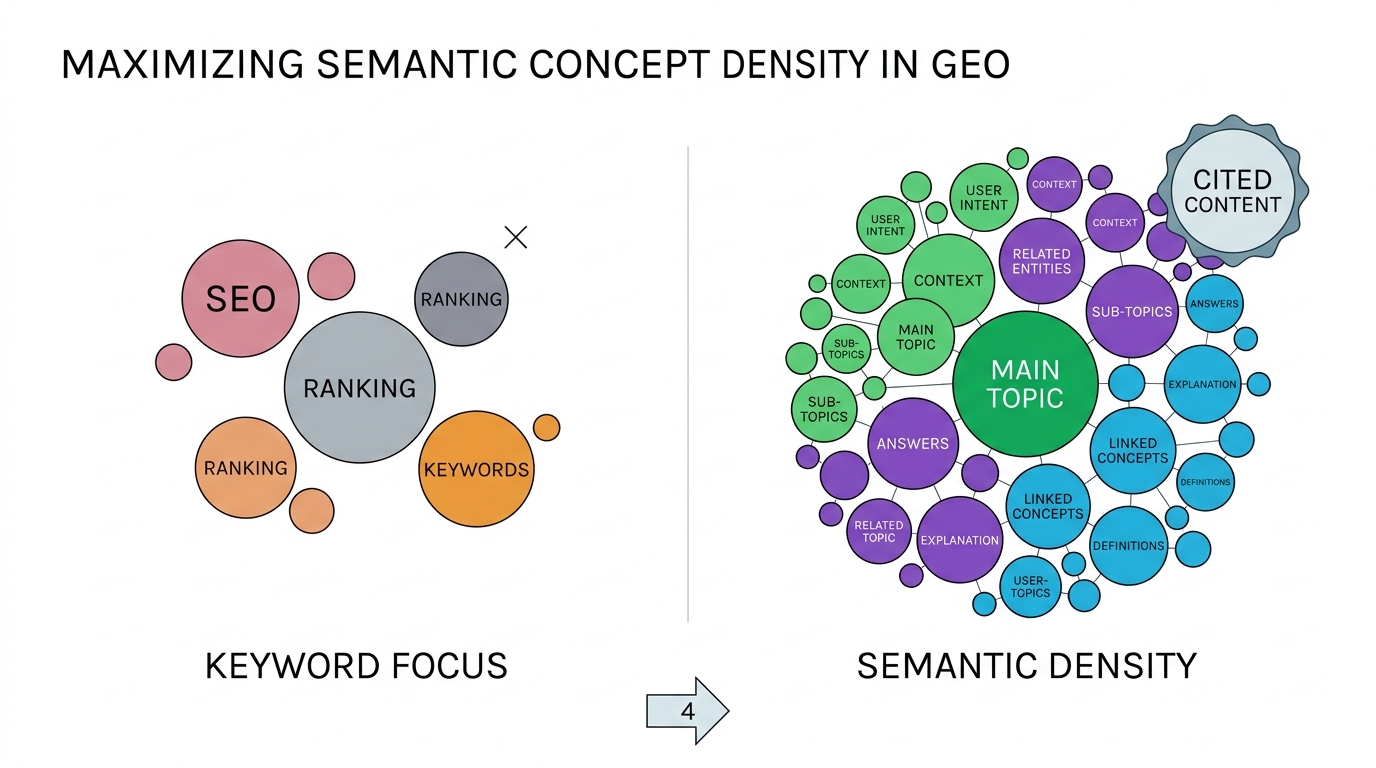
Stuffing keywords is old news. In 2026, covering a topic fully is a major ranking factor for models like Gemini.
You have to map out the whole subject to be seen as an expert. Content that gets cited usually has 32% more clear concepts than pages that get ignored.
Map out the side topics related to your main subject.
Focus on covering the whole idea instead of just repeating one word.
If you write about CRM software, the AI expects to see things like lead scoring, API links, and churn rate. Missing these pieces tells the machine your content is too shallow.
Step 5: Increase Information Gain with Original Data
AI avoids copycat content that just repeats what it already knows. These models look for Information Gain. They want something new.
Add your own stats, private data, and expert quotes. Pages that use both text and video get 317% more citations.
Add original data that can't be found anywhere else.
Use peer-reviewed links to back up technical claims.
Mix in YouTube tutorials to give the AI more to work with.
Rule: Every main page needs at least one original stat or expert quote to get high-trust citations.
Step 6: Cultivate Off-Page Social Citations
AI systems check what they know by seeing what the rest of the web says about you. Your site's authority matters less than social signals from other places.
Perplexity AI uses Reddit a lot for specific topics and cites it in almost half of its answers. Google AI Overviews use YouTube transcripts for nearly 19% of their summaries.
Stay active in relevant Reddit communities.
Make videos that answer specific, high-intent questions.
Get mentioned on review sites and industry news pages.
If people are talking about you on other platforms, the AI is more likely to trust your site. Real trust happens outside your own domain.
Step 7: Commit to a 30-Day Freshness Cycle
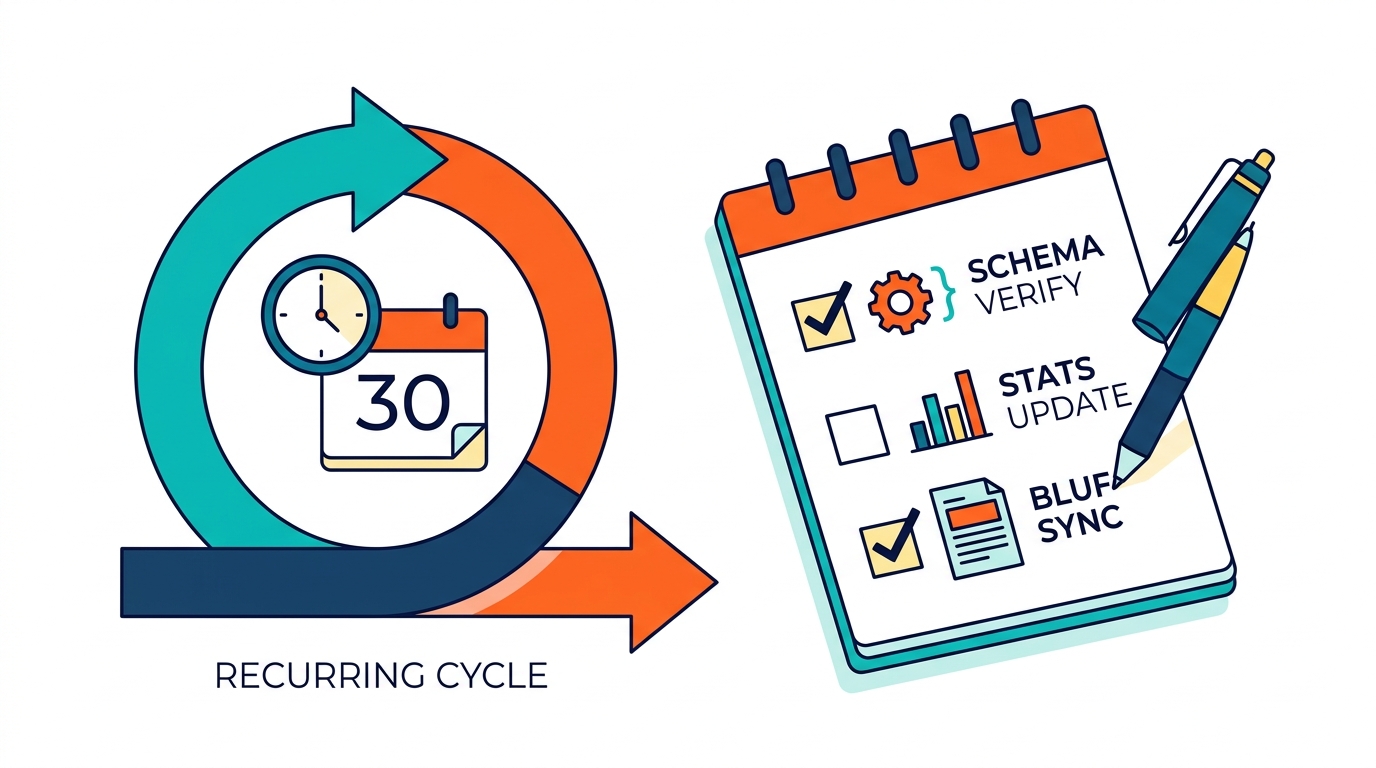
Being new is a huge deal for AI engines. If your content is older than a month, your chances of getting cited go way down.
About 76.4% of pages cited on Perplexity were updated in the last 30 days. Content older than that sees a 40% drop in citations.
Review your top 10 most cited pages every four weeks.
Refresh your stats and update your BLUF blocks.
Check that your dateModified schema updates after every edit.
This cycle keeps you at the top of the AI's recent knowledge. A stagnant page is a dead page in the GEO world.
Comparing Visibility Factors: Google AIO vs. Perplexity AI
Google and Perplexity use different logic to select their sources. Understanding these nuances helps you decide where to focus your resources.
Traditional ranking signals still carry weight for Google. However, Perplexity is looking for the most current conversation.
Frequently Asked Questions About AI Citations
Does GEO replace traditional SEO?
No, it adds to it. You still need a fast site that bots can crawl. But now you also have to make it easy for machines to pull info and cover topics fully.
Why is my site not being cited despite ranking high?
AI models often skip the top result if the content is too long or doesn't have a direct answer. Use BLUF summaries so the machine can find your main point fast.
How do I stop AI bots from scraping my site?
You can block them in robots.txt, but that also removes you from AI summaries. To be visible in 2026, you have to let bots like GPTBot and PerplexityBot in.
Do I need to use schema for every page?
Start with your most important pages. Use FAQ and Article schema to give the AI clear context it can easily trust.
Winning the GEO Arms Race
The move from old search to AI engines is here to stay. To keep up, stop writing for keywords and start building a brand that bots trust.
Start your 30-day update cycle and change your page layout to offer something new. Use tools like kitful.ai/write-tools to make sure your content is deep enough for 2026.
The shift from traffic to trust is happening right now. Start optimizing today or you'll just be a ghost in the machine.
 Kitful