BlogAI Workflow and Examples: Automating Tech Comparison Tables for Maximum SERP Visibility
AI Workflow and Examples: Automating Tech Comparison Tables for Maximum SERP Visibility
Writing manual tech reviews is no longer viable. Discover the database-driven programmatic playbook to build structured HTML comparison tables optimized for GEO, LLMs, and Google AI Overviews.
•7 min read
Writing individual blog posts reviewing one product at a time is a dead business model in 2026. The manual affiliate grind of chasing single-product search queries has collapsed under the weight of generative answer engines. Today, users do not want to scroll through thousands of words of introductory fluff to find out whether Product A beats Product B. They want the bottom line immediately, and so do the AI agents that serve them.
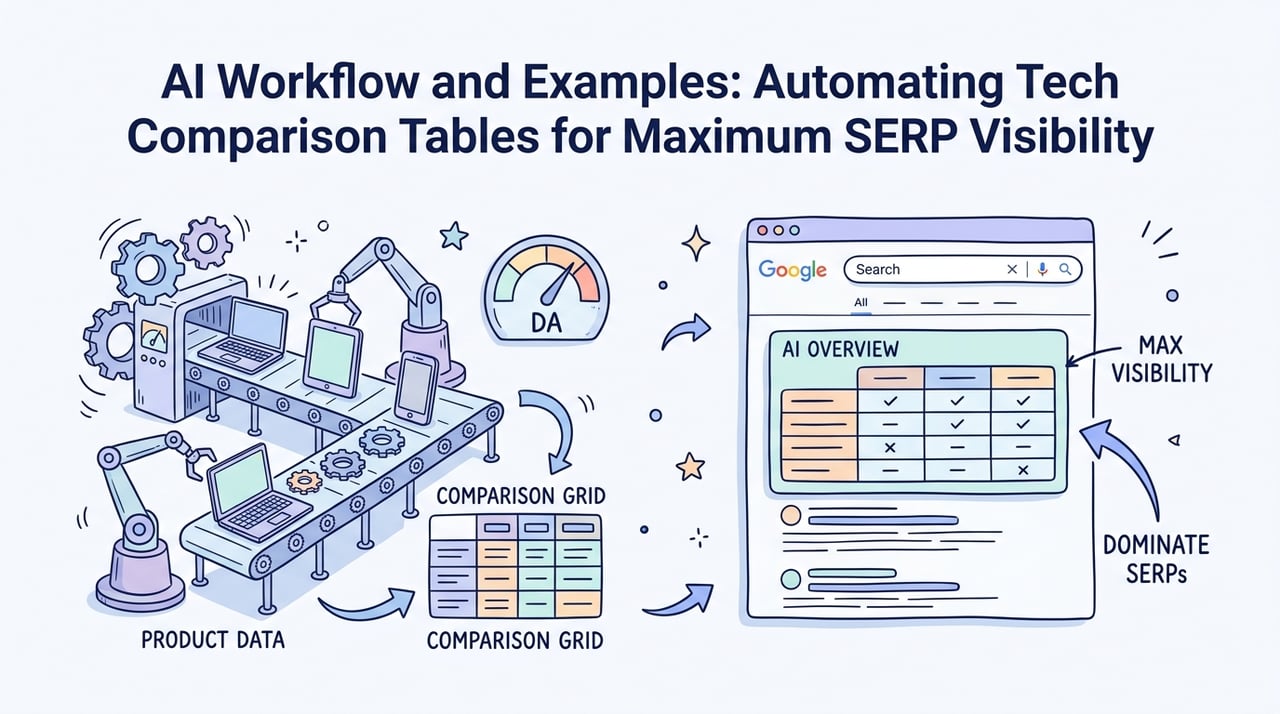
Success now requires Generative Engine Optimization (GEO). By shifting to structured, comparison-heavy programmatic layouts, you can capture modern search traffic at scale. Programmatic comparison tables serve as the ultimate vehicle for this shift, transforming static reviews into dynamic, machine-readable datasets that dominate search engine results.
The AI Comparison Playbook: High-Level Takeaways
Before diving into the technical execution, here is a quick summary of how automated tech comparison tables reshape your search visibility in 2026.
Structured Rosetta Stone: Clean HTML comparison tables serve as the Rosetta Stone for LLM algorithms, translating complex product attributes into easily parsable data.
Scale Over Manual Effort: Converting unstructured specifications into structured database variables allows you to generate thousands of comparison pages in minutes.
AI Citation Growth: Structuring your pages specifically for answer engines dramatically increases your probability of being cited in Google AI Overviews, Perplexity, and ChatGPT.
Zero-Click Immunity: Delivering direct, visual product answers keeps users engaged on your page, protecting your traffic from zero-click search patterns.
Why Do Google AI Overviews Prioritize Structured Comparison Tables?
80% of informational Google searches now end in zero clicks.
This shift, highlighted by Similarweb Traffic and Zero-Click Analysis, means traditional search results are increasingly bypassed. Google AI Overviews and other answer engines digitalize and synthesize web content directly on the search page, extracting facts so users do not have to click through.
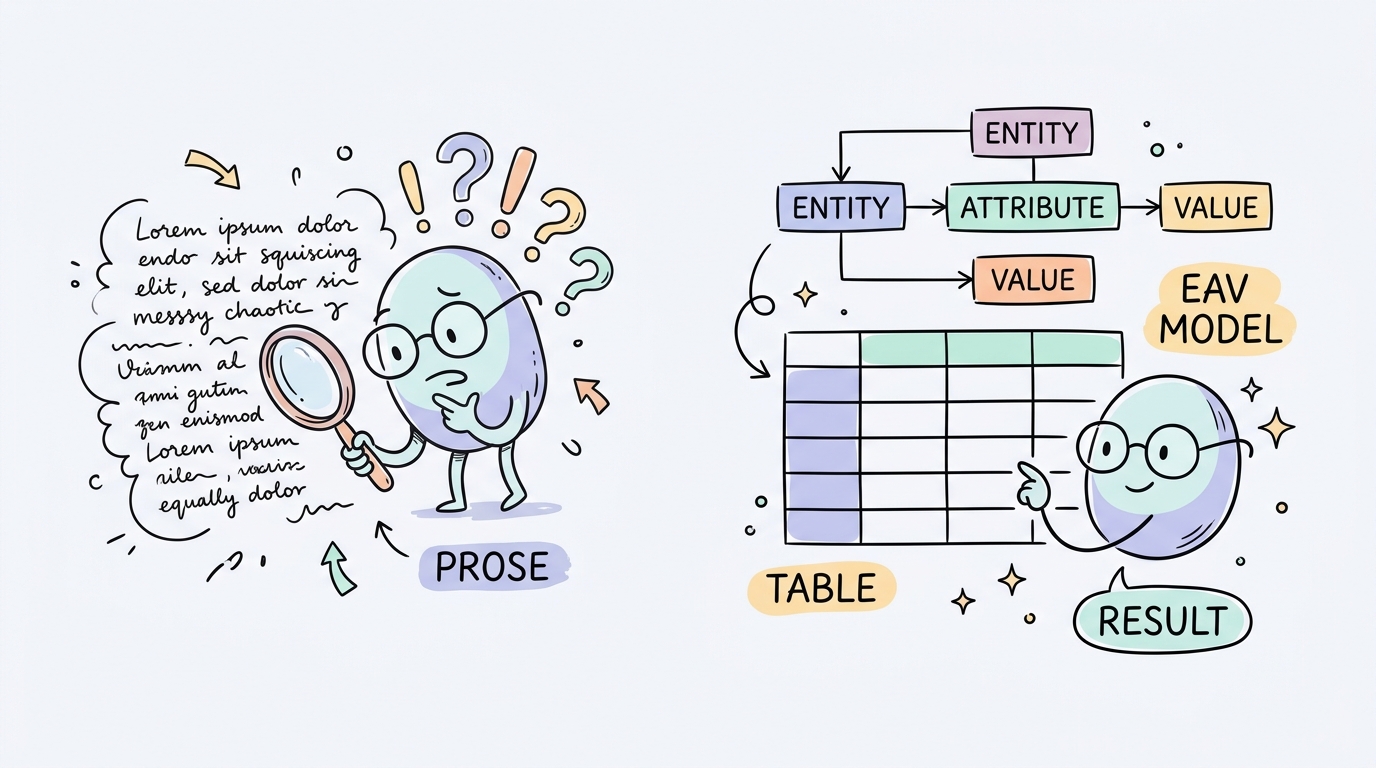
To survive in this environment, you must adapt your content to how these AI models think. Large language models (LLMs) rely heavily on the Entity-Attribute-Value (EAV) model to map the web. This model identifies an entity (such as a software product), its attributes (like pricing or features), and the values of those attributes. Structured HTML tables display these relationships with absolute clarity.
When you present data in a clean HTML grid, you minimize the computational load required for an AI model to parse your page. AI agents can easily extract and cite your data because they do not have to guess. Conversely, using static images instead of real HTML text for your tables is a critical mistake. Static images completely block search crawlers and AI agents from reading your comparison data, rendering your pages invisible to automated search systems.
If you want to understand how generative engines determine which sources to cite in these structured summaries, watch this video:
By aligning your design with machine readability, you secure your place in the future of search.
How Do You Scale From 1 to 1,000+ Automated Comparison Pages?
Transitioning from manual content creation to an automated comparison machine requires a reliable pipeline. Here is how you can construct your programmatic SEO system from scratch.
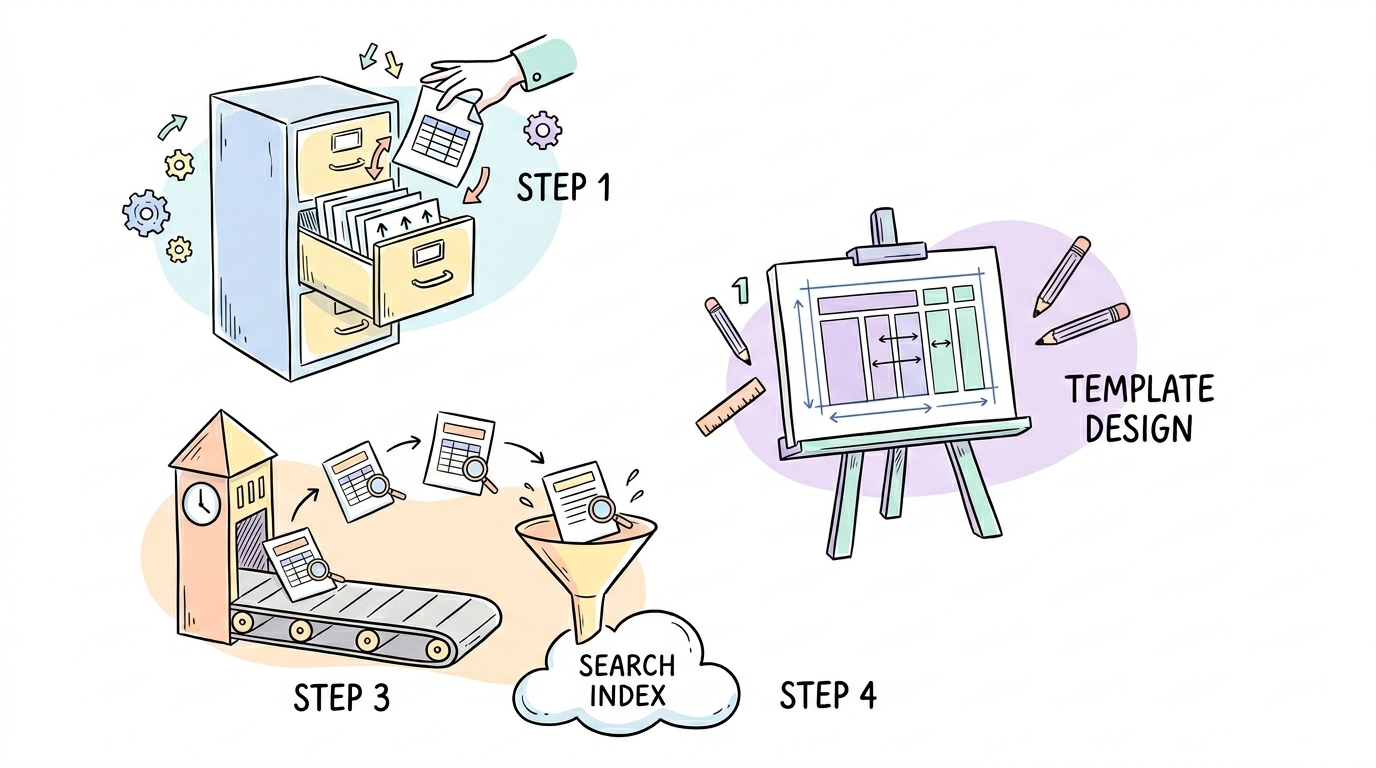
1. Compile Product Specifications
Build a centralized database using tools like Airtable, Baserow, or raw CSV files to serve as your single source of truth. Map out product names, technical specifications, prices, affiliate links, pros, and cons.
2. Design the Comparison Template
Create a clean, responsive HTML or Markdown comparison matrix. Ensure that your design utilizes actual text and responsive table elements, allowing your layout to adjust seamlessly to mobile screens.
4. Implement Structured Schema
Set up your publishing engine to automatically inject valid JSON-LD schema markup into every comparison page. Ensure your template maps database fields directly to Product, FAQPage, and Review schemas to make your pages fully machine-readable.
5. Deploy the Daily Drip Strategy
Avoid publishing thousands of programmatic comparison pages simultaneously, as this can trigger search engine spam filters. Instead, schedule your content to drip feed onto your site at a rate of one to five pages per day.
6. Audit and Interlink
Establish deep topical authority by linking your newly generated comparison pages back to your main category hubs and detailed single-product reviews. Continuous internal linking tells search crawlers how your pages relate to one another.
Consider a digital publisher migrating from manual reviews to programmatic databases. By shifting their product catalog to a structured setup, the team scaled comparison production from two articles per week to hundreds of pages. This programmatic shift reduced their task overhead from weeks of manual writing to just a few hours, yielding massive efficiency gains.
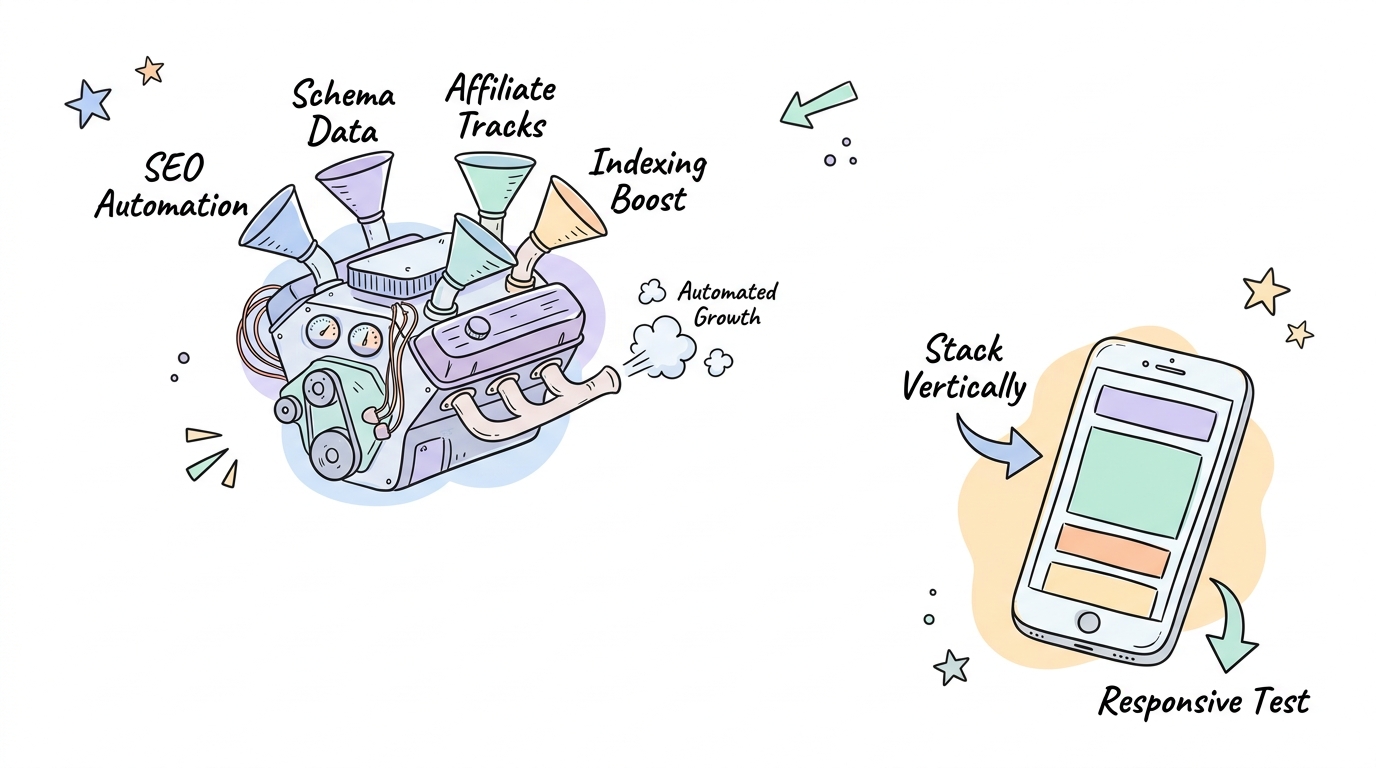
Tip: Always run your comparison templates through mobile responsiveness tests. If your tables are too wide, use CSS to stack the columns vertically on mobile screens to maintain a high-quality user experience.
Choosing Your Engine: The Ultimate Programmatic Tech Stack Compared
Selecting the right software to drive your automated comparison engine determines how quickly you can scale. Different platforms cater to specific publishing workflows, technical capabilities, and monetization styles.
If you want an end-to-end autoblog and content manager that drafts and publishes SEO-optimized posts automatically, you can also leverage Kitful AI to streamline your wider content operations.
How Do You Configure Schema Markup for AI Search Indexing?
To win AI citations, your programmatic comparison pages must communicate in a language machines understand natively. Standard HTML tables are excellent, but integrating structured schema markup from Schema.org Official Structured Data Vocabulary provides the definitive structural mapping search engines crave.
By deploying structured data, you directly inform search crawlers of your product ratings, pricing, and key features. This structured approach prevents AI search engines from hallucinating technical specifications.
Below is a structured JSON-LD schema block designed to map product specifications, user reviews, and FAQs on your comparison pages.
{
  "@context": "https://schema.org",
  "@graph": [
    {
      "@type": "Product",
      "name": "SaaS Platform A",
      "description": "Enterprise-grade programmatic SEO management software.",
      "offers": {
        "@type": "Offer",
        "price": "49.00",
        "priceCurrency": "USD"
      },
      "aggregateRating": {
        "@type": "AggregateRating",
        "ratingValue": "4.8",
        "reviewCount": "124"
      }
    },
    {
      "@type": "FAQPage",
      "mainEntity": [
        {
          "@type": "Question",
          "name": "How does Platform A compare to Platform B?",
          "acceptedAnswer": {
            "@type": "Answer",
            "text": "Platform A offers robust API access and faster page speeds, whereas Platform B focuses on no-code integrations."
          }
        }
      ]
    }
  ]
}
Rule: Never publish live comparison pages without verifying your structured data. Always run your pages through the Google Rich Results Test to ensure your schemas contain zero formatting errors.
Scalability and Penalty Mitigation: Frequently Asked Questions
Why does Google's AI Overview prioritize comparison tables?
Google AI Overviews prioritize clean comparison tables because they organize complex relational data using the Entity-Attribute-Value format. This clear formatting reduces the computational workload for AI models, allowing them to extract and synthesize direct answers without having to parse long-form paragraphs.
What is the best schema markup for product comparison pages?
The best schema setup combines Product schema for technical specifications, FAQPage schema for answering common long-tail search queries, and Review or AggregateRating schema for displaying trust signals. This multi-layered structured markup ensures search engines can validate your product data cleanly.
How do I build 1,000+ comparison pages without getting penalized by Google?
To scale comparison pages safely, avoid bulk-publishing thousands of unedited AI pages simultaneously. Instead, utilize a drip publishing pipeline to release a few pages daily, integrate unique proprietary data inputs to bypass thin-content filters, and maintain an active internal linking structure.
What is Google's Site Reputation Abuse policy in 2026?
Google's Site Reputation Abuse policy targets third-party hosted content that exists solely to exploit a host site's ranking authority without editorial oversight. To stay safe, ensure your comparison hubs are natively integrated, match your core site's niche, and feature genuine human editorial review.
Building Your Defensible Search Footprint for 2026
The days of manually typing out single-product review blogs are gone. Winning in the modern AI-driven search ecosystem requires embracing database-driven programmatic engines that scale your content production effortlessly.
By pairing clean HTML tables with comprehensive schema markup and human-verified product attributes, you build a highly authoritative review hub. This programmatic approach ensures your site remains highly visible to both human readers and search engine crawlers alike.
Begin by gathering your core product specifications into Airtable, map out your programmatic template, and establish your daily publishing schedule to secure your search footprint for 2026.
 Kitful