BlogAutomated Keyword Clustering: Best AI Tools and Methods for Modern SEO Architecture
Automated Keyword Clustering: Best AI Tools and Methods for Modern SEO Architecture
Keyword clustering has evolved from a manual spreadsheet chore into a high-speed AI workflow. This guide breaks down the methods and tools needed to build GEO-ready topical maps in 2026.
•10 min read
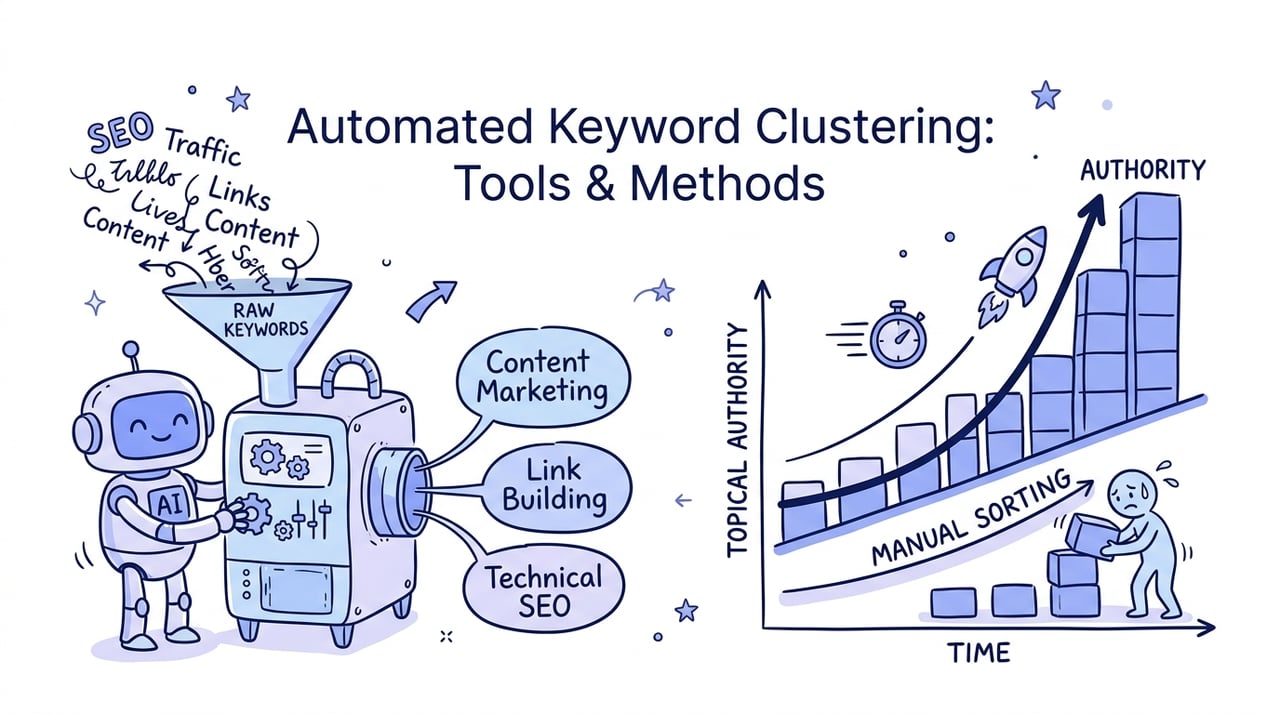
Most SEO professionals are still buried in spreadsheets, manually tagging thousands of search terms until their eyes blur. If you are spending 30 hours sorting a 5,000-row export from Ahrefs, you are operating at a massive competitive disadvantage. By 2026, 75% of marketers will have offloaded these manual tasks to AI agents to reclaim their strategic time.
The efficiency gap is staggering. While a human might take a full work week to categorize a complex niche, an AI agent can process that same list in 15 to 30 minutes. We are talking about a 50x speed increase in SEO architecture development that allows you to move from raw data to a finished site map before your coffee gets cold.
The Bottom Line: Clustering for Topical Authority
Modern SEO is no longer about winning a single keyword battle; it is about owning the entire topical war.
Topical authority is the primary ranking driver for 2026.
A single high-performing page can rank for over 1,000 relevant keywords if the cluster is structured correctly.
Clustering is the core foundation for Generative Engine Optimization (GEO) to ensure LLMs cite your brand.
Automated grouping prevents internal cannibalization by keeping related intents on a single pillar page.
Why Keyword Clustering is No Longer Optional in 2026
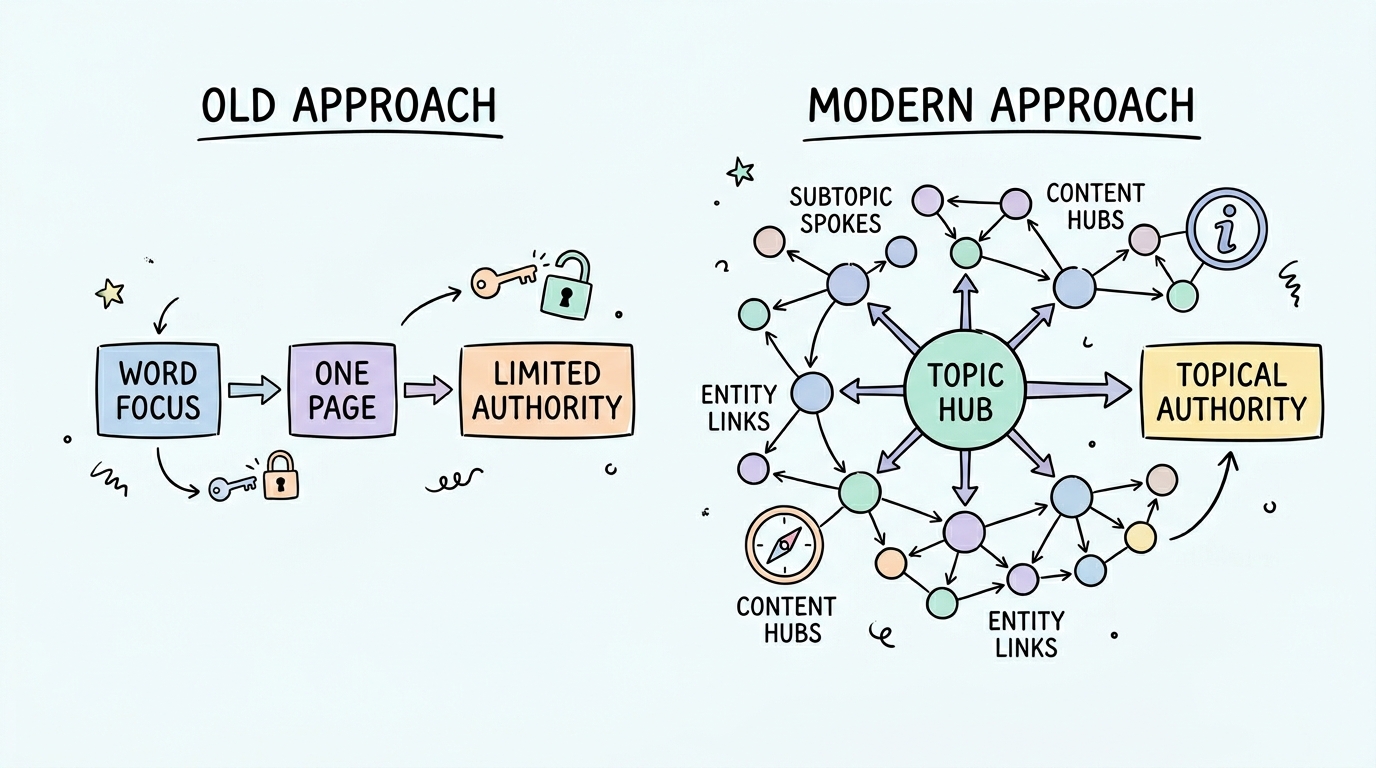
Google has shifted its focus from matching strings of text to understanding entities and relationships. If you want to rank today, you have to prove you are an expert on a subject, not just a writer targeting a high-volume phrase. Google's recent updates reward content depth and entity coverage over simple keyword density every single time.
Building a topical map is the process of defining every subtopic your site must cover to be seen as the ultimate resource. This map mirrors how LLMs like ChatGPT and Gemini organize their own knowledge bases. When your site architecture is a logical graph of related ideas, these AI engines find it easier to parse and cite your content.
Here's a walkthrough that covers the key steps:
This structural shift makes the old one-page-per-keyword model obsolete. Instead, we use a hub-and-spoke model where a central pillar page addresses a broad intent and smaller spoke articles cover specific sub-intents. This approach satisfies both the traditional search algorithms and the new generative answer engines that look for comprehensive topical depth.
The 3 Methods of Automated AI Clustering
Not all AI clustering is the same. To build a robust architecture, you need to understand the three primary ways software organizes your data.
SERP-Based Clustering: This is the gold standard. The tool looks at real-time search results for every keyword. If two keywords share three or more URLs in the top 10, the AI groups them together because Google clearly sees them as the same intent.
Semantic/NLP-Based: This uses Large Language Models to find conceptual relationships between words. It is excellent for emerging niches or blue-ocean topics where there isn't much SERP data yet. It focuses on the meaning behind the words rather than current rankings.
Pattern-Based: This is the most basic form. It groups words by shared root phrases or linguistic stems. While fast, it often fails to account for intent. For example, it might group how to bake bread with best bread for sale, even though those users want very different things.
If targeting established topics with stable rankings, use SERP-based clustering to mirror current intent logic.
If targeting emerging trends without existing search results, use Semantic/NLP methods.
If managing over 10,000 keywords, prioritize credit-based specialized tools over manual spreadsheet methods.
Tip: Always check the SERP Overlap setting in your tool. A 30% to 40% overlap is usually the sweet spot for grouping keywords without over-consolidating. For more on creating high-quality, intent-focused content, check the Google Search Central Quality Guidelines.
How to Build a Topical Map with AI in 5 Steps
Transitioning from a raw CSV of keywords to a structured topical map is a repeatable process. You just need a clear seed list and the right automation settings. Map every spoke article to support the pillar intent to ensure the authority flows upward through your internal links.
The Workflow
Gather Seed Keywords: Export every relevant query from Google Search Console, Ahrefs, or Semrush. Don't worry about cleaning them yet; the AI handles the bulk of the noise.
Export and Clean: Remove obvious duplicates or terms that are completely outside your business competency. A quick scan is all you need before the heavy lifting begins.
Run Automated Clustering: Upload your list to your chosen tool. Set the grouping aggressiveness to Medium to keep your clusters tight but comprehensive.
Define the Pillar Page: Identify the highest-volume, most competitive term in a cluster. This becomes your main hub page that will house the broad overview of the topic.
Map Spoke Articles: Assign the remaining keywords in the cluster to supporting articles. Each spoke should address a specific sub-intent that the pillar page only mentions briefly.
Building the Graph
Once the clusters are ready, you must build a graph-informed link architecture. Every spoke article must link back to the central pillar page. For maximum authority, spokes should also link to other related spokes within the same cluster.
Consider Sarah, a content lead for a fintech startup who spent weeks manually sorting 5,000 search terms into categories. By switching to an AI clustering agent, she processed the entire list in 20 minutes and identified three major content gaps her competitors had missed. This allowed her team to launch three new content hubs in a single month, significantly increasing their topical coverage.
This systematic approach ensures that no keyword is left behind and no two pages are competing for the same spot in the SERPs. It turns a chaotic pile of data into a logical, rankable roadmap.
Top AI Tools for Automated Clustering in 2026
Choosing the right tool depends on your scale and whether you prefer SERP-based accuracy or conceptual mapping. Here are the top contenders for building a modern SEO architecture.
Keyword Insights
This is a professional-grade platform built specifically for large-scale operations. It uses live SERP data to ensure groups are based on what is actually ranking right now. Keyword Insights can process up to 200,000 keywords in a single job, making it the best choice for enterprise sites or massive affiliate projects.
Implementation: Upload your CSV, choose your target country, and set the clustering level. It provides a detailed report showing which keywords should be on which page.
Tradeoff: It operates on a credit-based system which can become expensive for very small hobby projects.
This tool is built for speed and visual clarity. It excels at taking a single seed topic and expanding it into a full site architecture. It can generate 800 to 1,200 clustered keywords in about 60 seconds.
Implementation: Enter your core niche and let the AI generate the hierarchy. It provides a visual map that is perfect for editorial planning.
Tradeoff: It relies more on semantic logic than live SERP data, so you should verify the groups for high-competition terms.
Surfer integrates clustering directly into its content editor workflow. Instead of a separate research phase, the tool suggests clusters as you build your content plan. This is ideal for smaller teams who want everything in one interface.
Implementation: Use the Topic Planner tool to enter a seed keyword. Surfer will suggest a list of pages to create, grouped by intent similarity.
Tradeoff: The clustering is less granular than dedicated tools like Keyword Insights.
This tool is unique because it connects directly to your Google Search Console. It clusters the actual queries you are already ranking for. This helps you identify where you are already winning and where your site structure needs consolidation.
Implementation: Connect your GSC account and let the AI analyze your performance data. It suggests which pages should be merged to improve topical focus.
Tradeoff: It is less useful for new sites that don't have GSC history yet.
InfraNodus
InfraNodus uses network graph theory to visualize keyword relationships. It identifies co-occurrence patterns that traditional tools miss. It is best for finding unique content gaps that your competitors have overlooked.
Implementation: Import your keyword list and view the resulting knowledge graph. Look for isolated clusters that aren't well-connected to your main topics.
Tradeoff: The interface has a steep learning curve compared to standard SEO tools.
SearchAtlas (OTTO)
SearchAtlas provides a full SEO suite with a heavy focus on automated execution. Their OTTO tool combines topical mapping with automated content creation. It is a one-stop shop for building and filling out a cluster.
Implementation: Use the topical mapper to identify clusters, then use the AI writer to generate the initial drafts for the spokes.
Tradeoff: Some users may find the all-in-one approach too restrictive if they prefer specific writing tools.
LowFruits
LowFruits is a budget-friendly option that specializes in finding low-competition niches. It uses a hybrid approach to clustering that balances SERP data with semantic meaning. It is perfect for niche site builders on a budget.
Implementation: Run a search for your niche and use the grouping filters to see clusters with the most weak spots in the SERPs.
Tradeoff: It is not designed for massive, enterprise-level keyword lists.
Comparing the Best AI Keyword Clusterers
Tool Name
Best For
Price
Pros
Keyword Insights
Large-Scale/Enterprise
Credit-based
Extreme SERP accuracy; handles 200k+ keywords
Topical Map AI
Speed & Visual Mapping
Subscription
Generates full maps in 60 seconds
Surfer SEO
Content Optimization
Subscription
Integrated into writing workflow
SEOcluster.ai
GSC Data Analysis
Freemium
Clusters existing ranking data directly
InfraNodus
Gap Detection
Subscription
Visualizes knowledge graphs for unique insights
SearchAtlas
Full Execution
Subscription
Combines mapping with automated content creation
LowFruits
Budget/Niche Sites
Pay-as-you-go
Excellent for finding low-competition keywords
Advanced GEO Strategies: Knowledge Graphs and Citation Rates
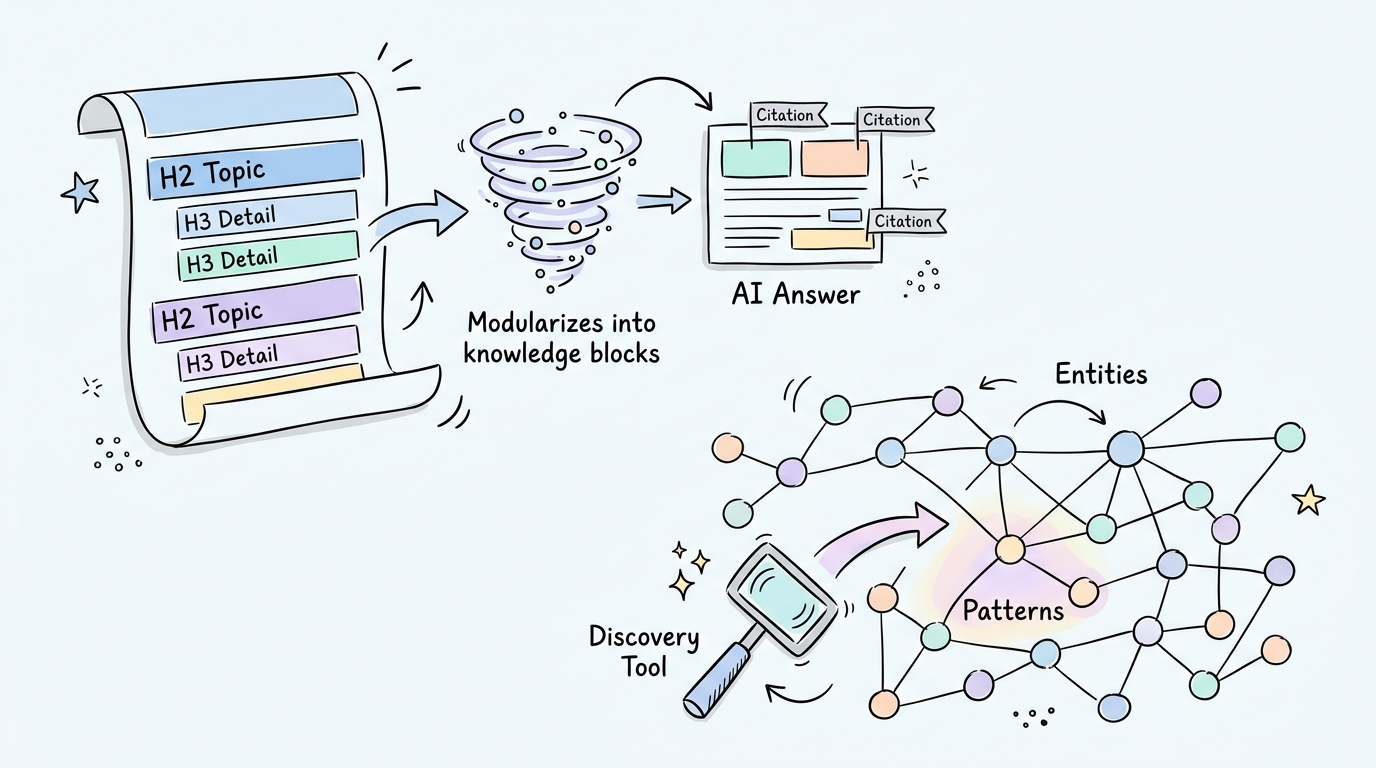
Generative Engine Optimization (GEO) is the new frontier for clustered content. When an AI engine like Perplexity or ChatGPT answers a user's question, it looks for sources with clear, logical hierarchies. Clustered content is significantly more likely to be cited by AI engines because it presents information in the modular way these models prefer.
SEO expert Eli Schwartz has noted that well-structured pages with clear H2 and H3 hierarchies have a 2.8x higher citation rate in AI answer engines. Clustered content naturally forces this hierarchy. By covering every sub-intent in a cluster, you provide the 'entities' that AI models use to verify facts.
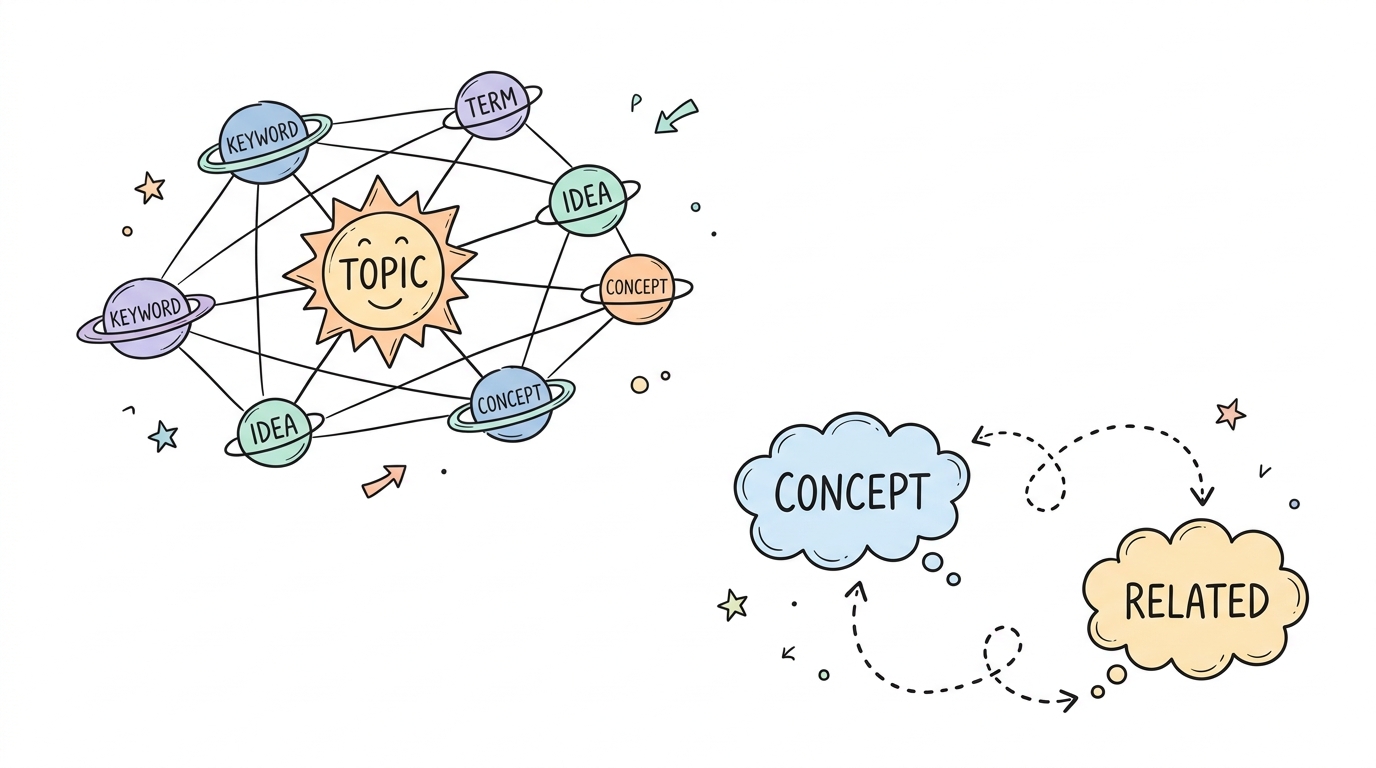
Using AI knowledge graphs can also reveal co-occurrence patterns that your competitors are missing. These graphs show which concepts are frequently mentioned together across the web. When you include these related concepts in your cluster, you increase your site's perceived relevance for the main topic. This topical consolidation helps you rank a single category page for thousands of long-tail variations without writing a separate post for every minor phrase.
Common Pitfalls in AI Automation
Even with the best AI, automation without human oversight can lead to messy site structures. The biggest risk is relying on morphology alone. Internal cannibalization happens when you target cluster keywords on separate pages because you didn't realize they share the same user intent.
Pitfall: Avoid the 'Parent Topic' trap. Sometimes AI will group keywords that look related but require different page types. For example, 'best yoga mats' (commercial intent) and 'how to clean a yoga mat' (informational intent) should usually be separate pages even if they are in the same cluster.
Identify the primary intent for every cluster before you start writing.
Check for SERP overlap manually if the AI groupings look suspicious.
Ensure every spoke article links back to the pillar page.
Avoid creating separate pages for keywords with over 40% URL overlap.
Review clusters for niche-specific jargon that AI might misinterpret.
Consolidate thin pages that cover the same sub-intent into a single, comprehensive guide.
Mastering Modern SEO Architecture
AI allows us to cluster keywords at a scale that was impossible just a few years ago. However, the software provides the structure; you provide the strategic priority. Use these tools to handle the heavy lifting of data organization so you can focus on building authority and serving your users.
Remember the simple verification rule: If the top 10 search results for two different keywords share three or more URLs, those keywords belong on the same page. Modern SEO is a balance between technical architecture and human insight. Build your topical maps, link your clusters, and start dominating your niche one topic at a time. Your next step is to export your GSC data and see where your existing clusters are leaking authority.
 Kitful