BlogBeyond Backlinks: Building Citation Velocity on Reddit and Quora for AI Trust Scores
Beyond Backlinks: Building Citation Velocity on Reddit and Quora for AI Trust Scores
Traditional backlinks are losing their grip as AI search engines prioritize 'Citation Velocity' across community platforms. This playbook details the exact workflow to boost your brand's AI trust scores through strategic Reddit participation, Atomic Fact structuring, and Schema 4.0.
•7 min read
Your top-tier rankings are becoming invisible as zero-click search dominates the 2026 landscape. Ranking number one in blue links is no longer the win it used to be if you are not cited in the AI summary above it.
Generative engines now recommend specific voices and entities rather than just indexing pages. If your brand is not part of the retrieval set, your traffic will continue to bleed out.
The survival of your digital presence depends on moving beyond traditional backlinks. You need to build citation velocity to ensure AI models trust your authority enough to name-drop you.
The 2026 AI Trust Playbook at a Glance
Winning in the AI search era requires a shift from counting links to measuring how often LLMs cite your brand as an authority.
Seed community mentions: Brands active on Reddit and Quora see 347% higher citation velocity than those sticking to standard blogs.
Optimize the top 30%: Generative engines like ChatGPT pull 44.2% of their citations from the first third of your page content.
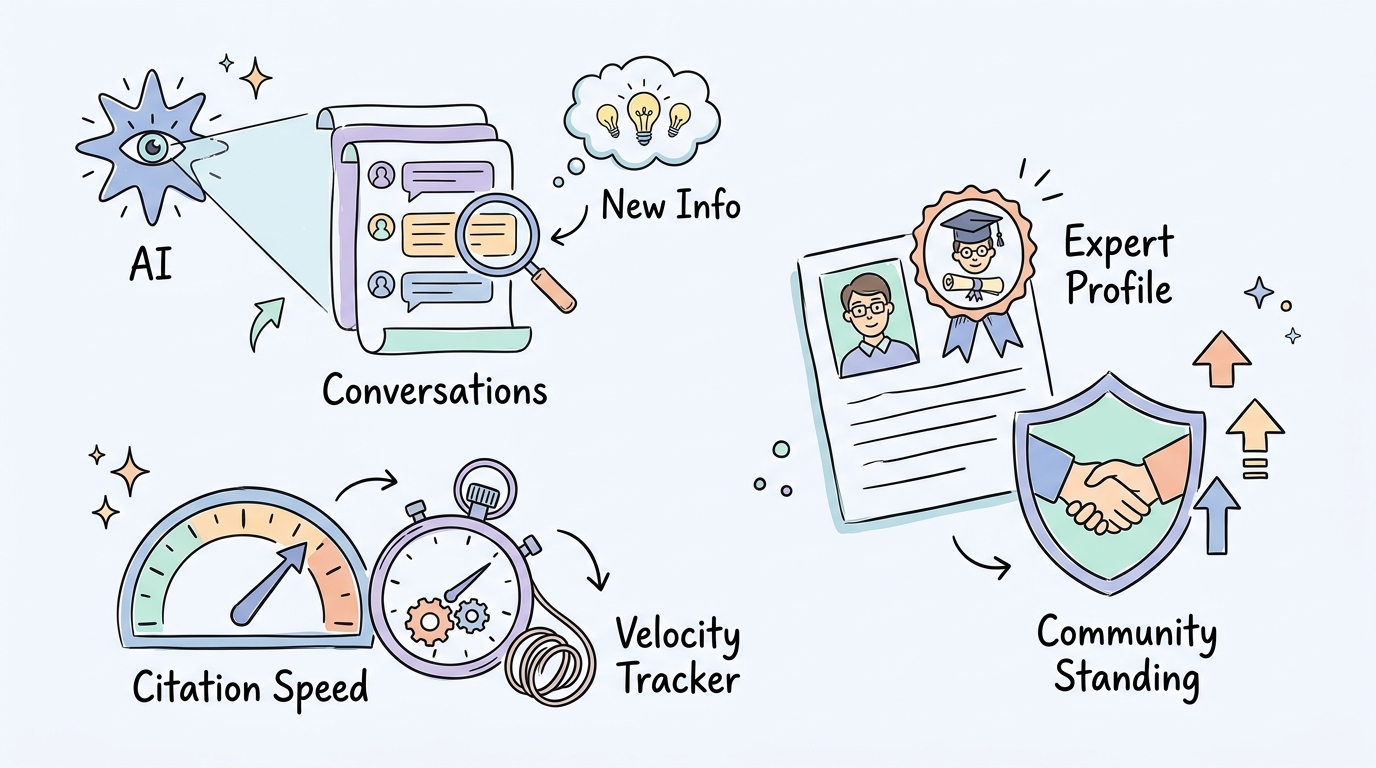
Verify identity: Use Schema 4.0 to link your content to verifiable expert identities via LinkedIn or Wikidata profiles.
Focus on freshness: AI models show a 3.2x bias toward content updated within the last 60 to 90 days.
What Is Citation Velocity for AI Search?
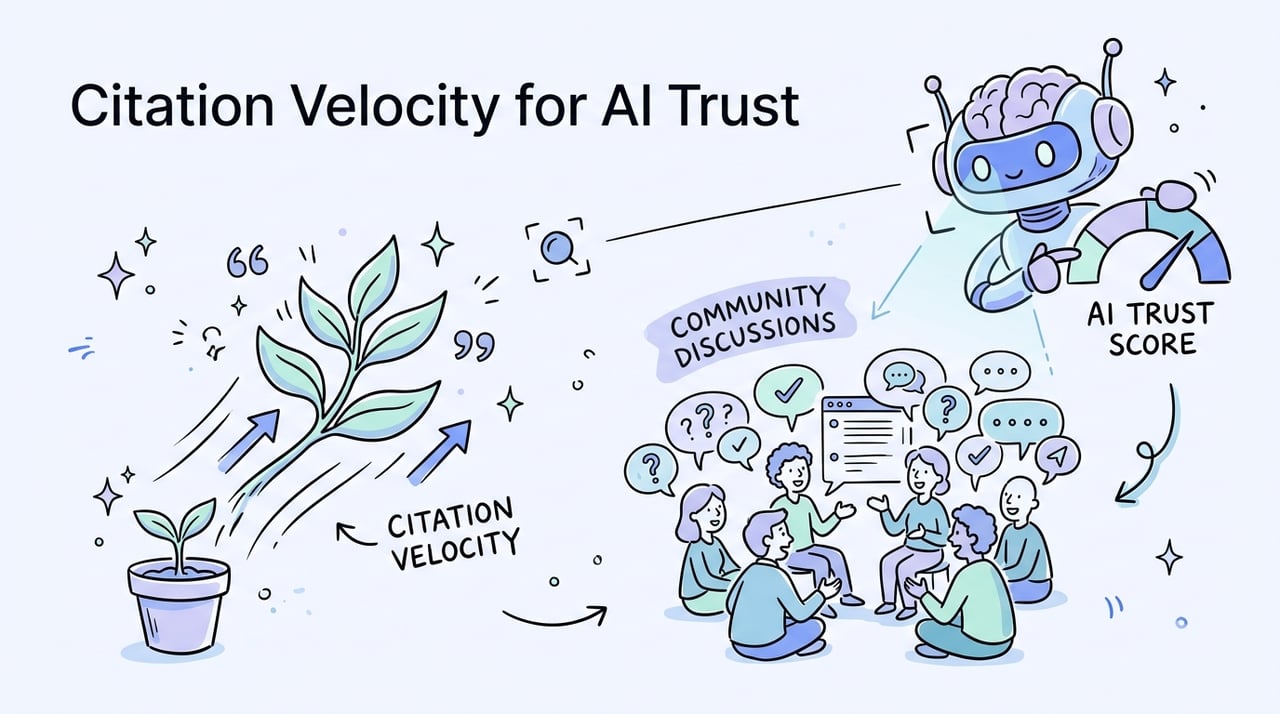
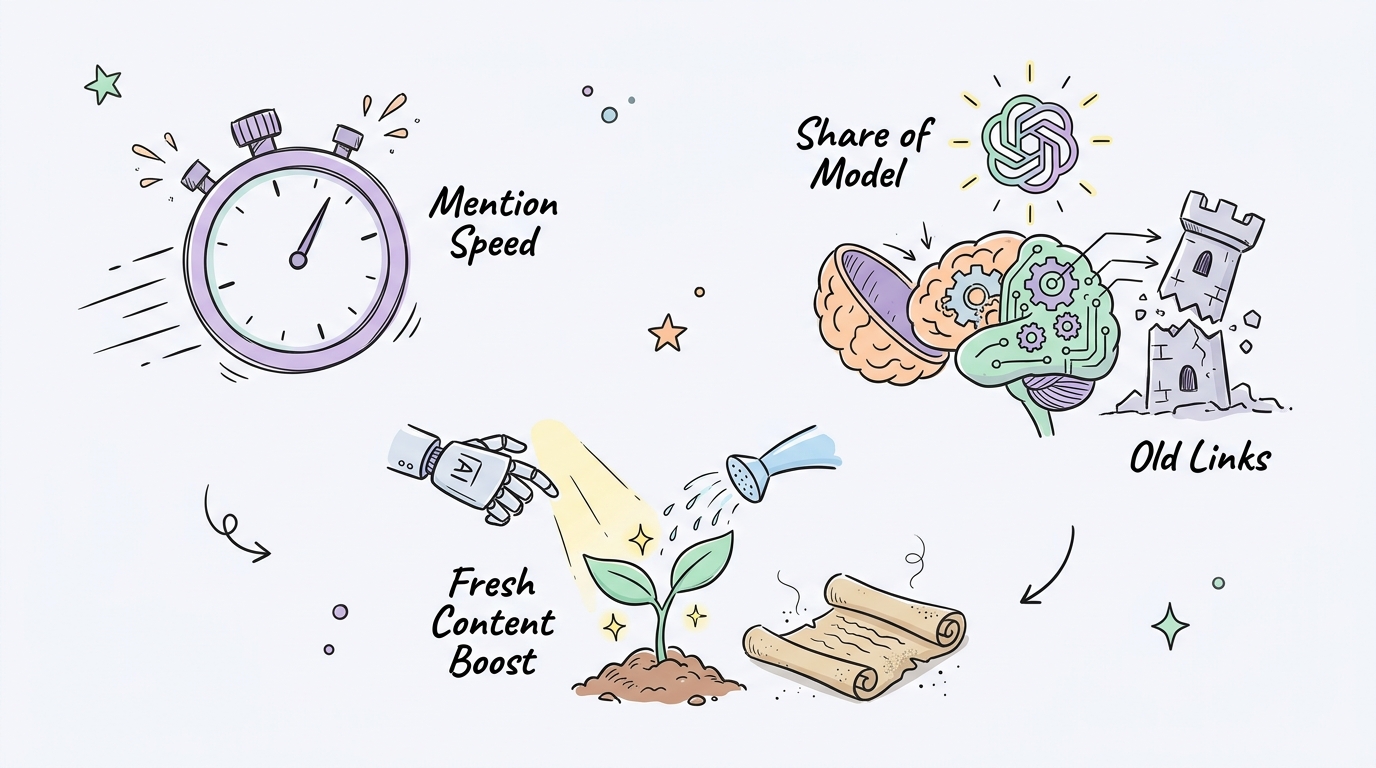
Citation velocity measures the frequency and speed of your brand mentions across LLM training data and retrieval-augmented generation (RAG) surfaces. It represents your true Share of Model (SoM) in a world where static rankings are fading.
Traditional search engines looked for links to determine authority. Modern AI engines look for consensus across community platforms like Reddit and Quora to verify facts.
Freshness is a critical weight in this calculation. AI models show a 3.2x bias toward updated data, meaning a stale page with high authority often loses to a newer page with precise 'Atomic Facts'.
Understanding the transition from SEO to AEO and GEO is the first step in this strategy:
This shift ensures your brand remains the primary source for generative answers instead of a forgotten link in the footer.
Audit Your Brand’s Current AI Footprint
You cannot improve what you do not measure, so start by identifying where the models are already citing your competitors. Run at least 30 industry-specific prompts across ChatGPT and Perplexity to see which entities are getting the spotlight.
Monitor your progress using specialized tools like Ahrefs Brand Radar to track brand mentions across the web. Identifying these citation gaps allows you to target specific queries where your voice is currently missing.
Identify 'fan-out' queries where AI asks secondary questions to verify a primary answer.
Document which third-party sources (listicles or forums) are frequently cited for your target keywords.
Map out the 'Information Gain' your site offers that competitors are currently lacking.
The Reddit and Quora Seeding Protocol
Reddit has become the most influential source for product queries in Google AI Overviews, holding a 21% share of all citations. To build trust, you must engage where the AI is looking for human consensus.
Avoid the mistake of dropping links into every thread you find. AI engines prioritize threads with high organic engagement and expert-level participation over promotional noise.
Using Kitful AI can help you draft research-backed insights that maintain a natural, human tone for these community discussions. This ensures your contributions are seen as helpful rather than spammy.
Find threads that are already appearing in AI citations for your core keywords.
Contribute 'Atomic Facts' or unique data points that add genuine value to the conversation.
Ensure your community profile is linked to your professional identity to build E-E-A-T signals.
Monitor the citation velocity of these threads to see if they influence future AI responses.
Tip: Focus on threads that are less than 90 days old, as AI models prioritize recent community sentiment to provide 'fresh' answers.
Structuring Content for RAG Extraction
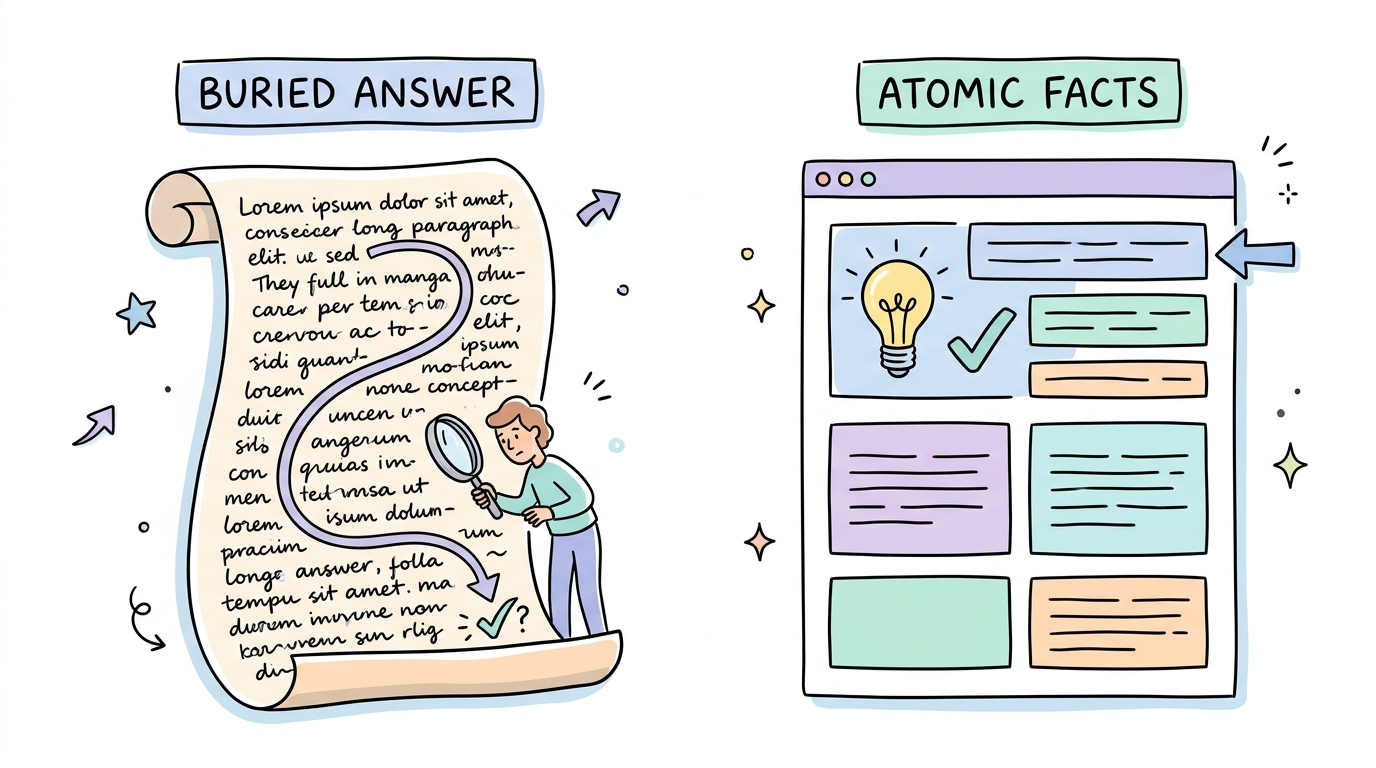
Structuring your pages for RAG systems requires moving the most important information to the very top. Since 44.2% of citations come from the first 30% of a page, burying the lead is a recipe for invisibility.
Inject short, dense sentences of 6 to 20 words—known as Atomic Facts—into your introduction. Targeted edits like adding expert quotes and fresh statistics can boost your visibility by 40% according to Princeton GEO research.
Example
Traditional approach: In this article, we will explore the various ways that citation velocity can help your brand grow in the long term through different AI channels.
Atomic Fact approach: Citation velocity measures how frequently AI models cite your brand. High velocity on Reddit increases AI trust scores by 347%.
Rule: Never place a generic introductory paragraph before your primary definition or answer. Generative engines prioritize pages that deliver immediate information gain over fluff.
Following the Princeton Research on GEO suggests that citations flow to the most concise and factual sources.
Technical SEO: Schema 4.0 and Entity Mapping
Machine communication requires more than just clean text; it requires structured data that clarifies who is behind the information. Schema 4.0 allows you to nest Person and Organization entities directly within your article markup.
Verify every author identity by linking their professional profiles. AI models cross-reference Wikidata and LinkedIn to ensure YMYL topics are handled by legitimate experts.
Check your robots.txt file to ensure you are not accidentally blocking GPTBot or PerplexityBot. If the bots cannot crawl your site, they cannot cite your facts in their training data.
Navigating the 2026 Site Reputation Abuse Penalties
Google's 2026 update regarding Site Reputation Abuse has effectively ended the era of 'Parasite SEO'. You can no longer rely on hosting third-party content on high-authority subdomains to manipulate rankings.
Defensible authority must now be built on your own domain through original research and community participation. Keyword stuffing has also become a negative signal, as it reduces your GEO visibility scores in modern retrieval systems.
You can read the full Google Site Reputation Abuse Policy to understand the strict boundaries between legitimate content and reputation manipulation.
Pitfall: Using anonymous or pseudonymous authors for health, finance, or legal topics. AI models will likely ignore content that lacks a verifiable expert footprint.
SEO vs. GEO: Comparing Performance Metrics
The metrics you track in 2026 must shift from traditional clicks to the actual influence your content has on generative models. This Mastering GEO 2026 Guide highlights the change in focus.
Metric
Traditional SEO
Modern GEO/AEO
Primary Goal*******
Page One Rankings
Share of Model (SoM)
Main KPI*******
Organic Clicks
Citation Frequency
Trust Factor*******
Domain Authority
Community Consensus
Content Focus*******
Keyword Density
Information Gain
Conversion*******
Direct Link Clicks
Assisted AI Conversions
A B2B SaaS company recently saw a 127% increase in leads just by tracking fan-out queries and ensuring they were the cited source for secondary verification questions.
Advanced SEO FAQ for the AI Era
What is a good Citation Velocity score?
There is no single universal number, but you should aim for your brand to appear in at least 3 out of 5 identical prompts on ChatGPT. This 30% consistency threshold indicates that the model has internalized your brand as a reliable entity for that topic.
How often should I refresh my content for AI search?
You should update your high-value pages every 60 to 90 days. AI models prioritize fresh data, and a regular update cycle can lead to a 3.2x increase in visibility compared to static pages.
Does social media activity affect Citation Velocity?
While traditional links from social media are often no-follow, the mentions and discussions on platforms like Reddit and Quora are heavily weighted. AI engines use these public discussions to gauge community consensus and verify the 'real-world' authority of a brand.
Is Schema 4.0 mandatory for AI visibility?
While not strictly mandatory for indexing, it is essential for clarity in the RAG layer. Schema 4.0 helps AI models link your content directly to verifiable expert identities, which significantly boosts your E-E-A-T scores.
The Future Is Cited, Not Ranked
Traditional SEO gets you in the door, but AEO and GEO are what put you on the main stage of the 2026 search economy. Focus on building real-world trust through community participation and Atomic Fact structuring.
Shift your budget from high-volume keyword chasing to capturing Share of Model. The brands that provide the most information gain will be the ones that survive the zero-click era.
Start by auditing your current AI footprint today. Identify your citation gaps and begin seeding authentic expertise where it matters most.
 Kitful