BlogCase Study: Hybrid AI vs. Pure AI vs. Human Content—Which Converts Best for High-Ticket SaaS?
Case Study: Hybrid AI vs. Pure AI vs. Human Content—Which Converts Best for High-Ticket SaaS?
A deep-dive conversion performance study comparing human-written, pure AI, and human-edited AI workflows. Learn the 2026 playbook for scaling B2B SaaS search visibility safely.
•7 min read
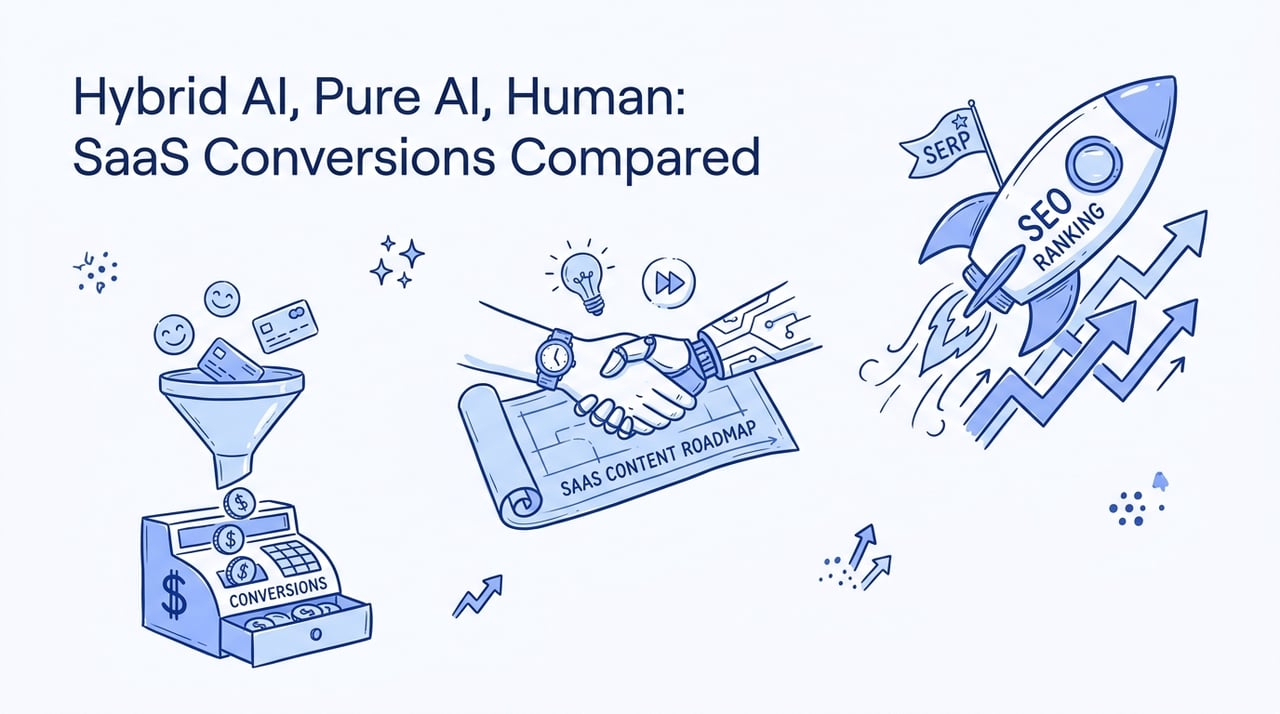
Raw AI copy is quietly bleeding your sales pipeline. A massive study of 1,870 landing pages and LinkedIn outreach sequences shows that human-written sales copy converted at 2.74% on average. Meanwhile, unedited AI copy dragged conversions down to 2.09%. If you look at a typical human-edited AI content conversion case study, you will see why this gap matters. For high-ticket SaaS platforms where a single contract is worth five or six figures, this half-point drop means millions in lost annual contract value. Many tech founders rushed to swap their entire writing team for generic language models to save cash. Instead of scaling safely, they ended up with flat, boring pages that buyers ignore. Speed means nothing if your traffic bounces before requesting a demo.
Bottom Line Up Front: The Hybrid Content Paradigm
You do not have to sacrifice performance to scale. Shifting from a fully manual writing pipeline to a hybrid model gives you the best of both worlds.
Here is what the data shows for high-ticket SaaS teams:
Massive cost efficiency: Switching to a hybrid workflow cuts content costs by 40-60% by clearing out drafting bottlenecks.
Protected organic traffic: Raw, unedited AI content lags behind human-written content by 23% in search rankings over a year.
Near-identical ranking power: Human-edited AI content shows only a 4% median ranking difference compared to fully human content.
Watch this teardown to see how search visibility is shifting:
This shift forces brands to rethink how they create content.
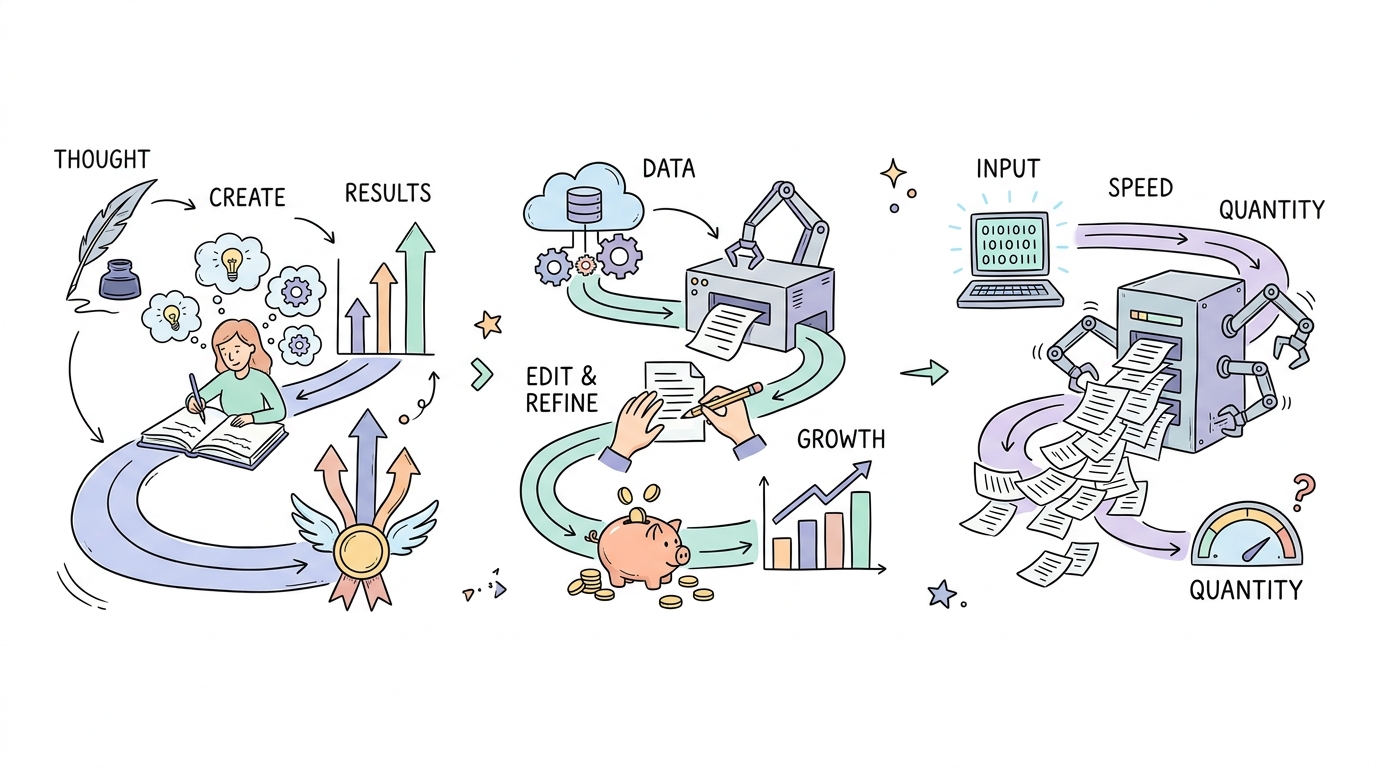
The numbers expose a clear middle ground. A 16-month Search Engine Land study tracking 4,200 articles across 140 domains revealed only a 4% median ranking difference between human-written and human-edited AI content. Meanwhile, unedited AI content lags far behind, showing a 23% underperformance in organic rankings after a year. If you rely on purely automated pages, you sacrifice both conversion volume and long-term search visibility. By introducing human editors, you recapture the authority signals Google demands while maintaining a 12% productivity advantage over traditional manual writing.
Why Pure AI Content Fails to Close High-Ticket SaaS Buyers
Generic text cannot sell complex SaaS products. High-ticket B2B buyers look for proof, real experience, and technical details.
When you publish unedited AI drafts, you get dry, repetitive copy that makes buyers skeptical. AI models are good at summarizing information, but they cannot build the trust you need for high-risk buying decisions.
Content expert Jessica Bowman points out that AI is terrible at writing long content, but great for ideas and short paragraphs. Expecting an algorithm to write a deep, 2,000-word SaaS comparison guide without human help is a recipe for failure.
Without an editor, AI tools fall back on plausible-sounding filler and fake metrics. When a buyer spots a made-up stat on your landing page, your credibility is gone instantly.
Pitfall: Publishing unedited draft text straight from an AI tool risks putting fake numbers and repetitive phrases on your site, which kills buyer trust.
The 8-Step Hybrid Blueprint: Scaling Human-Edited AI Safely
Scaling SaaS content takes a clear, step-by-step process.
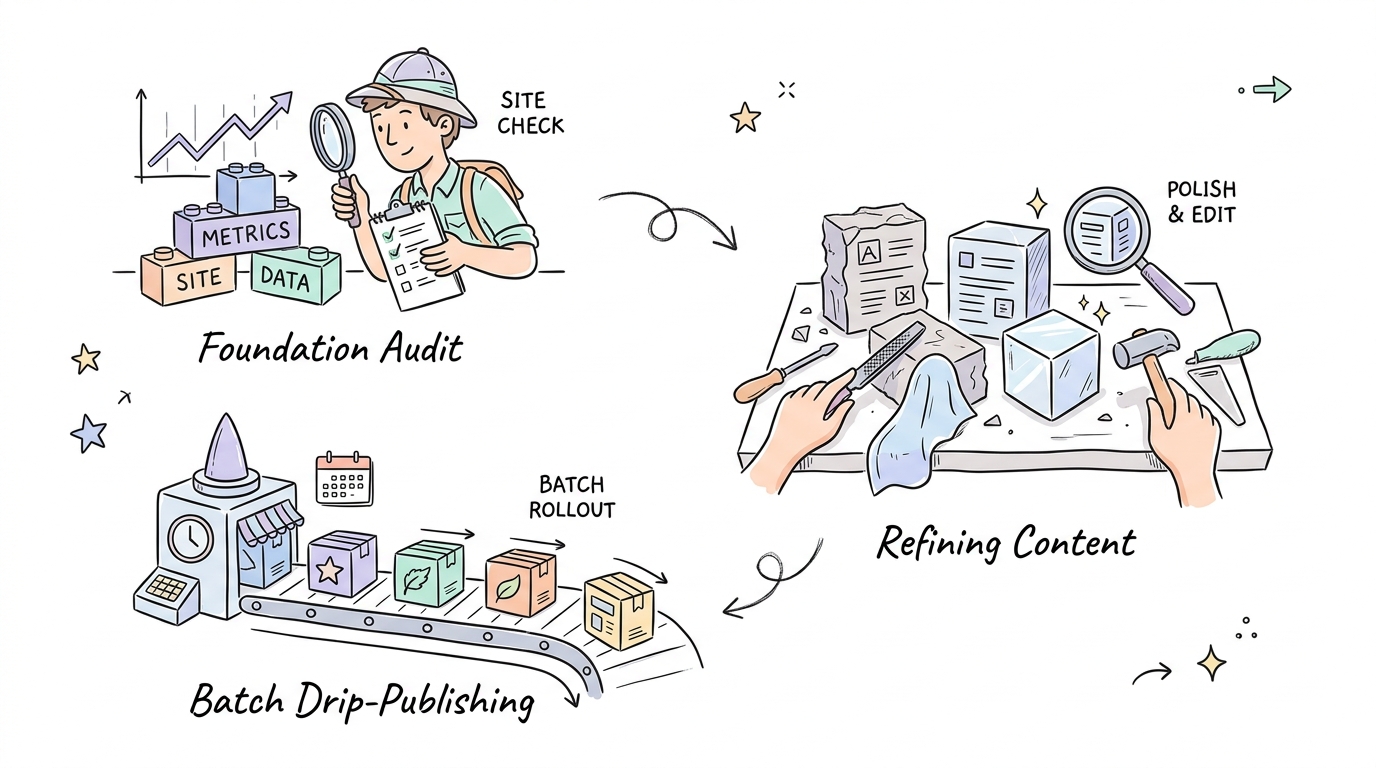
Run a baseline audit: Look at your domain authority, organic traffic, and index rates before you add new content.
Build programmatic templates: Design custom page layouts that use dynamic variables rather than repetitive, stiff blocks of text.
Generate structured drafts: Use tools like Kitful Autoblog to find topic ideas and build clean outlines based on what people actually search for.
Enforce the 1:80 rule: Make sure your outlines call for at least one real stat or credential for every 80 words to keep facts dense.
Inject real-world evidence: Have your experts add real SaaS case studies, customer quotes, and actual screenshots while cutting repetitive AI filler.
Apply JSON-LD schema: Add metadata like Article, HowTo, and FAQPage schemas so search bots can easily read your pages.
Drip-feed your publishing: Publish your content in small, controlled batches. Start with 100 pages, check how they index, and then scale up to 1,000 pages.
Monitor Search Console: Watch your crawl metrics every week to make sure Google indexes your directories without flagging them as thin content.
Tip: Keep a shared list of banned AI words like "delve," "testament," and "in conclusion" so editors can clean drafts faster.
Take the case of a high-ticket B2B SaaS company that replaced its writing team with raw AI drafts. Their landing page conversions quickly fell from 2.74% to 2.09%, putting their sales pipeline at risk. They only turned things around after setting up a strict hybrid system that combined AI drafting with human expert reviews.
Here is a quick checklist to check your setup:
Make sure database variables map correctly in your templates.
Have a human editor verify every external statistic.
Check that schema markup has zero coding errors before you go live.
Defensible AI SEO: Combatting the 2026 Site Reputation Abuse Crackdown
Modern SEO has shifted to semantic entity mapping. Google's updated manual action guidelines state that publishing low-value, third-party content produced without close editorial oversight constitutes site reputation abuse. This means unmonitored automated scaling will trigger swift deindexing penalties.
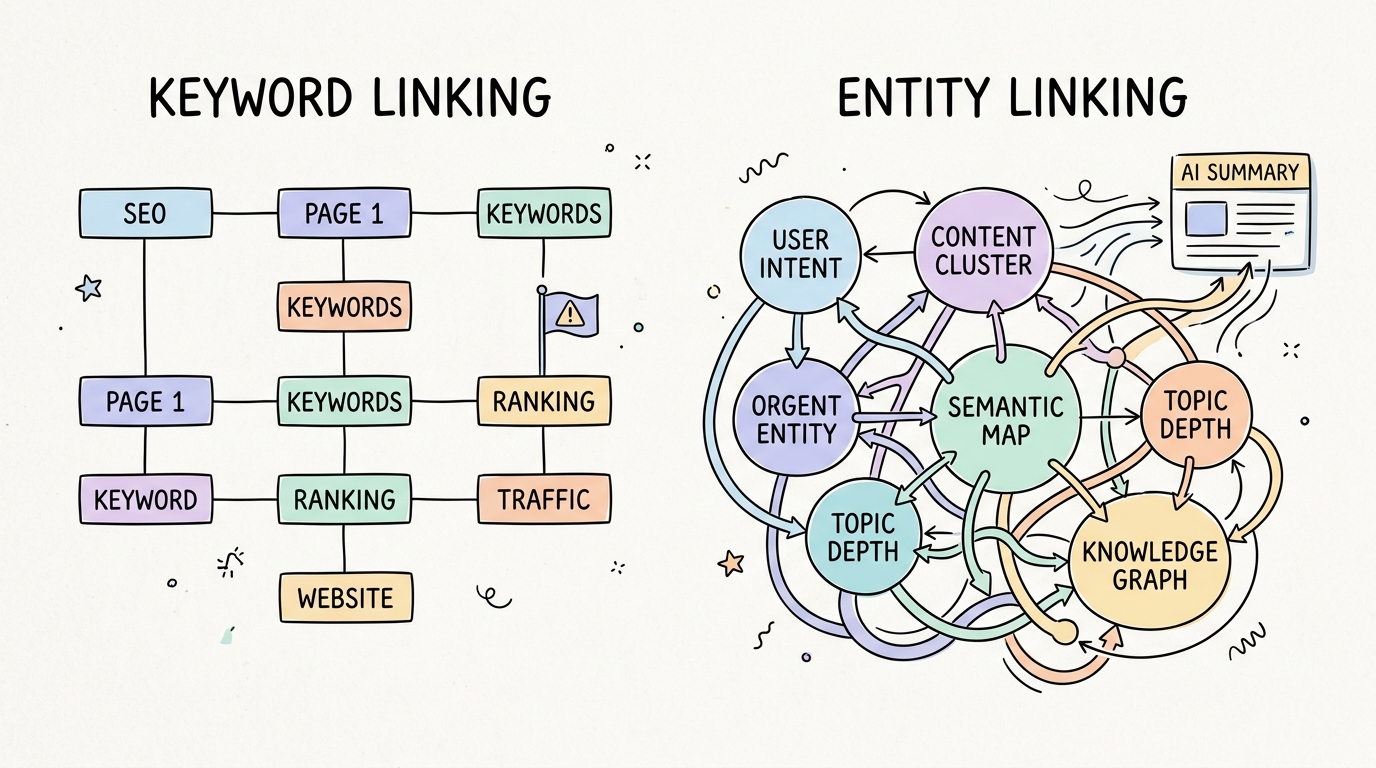
To build a defensible presence, you must optimize for conversational engines like Gemini and Perplexity. Ranking on page one matters less if your brand is not referenced inside the zero-position AI Overview block sitting above organic results. To secure these citations, transition your site architecture from simple keyword-based internal links to entity-based networks.
Additionally, integrate structured metadata directly into your templates. Even though visual FAQ snippets on Google search results were deprecated, the underlying JSON-LD markup is still a primary data feed for modern LLMs. You can validate your markup using the Schema.org Vocabulary guidelines.
Here is a clean JSON-LD example for adding semantic FAQ schema to a programmatic template:
{
  "@context": "https://schema.org",
  "@type": "FAQPage",
  "mainEntity": [{
    "@type": "Question",
    "name": "How does hybrid AI content improve SaaS conversion rates?",
    "acceptedAnswer": {
      "@type": "Answer",
      "text": "Hybrid AI content combines the speed of automated drafts with human editor verification, ensuring accurate statistics and brand credibility."
    }
  }]
}
Monitor your integration progress using Google Search Console to confirm that the schema registers without error.
The Post-Launch Checklist: Verifying Your Hybrid Engine
Going live with programmatic pages is just the first step. To get a real return on your spend, you need to check your new directories regularly.
Use these simple rules for your post-launch checks:
If your pages do not index within 14 days, look at crawl budget metrics in Search Console to make sure Googlebot isn't getting stuck.
If organic traffic drops because of zero-click AI Overviews, put an "Answer-First" summary block (under 300 characters) right in the top 10% of the page.
If you are building out advanced programmatic pages, use the Claude SEO on GitHub repository to clean up your metadata setup.
Your post-launch steps should focus on verification:
Watch Google Search Console for any sudden rise in "Crawled - currently not indexed" status.
Run a 90-day A/B test to compare your hybrid content conversions against pure AI and human drafts.
SaaS SEO & Conversions: Critical Questions Answered
Does AI-generated content rank on Google?
Yes. Google does not penalize content just because an AI wrote it. But unedited AI pages perform 23% worse than human-written ones over a year. You still need human editors to hit the top spots.
What is Google's site reputation abuse policy?
This policy targets big websites that host cheap, unedited AI content without human supervision. If you publish automated content just to game search results, Google will hit you with manual penalties.
How does schema markup help with AI search visibility?
Google cut back on some visual FAQ features, but structured data is still incredibly useful. Schema provides a clean, machine-readable feed that engines like Gemini and Perplexity use to build AI answers.
How can brands scale programmatic SEO to 1,000+ pages without penalties?
Do not publish everything at once. Release your pages in small batches of 100, enforce strict fact-checking, and use custom template fields to avoid thin content issues.
Securing the Future: Balancing Scale and Authority
You do not have to choose between speed and quality. The performance gap between AI and human copy shows that the tool itself isn't the issue. What matters is how you design your publishing workflow.
By letting AI write the drafts and having human experts edit them, you get both speed and trust. Programmatic pages give you the reach to capture search traffic, while real human editing builds the trust you need to close complex SaaS deals. Set up your hybrid workflow, check your pages closely, and start scaling your content the right way.
 Kitful