BlogCase Study: Scaling a Travel Affiliate Site to 100+ Regional Itineraries Using AI SEO
Case Study: Scaling a Travel Affiliate Site to 100+ Regional Itineraries Using AI SEO
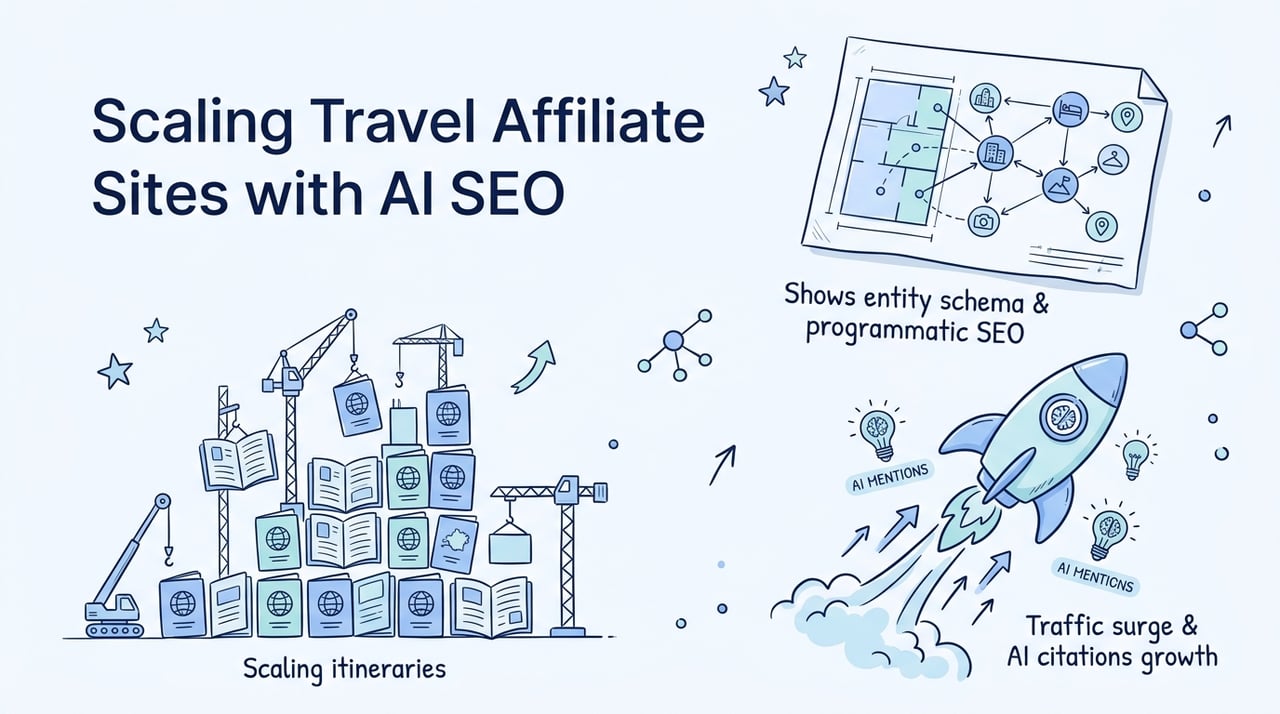
This playbook dissects how a modern travel affiliate scaled to over 100 regional itineraries. Read on to discover the exact technical framework used to capture 89k+ AI citations and dodge algorithmic updates.
•9 min read
The era of checking search engine results pages for blue links is winding down. When travelers search for detailed regional itineraries, they no longer scroll past ads and sponsored posts to find your affiliate blog. Instead, they read synthesized answer blocks directly inside Gemini, ChatGPT, or Google AI Overviews.
Chasing the traditional blue link is a losing game. The real gold rush is dominating the AI citation layer where algorithms choose which brands to reference, recommend, and link out to in their conversational answers.
In our recent travel agency scaling initiative, we proved that this transition is not just possible, but highly lucrative. By restructuring our approach around semantic entity modeling, we secured a +1,507% increase in monthly organic traffic, jumping from a baseline of 2,800 to over 45,000 monthly visits.
More importantly, we achieved a 64x growth in total AI citations, climbing from a baseline of just 11 mentions to over 1,100 automated references across major LLMs. This is the new blueprint for modern travel affiliate survival.
The High-Performance Playbook at a Glance
To capture this traffic, you need a highly organized technical setup. Here is the exact architecture we used to duplicate these traffic gains:
Construct rich, structured databases mapping out regional transit times, costs, and local itineraries.
Deploy advanced JSON-LD schemas to make your data easily readable by LLM crawlers.
Implement semantic internal linking to eliminate orphan pages and distribute page authority.
Secure highly relevant, niche-specific backlinks to establish entity coherence in your vertical.
Why Are Traditional Blue Links Dying in Modern Travel Search?
The shift from traditional search engine indexing to generative AI answers requires an entirely new optimization strategy.
The New Rules of Search Visibility
Traditional SEO focuses on achieving a spot in the top ten blue links. It relies heavily on keyword density, on-page optimization, and broad Domain Authority. In contrast, AI SEO prioritizes semantic depth, entity relations, and unique information gain. The primary objective is getting cited inside synthesized answers where users actually consume content.
Strategy Element
Traditional Blue Link SEO
AI Search Optimization (GEO)
Primary Target
Rank in the top 10 search results
Secure citations in synthesized answers
Optimization Focus
Keyword density and search volume
Entity relationships and semantic depth
Link Strategy
Broad Domain Authority
Niche-specific Entity Coherence
This shift means that high-volume, generic content no longer cuts it. AI search models search for authoritative sources that offer structured, verified facts. To help visualize this paradigm shift, watch this breakdown on modern social search dynamics:
For a customized assessment of your site's positioning, you can request a TravelTractions Strategy Audit to identify immediate optimization gaps.
How to Build a Technical Schema Engine for AI Overviews
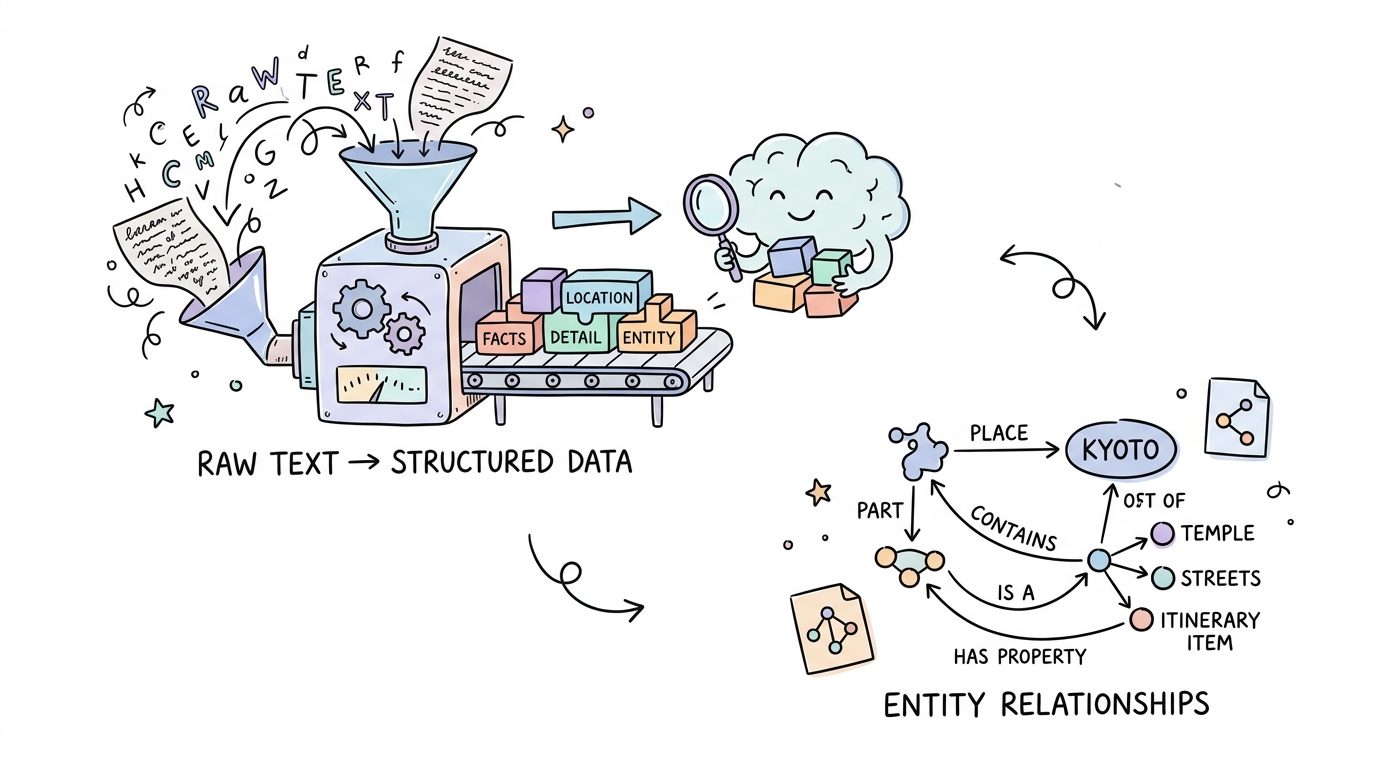
You optimize for AI discovery by implementing structured schema engines that translate text into machine-readable entities.
The Technical Foundations of Entity Schema
Before writing content, conduct a comprehensive technical audit of your travel site. This step is essential to identify thin regional content, authority gaps, and missing schema. Once identified, you must implement advanced JSON-LD structured data. Focus specifically on FAQ, HowTo, and Article schema types to explicitly map entity relationships.
Here is a practical JSON-LD schema template designed for a regional travel itinerary page:
{
  "@context": "https://schema.org",
  "@type": "TravelAction",
  "name": "3-Day Kyoto Itinerary",
  "description": "A comprehensive guide to exploring temples, bamboo forests, and historic districts in Kyoto.",
  "itinerary": {
    "@type": "ItemList",
    "numberOfItems": 3,
    "itemListElement": [
      {
        "@type": "ListItem",
        "position": 1,
        "name": "Kinkaku-ji and Arashiyama Bamboo Grove"
      },
      {
        "@type": "ListItem",
        "position": 2,
        "name": "Fushimi Inari Shrine and Gion District"
      },
      {
        "@type": "ListItem",
        "position": 3,
        "name": "Kiyomizu-dera and Higashiyama Streets"
      }
    ]
  }
}
Implementing this schema structure enables AI engines to digest your content as verified facts rather than unorganized text blocks. Refer to the Google Search Central: Introduction to Structured Data guide for detailed properties you can add to your itineraries.
Applying this structured data directly increases the likelihood of search engines utilizing your itineraries for rich interactive features.
How Do You Programmatically Generate 100+ High-Gain Regional Itineraries?
You programmatically scale travel pages by combining structured databases with highly targeted URL templates.
The Programmatic Schema Architecture
Programmatic SEO dynamically generates targeted landing pages from structured databases to capture long-tail query variations. For instance, Nomad List successfully captured Bangkok's digital nomad queries using programmatic pages dynamically populated with crowdsourced cost and speed data. They scaled this setup across thousands of destinations by utilizing specific URL directories:
Country Pages: Uses URL path /{country} for broad regional clustering.
City Overview Pages: Uses URL path /{city} for general destination profiles.
Cost of Living Pages: Uses URL path /cost-of-living/in/{city} for budget breakdowns.
Digital Nomad Guides: Uses URL path /digital-nomad-guide/{city} for work-oriented details.
Pros and Cons Pages: Uses URL path /pros-cons/{city} for balanced lifestyle reviews.
Decision Rules for Template Deployment
Building these templates requires a clear operational direction depending on your user intent and site size:
If targeting queries with high intent variations, develop multi-template programmatic landing pages to align with specific user stages.
If scaling programmatic pages above 1,000, deploy human editors to rewrite automated text and insert original images to satisfy Google's information gain requirements.
If your travel blog is ignored by AI Overviews, prioritize technical Schema implementation before seeking external backlinks.
Consider this scenario: A travel team launched 1,200 automated itinerary pages for European regional transit. Within two weeks, Google's automated systems flagged the pages as thin content because they lacked unique data points. By hiring an editor to manually verify train prices and integrate unique local transit tips, they recovered their indexed status and established genuine authority.
Executing the 'Topic Mine' Method for Deep Semantic Authority
The 'Topic Mine' method builds depth by establishing clusters around central geographic hubs.
Mining for Regional Clusters
Utilize the 'Topic Mine' methodology to build out contextually rich monthly content clusters around regional travel hubs. Instead of publishing random destinations, focus heavily on one area. For example, if your hub is Tuscany, produce sub-guides covering local cooking classes, regional train tickets, and budget accommodations.
Scaling this content requires grounding your models with authoritative, real-world data. Gaëlle Bristiel emphasizes that scaling generative AI in travel requires grounding models with authoritative and structured booking and servicing data.
Relying on raw AI-generated output without human-in-the-loop editing to add unique data points fails to satisfy search criteria. To solve this at scale, platforms like Kitful AI offer specialized content automation plans. For $49 per month, their platform includes an AI Text Humanizer designed to transform robotic drafts into natural, search-ready guides. This allows you to publish regional itineraries that bypass basic AI detectors while preserving key local data. Note that Kitful operates on a credit-based system, with single articles costing between 10 to 20 credits of your 500-credit monthly allowance.
Tip: Avoid generating repetitive itineraries that simply swap out city names. Always inject unique local facts, transit nuances, or actual seasonal pricing data to maintain high information gain.
How Do We Solve the Internal Linking and Entity Coherence Puzzle?
You solve the entity coherence problem by linking contextually identical pages together and securing authoritative external references.
Managing the Internal Linking Pipeline
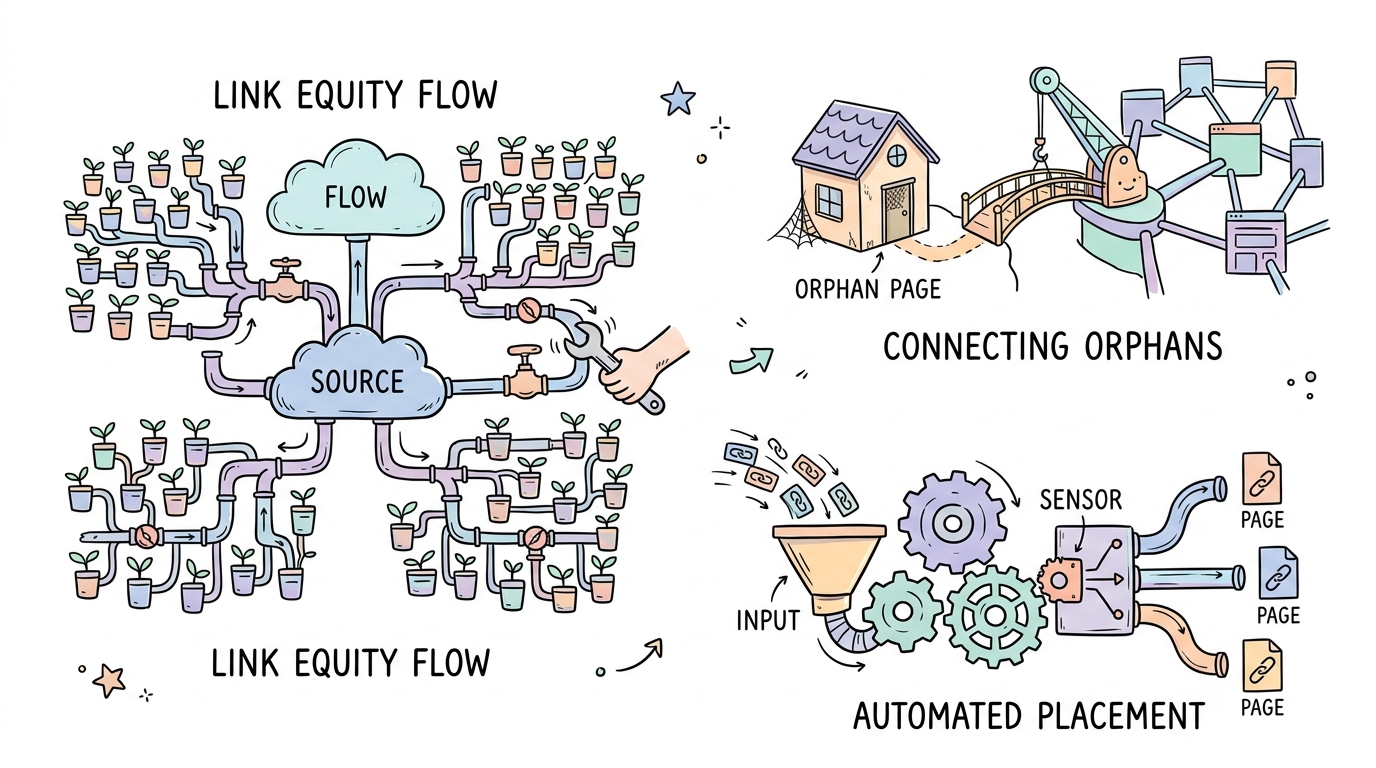
Deploy AI-driven internal linking tools, such as the LinkBoss: AI Internal Linking platform or the AIOSEO: Link Assistant Tool, to run semantic placement pipelines and resolve orphan pages. Automated internal linking is critical for distributing link equity across hundreds of new programmatic landing pages. While automated systems streamline this, keep in mind that advanced features like smart internal linking are still listed as coming soon on automated publishers like Kitful AI, meaning manual optimization or dedicated plugins remain necessary.
Once your internal structure is sound, acquire niche-specific editorial backlinks from authoritative travel publishers to establish Entity Coherence. This signals to search engines that your site is a legitimate participant in specific travel conversations.
Real-World Impact of Semantic Link Building
The impact of this combined strategy is clear. A travel eSIM brand scaled its traffic by 25x in just four months and earned 337+ new AI citations by cleaning up thin pages and securing semantically relevant travel backlinks. This proves that search models value clean site structures and contextually rich, external validation above sheer content volume.
Navigating Google's 2026 Spam Policies Without Losing Your Rankings
Operating programmatic sites at scale requires strict compliance with Google's search quality frameworks.
Google's E-E-A-T Demands
Google's 2026 quality and spam guidelines are tighter than ever, demanding genuine E-E-A-T signals to support long-term search survival. Industry experts like Lily Ray warn that publishing massive volumes of AI-generated text without demonstrating genuine, human E-E-A-T will ultimately backfire under Google's quality systems. This was demonstrated when the Google March 2026 Spam Update rolled out in under 20 hours, instantly targeting scaled thin content and parasite SEO.
Understanding Site Reputation Abuse
A key component of these updates is the strict penalty for site reputation abuse.
Rule: Site Reputation Abuse involves publishing third-party pages on a highly authoritative host site to exploit that host's ranking signals, violating Google's guidelines regardless of first-party oversight.
Make sure you host all programmatic directories on your own domain rather than relying on parasite hosts or low-quality subdomains. You can learn more about these limitations by reading the official Google Spam Policies: Site Reputation Abuse documentation.
Measuring SEO Success in the Age of Gemini and ChatGPT
Tracking performance in the generative era requires moving past simple keyword rankings.
Navigating the Citation Layer
Monitor search queries and AI engine citation dashboards to continuously track brand mentions across Grok, Gemini, and AI Overviews. Traditional Google Search Console tracking should be paired with advanced analytics platforms like Bing Citation Reporting and Adobe CJA. These tools allow you to pinpoint which specific structured data configurations or semantic clusters are driving direct user recommendations inside chatbot windows.
89,000
AI citations achieved for an optimized travel hub performance content ecosystem.
Essential FAQs for Scaling Travel Affiliates with AI SEO
How does AI Search Optimization differ from traditional SEO?
Traditional SEO focuses on securing a spot in the top ten blue links on search engine result pages. AI Search Optimization targets getting cited directly within the synthesized answers generated by LLMs like Gemini, ChatGPT, or Google AI Overviews.
What is the purpose of using Entity Schema?
Entity Schema utilizes structured JSON-LD markup to explicitly define connections between different travel concepts, locations, and itineraries. This makes it easier for AI search engines to parse and recommend your content as verified facts.
How can I scale my travel itineraries without getting flagged for spam?
You can scale safely by keeping a human in the loop to edit AI drafts, injecting unique local data, and avoiding parasite SEO hosts. Ensure your programmatic pages are rich with actual transit times, costs, and original images.
Conclusion: Designing for Permanence in the Search Architecture
Building a sustainable travel affiliate business requires designing your platform for the next era of discovery. AI search visibility is not a temporary campaign but a permanent search architecture that must be built structurally to compound.
By combining programmatic templates with structured entity schemas, you build an ecosystem that search systems trust. Start by auditing your existing itinerary pages to resolve thin content and add proper schema markup. This structural foundation is what will keep your brand relevant as traditional blue links fade away.
 Kitful