BlogGEO Strategy: How to Optimize Niche Product Reviews for Perplexity and Gemini Citations
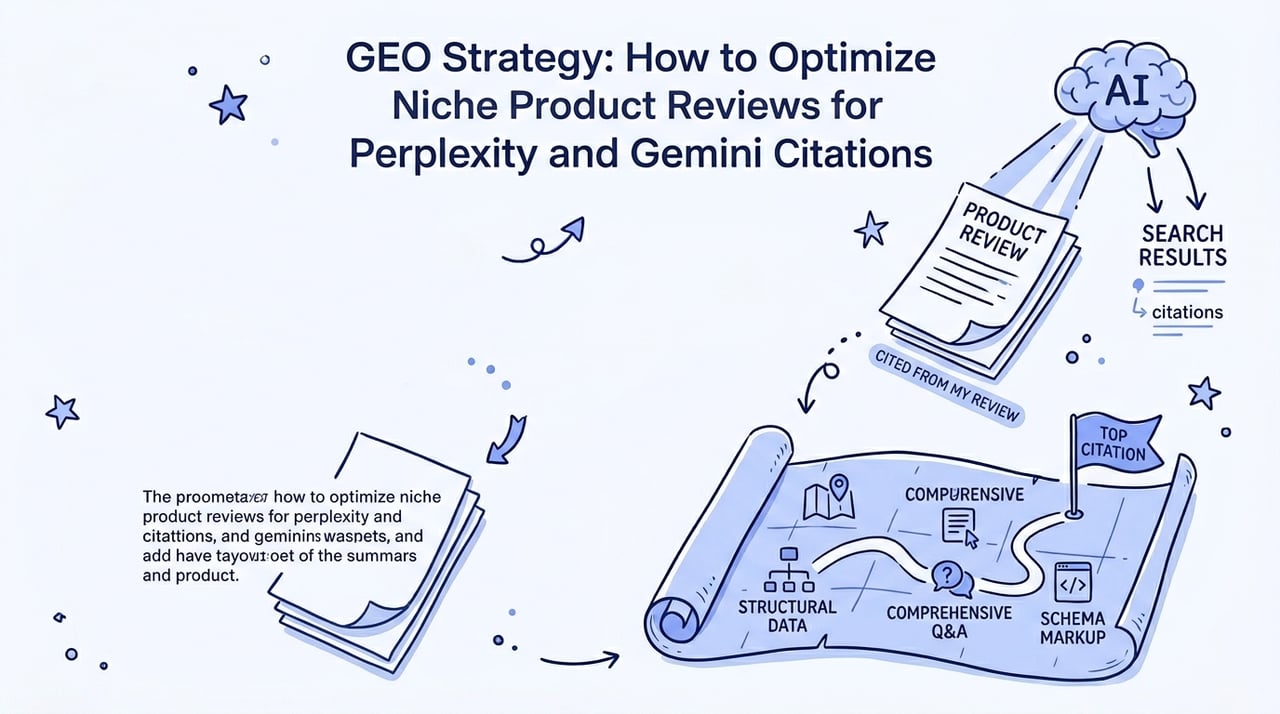
GEO Strategy: How to Optimize Niche Product Reviews for Perplexity and Gemini Citations
Niche product reviews face an existential shift. Discover how to transition from traditional SEO to Generative Engine Optimization (GEO) to win citations on LLMs and Google's AI Overviews.
•7 min read
Organic search click-through rates are falling fast. A 34.5% year-over-year decline in organic click-through rates has hit informational queries because AI systems now answer questions directly. If your product reviews rely on outdated search strategies, you are invisible to the algorithms that control modern buying journeys.
I watched my traditional review traffic drop because engines synthesized my hard-earned insights into a single sentence, leaving my links unclicked.
This shift demands a total strategic pivot to Generative Engine Optimization (GEO).
GEO is the technical and content framework of formatting, structuring, and verifying web pages so that AI models can retrieve, trust, and cite them. It is no longer about winning a blue link. Instead, it is about training machine-learning models to treat your reviews as their primary source of truth.
At a Glance: The GEO Playbook for Niche Reviews
Here is your quick summary of the GEO playbook. To stay visible in modern search, you must optimize for how Retrieval-Augmented Generation models parse information.
Prioritize Machine Readability: AI engines rank content based on independent consensus and highly structured, clean data rather than traditional domain metrics.
Implement the Triple-Optimization Framework: Build your strategy around answer-first scannability, structural entity schema, and first-party provenance.
Simplify Data Tables: Make your comparison tables and text blocks instantly readable for automated scrapers.
What Is Generative Engine Optimization for Product Reviews?
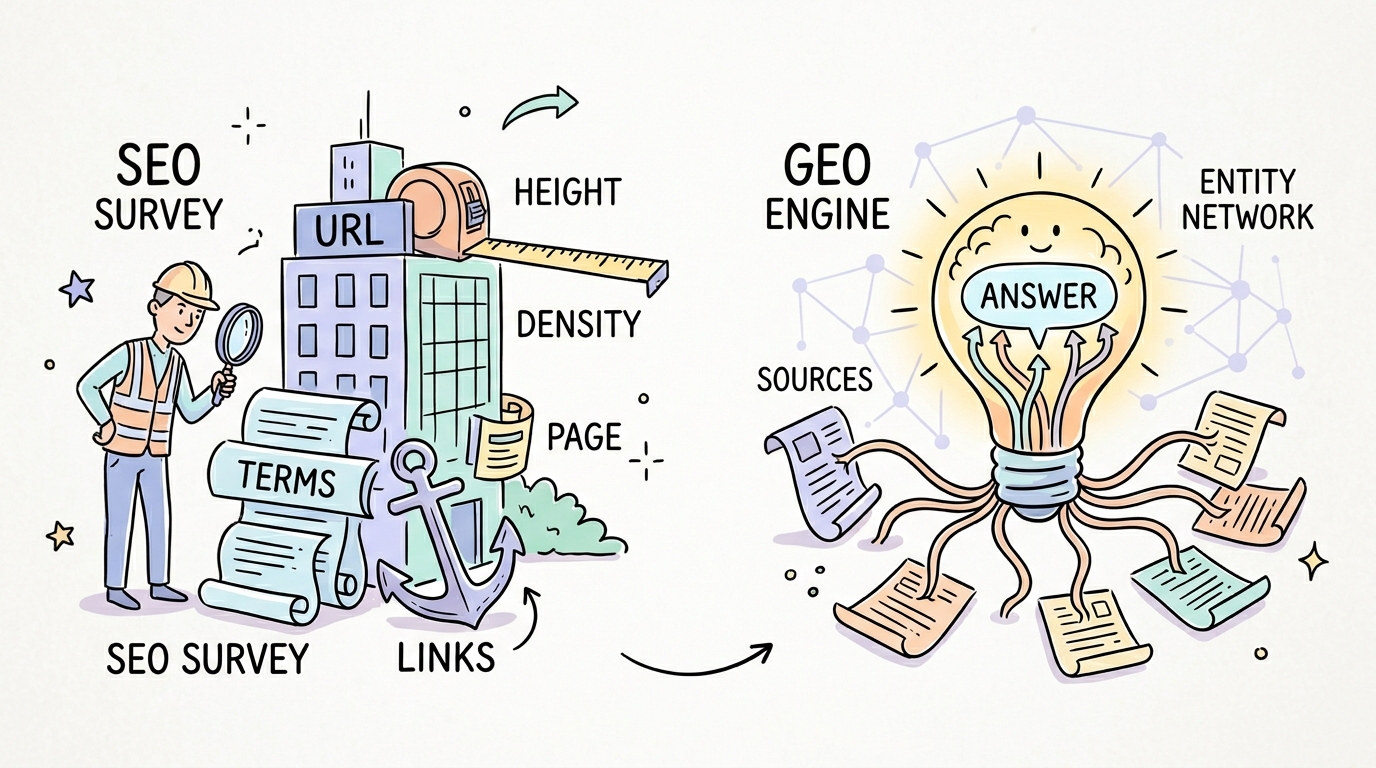
Generative Engine Optimization is the evolution of traditional search. It is the practice of structuring your content to be easily digested, synthesized, and cited by AI-powered answer engines. Unlike traditional search engines that rank URLs based on keyword matches, GEO relies on Retrieval-Augmented Generation (RAG) systems that extract semantic, clean text passages to ground their answers.
When Perplexity or Google's Gemini processes a user query, they do not just match keywords. They run a process called Query Fan-Out, triggering concurrent sub-queries to map entity relationships across the web. If your site lacks a clear entity graph, the engine skips you.
Strategy Factor
Traditional SEO
Generative Engine Optimization (GEO)
Core Target
Single-page keywords and meta descriptions
Structured entity scannability and machine readability
Authority Signals
Backlink volume and anchor text
Cross-platform consensus and third-party corroboration
Structure Style
Optimized for human skimming
Answer-first prose and clean HTML data tables
To see this structural shift in action and learn how to position your content for modern search interfaces, watch this expert guide:
Now, let's look at how to build this technical architecture directly into your site.
How Do You Optimize Niche Product Reviews for AI Citations?
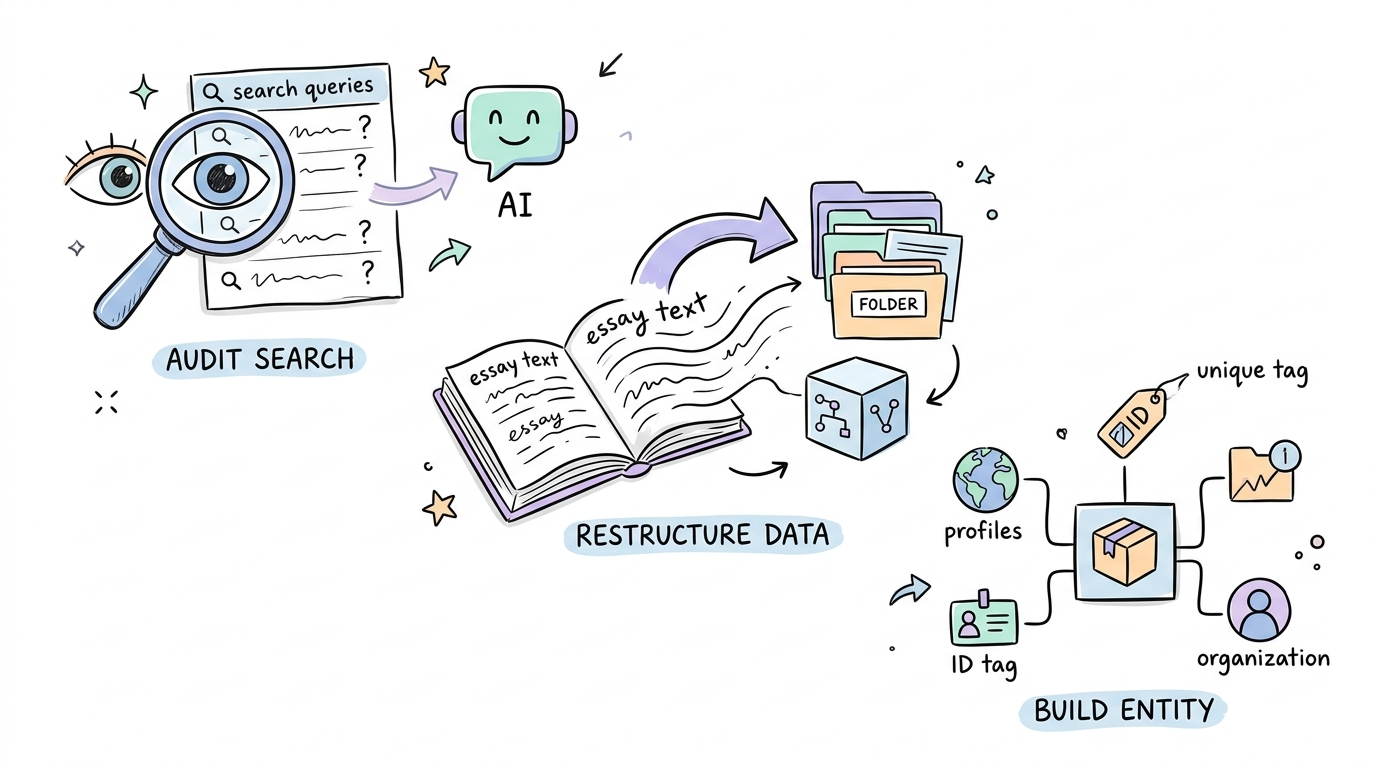
Optimizing for AI engines requires a total structure shift. You must transform your content from simple essays into structured database records that machines can verify.
By mapping your entities and restructuring your writing style, you make it incredibly easy for LLM scrapers to quote you as an authority.
I use a systematic 4-step framework to secure consistent citations across ChatGPT, Gemini, and Perplexity:
Audit Your AI Engine Footprint
Begin by manually executing 30 target buyer queries across the major AI search engines. Track which competitors are currently recommended and analyze their citation sources. This maps out your niche's entity landscape.
Establish Your Brand's Entity Layer
Help LLMs connect your brand name to established web entities. Inject clean JSON-LD Organization schema on your homepage, using a stable @id and linking to verified third-party databases using sameAs tags. This establishes an explicit connection to highly trusted nodes like Wikidata or Crunchbase, allowing automated indexers to verify your company's credentials instantly.
Adopt Answer-First Prose
Rewrite your H2 and H3 body content. Case studies show a 40% increase in AI citation probability when using direct answer-first writing structures directly under headings. Keep the first two sentences of every section extremely dense, factual, and direct.
Drive Off-Page Corroboration
AI models do not trust isolated sites. They look for consensus. Focus your digital PR on earning citations and mentions across external networks like G2, Trustpilot, Reddit, and platforms like Featured.com. When multiple independent sources repeat the same product attributes, LLM classifiers recognize the pattern and elevate your visibility.
Pre-Publishing Checklist
Audit server logs to confirm visits from PerplexityBot and ChatGPT-User.
Check JSON-LD validation using Google's Rich Results Test tool.
Eliminate heavy JavaScript components on comparison tables to keep elements readable.
Building Value-Added Provenance to Prevent Google's S-CTS Penalties
Value-Added Provenance is your shield against quality downgrades. It means providing undeniable, structured evidence of firsthand human testing that AI crawlers can crawl and search engines can verify.
Google's updated spam guidelines, particularly Google's Spam Policies Documentation, officially classify the manipulation of generative AI responses and scaled template abuse as standard spam violations. Websites that fail to provide clear human expert inputs have seen an average traffic decline of 58% within just three months of quality core updates. To survive this shift, your content must possess unique data.
For instance, if you scale comparison pages programmatically, you must maintain at least a 60% uniqueness ratio on every single page. Avoid thin templates with simple keyword swaps. Instead, integrate unique localized data, firsthand photos, and direct manual spot checks. If you are using automated writing tools, run your drafts through an optimizer like the AI Text Humanizer on Kitful AI to polish robotic phrasing into natural, conversational language. This ensures you maintain the required uniqueness while targeting both classic search and modern AI engines.
Additionally, pay attention to technical accessibility. AI crawlers struggle with complex, interactive JavaScript comparison widgets. Keep your product specs in clean, structured HTML tables. If you want to steer AI crawlers on what they can and cannot parse, configure your site's access permissions carefully. You can set up an llms.txt file as described in Search Engine Land's guide or follow Yoast's Analysis on LLMs.txt.
Pitfall: Do not use heavy JavaScript elements for key comparison tables. If Perplexity or Google AI Overviews cannot easily extract the tabular data from pure HTML, they will completely skip your site in favor of a competitor's simpler table.
Essential Tools and Partners for the GEO Stack
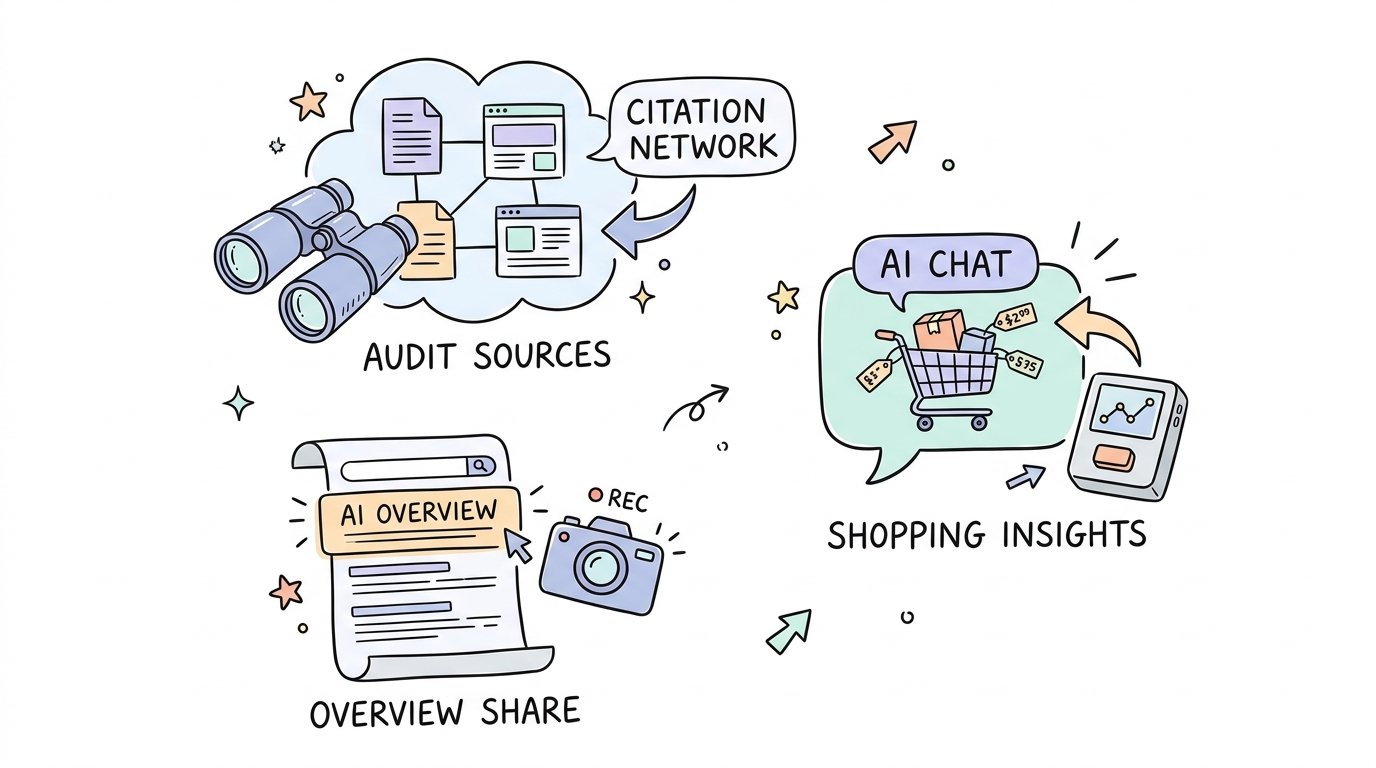
The GEO tool stack tracks conversational search engine share. This specialized group of platforms and service providers monitors how AI models retrieve, synthesize, and cite your brand.
Top GEO Tracking Tools
Semrush: Best for full traditional search and AI overview tracking panels. It provides detailed insight into where your brand is currently cited in search-based AI features.
Otterly: Best for prompt-specific citation tracking. It evaluates exactly how your brand is represented in direct chat interfaces across multiple LLMs.
Profound: Best for enterprise-level visibility tracking. It is highly rated for monitoring how products perform within the ChatGPT Shopping engine algorithms.
Scrunch: Best for brand narrative control. It allows you to track and identify outdated or false brand summaries generated by AI search engines.
Top GEO Service Providers & Platforms
Kitful AI: Best for automated, engine-optimized content creation. It automates SEO content generation with built-in text humanization, helping you target traditional Google rankings and AI-driven answer engines for a starting price of $49/mo.
GenOptima: Best for results-based citation growth. This specialized GEO-first agency operates on a Result-as-a-Service model to scale citation share.
Go Fish Digital: Best for technical SEO adjustments. They specialize in patent-informed technical changes and digital PR campaigns to influence generative retrieval models.
Decision Rules for the GEO Stack
If you need broad tracking of Google AI Overviews alongside traditional search, choose Semrush.
If your main focus is optimizing retail products for conversational ecommerce engines, implement Profound.
If you are experiencing false information or outdated brand definitions in Gemini, use Scrunch to plan corrections.
Frequently Asked Questions About GEO for Reviews
Understanding AI citation mechanics helps clarify your strategic roadmap. Let's resolve the most common point of confusion around optimization for AI search engines:
Does schema markup help you get cited in Google AI Overviews?
Yes, schema markup is highly effective because it organizes entity relationships in a clean, standardized format. By using Organization or Product schema with explicit ID references, you make it much easier for Google's crawlers to verify your facts and link back to your pages.
What is Google's policy on AI Overview manipulation?
Google's updated spam policies treat scaled template manipulation and deceptive attempts to bias generative answers as standard spam. If you try to manipulate AI engine outputs with low-quality, automated content networks, you risk immediate domain deindexing.
What is the difference between SEO and GEO?
Traditional SEO focuses on optimizing single-page keywords, building backlink volume, and ranking high on search engine results pages. GEO focuses on machine scannability, answer-first paragraphs, and cross-platform consensus so that conversational AI models cite your brand directly inside their compiled answers.
Embracing the Trust Paradox in a Synthetic Web
Synthetic content has triggered an unexpected shift. This shift has resulted in the Trust Paradox, where human verification is more valuable than ever.
Success in this new search landscape does not belong to those who can publish the most words. It belongs to those who establish undeniable authority through explicit entity signals, clean HTML layouts, and corroborated real-world experience.
Review your technical schema, restructure your review summaries, and secure your place in the generative index today.
 Kitful