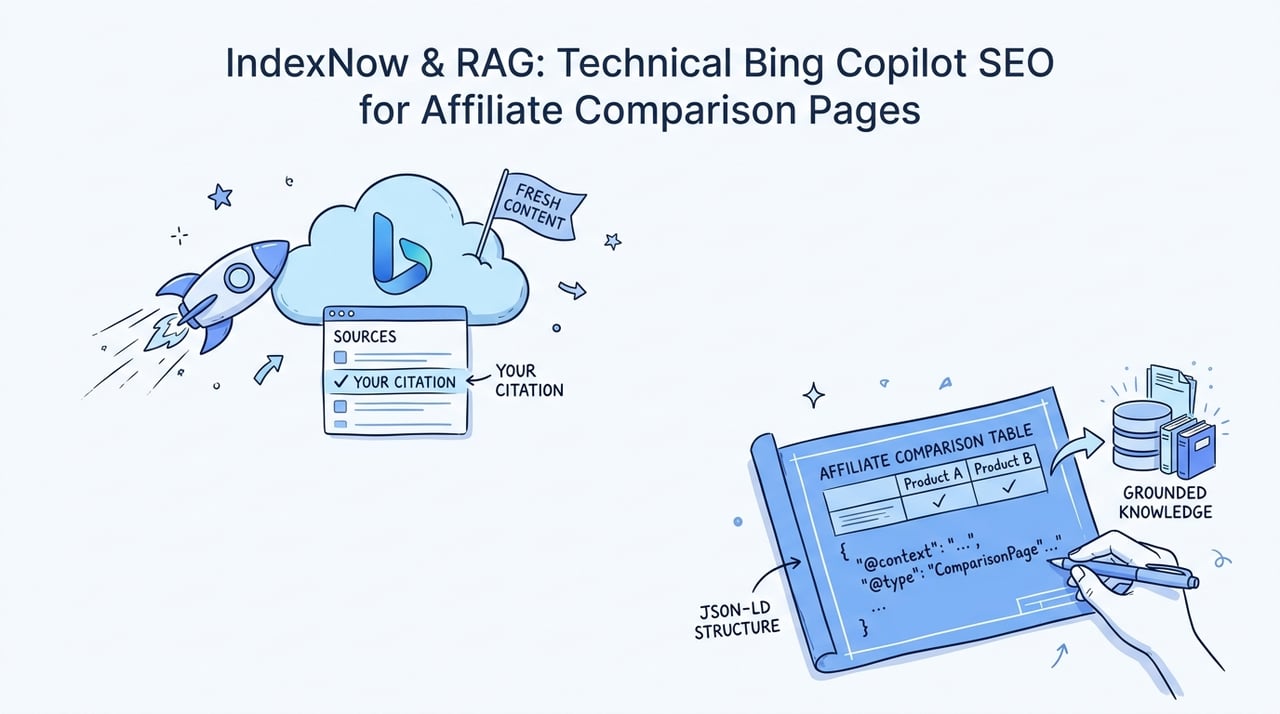
In 2026, ranking first on Bing is no longer the finish line. If your affiliate data is not formatted for Retrieval-Augmented Generation, Bing Copilot will simply strip your prices and specs to answer the user while leaving your click-through rate at zero. Visibility is now measured by presence inside the AI's answer.
Traditional blue links are losing the war for user attention to AI Overviews. Every time a user asks for a product comparison, the model decides whether to credit you or your fastest competitor. You are either the primary source of truth or invisible. The search engine just read your content and cited someone else.
The 2026 Playbook: Key Takeaways
- Speed is authority: Use IndexNow to notify Bing of price changes within seconds to secure the lead citation.
- Grounding is the goal: Structure data so Bing's internal queries can easily lift facts from your pages.
- Focus on Answer Capsules: Write 40-60 word summaries that fit perfectly into Copilot's response window.
- Monitor AI metrics: Shift your focus from impressions to citations in the Bing Webmaster Tools performance report.
- Differentiate at scale: Avoid the 'thin content' label by grounding programmatic pages in unique, non-feed data.
What is RAG and Why Does Bing Copilot Care About Your Affiliate Data?
Retrieval-Augmented Generation (RAG) is the technical bridge between a static LLM and the live web. When a user asks Bing Copilot for a comparison, the AI does not rely on its training data alone. It performs grounding queries to find real-time facts from the Bing index.
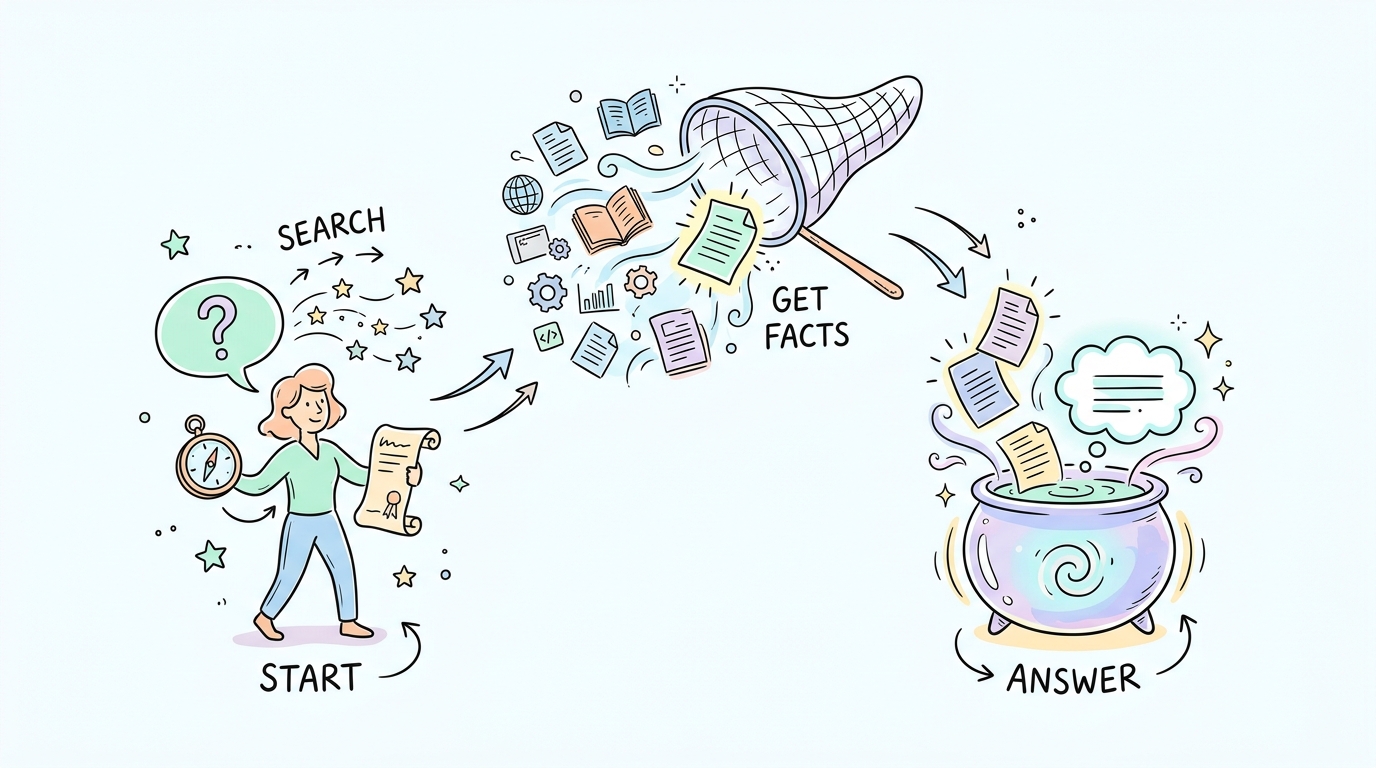
These internal searches are fact-seeking keywords generated by the AI to verify pricing and availability. If your site is the first to provide this data, you become the grounding source. 87% of citations match top organic results.
Consider a travel affiliate site that missed the 2026 AI shift. They updated flight prices once a week, but Bing Copilot cited a competitor who pushed updates hourly via IndexNow, resulting in a 40% revenue loss overnight. Speed is not just about user experience anymore. Information utility is the primary driver of AI visibility.
Implementing IndexNow for Instant Price and Spec Synchronization
IndexNow is an open-source protocol that creates a direct handshake between your server and Bing's crawler. Instead of waiting for a bot to find your updates, you push them instantly. This is critical for affiliate pages where price-sensitive comparison data changes frequently.
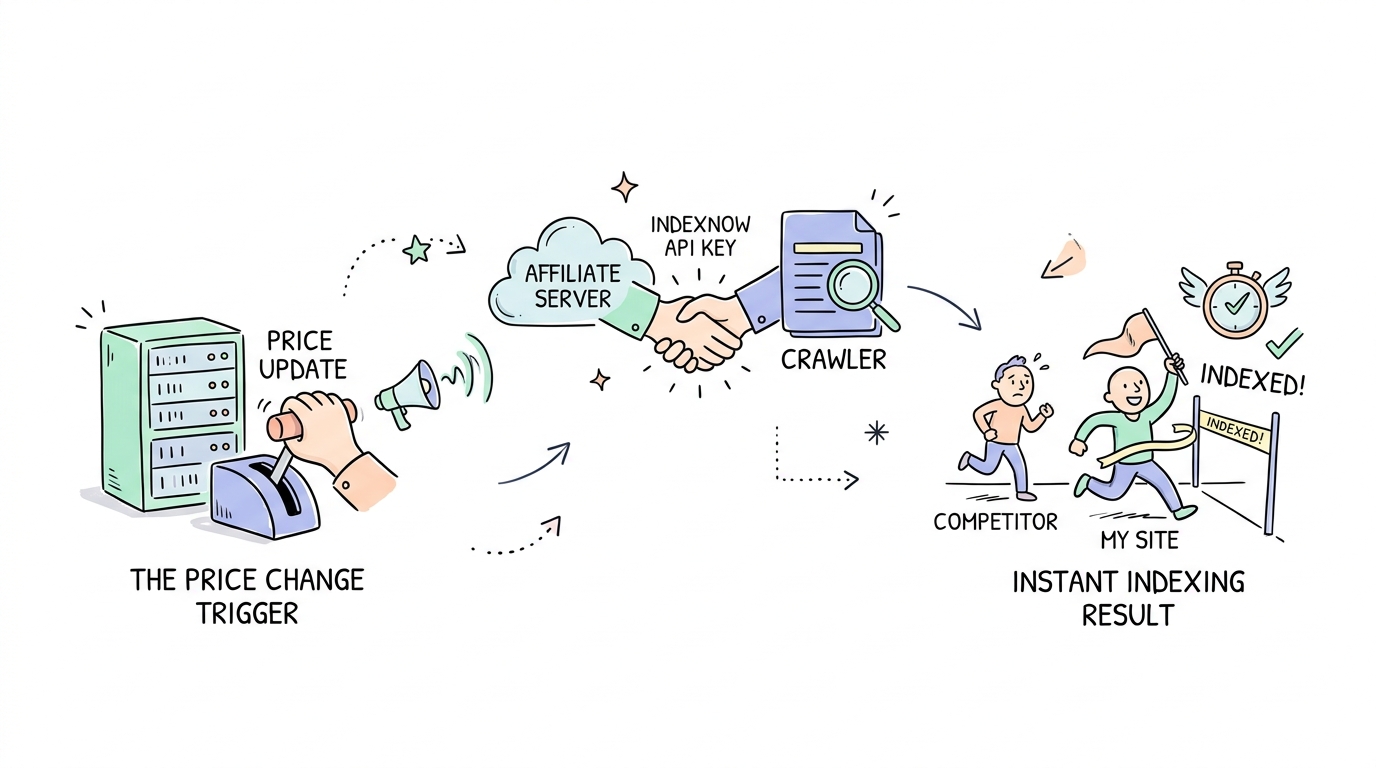
You must generate an API key in Bing Webmaster Tools and host it on your server. Once configured, your site can ping the Official IndexNow Protocol every time a product attribute changes. The first site to index a price change wins the RAG citation.
To verify your setup, you can send a simple GET request to notify Bing of a new or updated URL. Replace URL with your page and KEY with your specific API key.
# Notify Bing of a content update
curl "https://www.bing.com/indexnow?url=https://www.yoursite.com/deals/iphone-16&key=1234567890abcdef"

# Expected output: HTTP 200 OK
Tip: Automate this process using a server-side script that triggers every time your product database updates to ensure you never lag behind competitors.
Server-side rendering (SSR) is essential here. If your price data is hidden behind client-side JavaScript, the RAG model may fail to 'lift' the content accurately. SSR ensures your data is machine-readable on the first pass.
Scaling 1,000+ Pages Without the 'AI Spam' Penalty
Building 1,000+ comparison pages requires a balance between automation and unique value. Bing's 2026 policies aggressively target 'site reputation abuse' and thin programmatic content. Unique data-driven insights are your only defense against AI filters.
The Programmatic Fact-Engine
This strategy uses raw product data to generate high-utility comparison grids that AI models can easily parse.
Description
Focuses on converting product specifications into comparative advantages rather than just listing features.
Features
- Automated spec-to-benefit mapping
- Instant IndexNow triggers
- Dynamic JSON-LD injection
Verdict
Best for high-volume hardware or software comparison sites.
Implementation
- Pull product API data into your database.
- Use Kitful AI to humanize descriptions and generate research-backed summaries.
- Publish and immediately notify Bing via the IndexNow API.
Topical Authority Clusters
This approach builds dense networks of internal links around specific product entities to prove expertise.
Description
Groups small comparison pages under a single 'power page' to capture the majority of niche citations.
Features
- Entity-based internal linking
- High-density Answer Capsules
- Shared schema nodes
Verdict
Effective for dominated competitive niches where authority is consolidated.
Implementation
- Identify a primary 'power' product entity.
- Create 10-15 sub-pages comparing it to every major competitor.
- Link all sub-pages back to the primary hub using descriptive anchor text.
Hybrid Human-AI Verification
Combines automated data gathering with human editorial oversight to ensure accuracy and trust.
Description
Uses AI to draft the baseline content and humans to add unique testing data or subjective 'verdict' scores.
Features
- Real-world testing logs
- Subjective 'Best For' tags
- Enhanced E-E-A-T signals
Verdict
Critical for high-ticket affiliate items where trust is a ranking factor.
Implementation
- Generate content briefs using Kitful AI tools.
- Insert custom fields for proprietary test results or lab data.
- Validate the final output against Bing's machine-readability standards.
Rule: Never publish raw product feeds without adding a layer of synthesis or unique analysis that justifies the page's existence.
A camera review site launched 1,200 pages using raw manufacturer feeds. Within weeks, their traffic crashed because Bing identified them as a duplicate 'thin content' source. They switched to a RAG-first approach, grounding every page in unique user sentiment data, and reclaimed 69% of the citations in their niche.
Crafting the 'Answer Capsule': The New Unit of SEO
An 'Answer Capsule' is a 40-60 word block of text designed specifically for extraction by AI models. It should sit directly under an H2 or H3 question and provide a definitive, factual answer. One power page often captures 69% of AI citations in its niche.
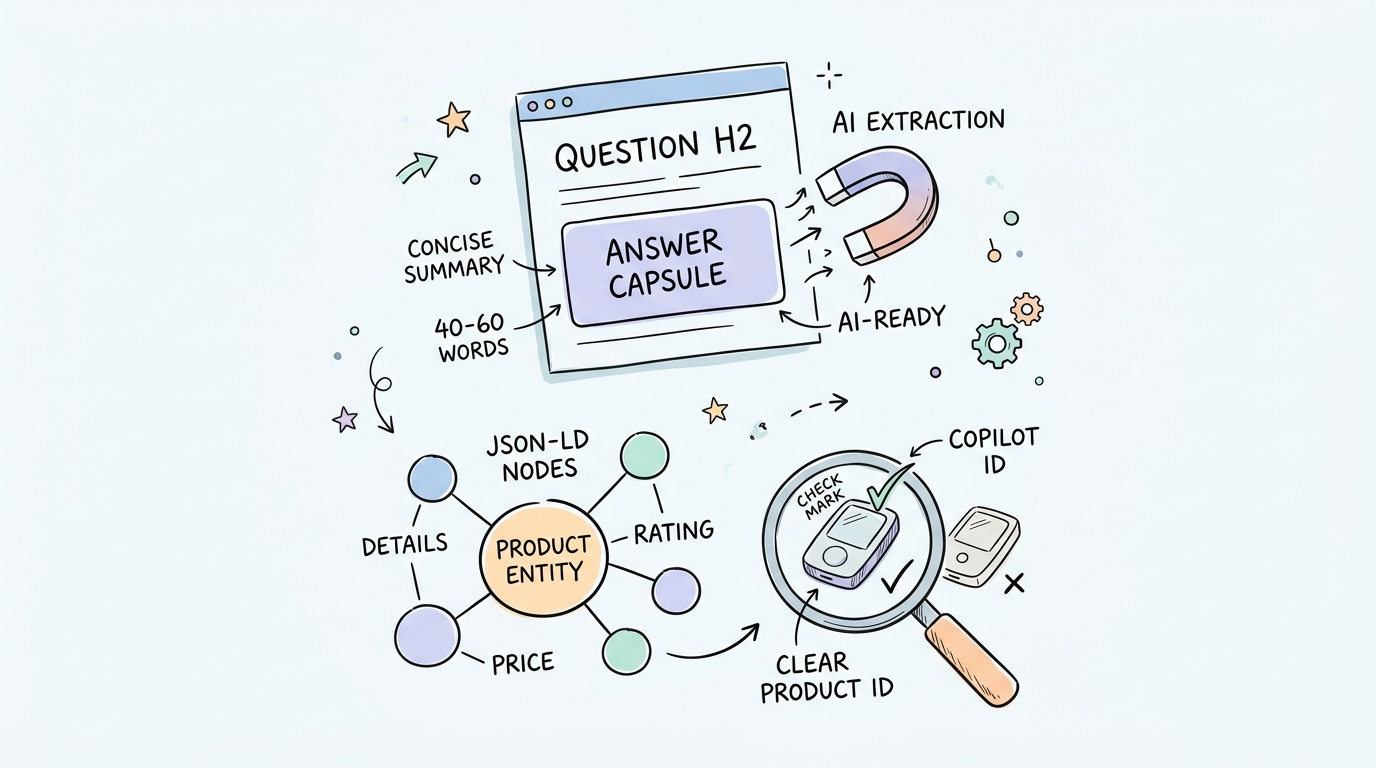
Entity disambiguation is critical here. You must clearly state the exact product version and year so Copilot doesn't mix it up with older models. Use plain, declarative sentences that lead with the most important fact. Direct answers reduce the AI's cognitive load during synthesis.
Example Answer Capsule
Is the Sony WH-1000XM5 better than the XM4 for travel?
The Sony WH-1000XM5 offers superior active noise cancellation (ANC) for high-frequency sounds compared to the XM4. While it lacks the folding design of its predecessor, the 30-hour battery life and improved microphone array make it the better choice for frequent flyers in 2026. The XM5 remains the premium choice for noise isolation.
Schema Markup for AI Overviews: Beyond Basic Product Snippets
Basic product schema is the bare minimum for 2026. To dominate RAG citations, you must use deep-nested JSON-LD to help the Microsoft Prometheus Model understand complex relationships. Deep nesting proves your page is a structured database.
{
  "@context": "https://schema.org",
  "@type": "Product",
  "name": "Example Tech Gadget",
  "review": {
    "@type": "Review",
    "reviewRating": {
      "@type": "Rating",
      "ratingValue": "4.5"
    },
    "author": { "@type": "Person", "name": "SEO Expert" }
  },
  "offers": {
    "@type": "AggregateOffer",
    "lowPrice": "299",
    "priceCurrency": "USD"
  }
}
This markup should live in the head of your document and reflect the exact values shown in your visual Answer Capsules. Discrepancies between your schema and your prose can lead to grounding failures. Consistency across data formats builds technical trust.
Validate your JSON-LD using Bing's URL Inspection tool specifically for 'machine readability'. If the crawler can't easily map your schema to your visible text, Copilot will likely skip your site for others. Precision in your markup is the new keyword density.
Measuring success in the age of AI requires moving beyond standard organic rankings. The Bing AI Performance Report introduces two critical metrics: Citations and Grounding Queries. A citation measures informational utility and proves your content was synthesized.
87% of citations directly match pages in the top organic results.
While an impression simply means your link appeared in a list of sources, a citation means the AI used your specific data to form its answer. You can analyze 'Grounding Queries' in Bing Webmaster Tools to see which specific internal searches triggered your content. This data reveals the exact questions users are asking the AI.
Use these insights to refine your Answer Capsules. If you see high impressions but low citations, your content may be too wordy or difficult for the model to extract cleanly. Optimization is now a cycle of testing for extraction efficiency.
Traditional SEO vs. RAG-Enabled Affiliate SEO
The Citation War is Just Beginning
The citation war is not won through volume alone, but through technical precision and speed. As Bing Copilot and other AI search engines evolve, the gap between 'indexed' and 'cited' will continue to widen. The first mover advantage belongs to those who index instantly.
Audit your technical infrastructure today. Ensure your price updates are pushed via IndexNow and your summaries are optimized for AI extraction. The future of search belongs to the most readable data.
Common Questions on Bing Copilot and IndexNow
Does IndexNow help with Google rankings?
No, IndexNow is an open-source protocol currently supported by Bing, Yandex, and partners like ChatGPT Search. While Google has its own indexing API for specific use cases, implementing IndexNow primarily ensures your content is ready for the Microsoft and OpenAI ecosystems. It is a foundational tool for AI-driven search engines.
What is the difference between a Citation and an Impression?
An Impression means your URL was listed as a 'source' at the bottom of an AI response. A Citation means the AI specifically highlighted or used a piece of information from your page to generate a sentence. Citations are a higher-value signal of content authority.
How long should an Answer Capsule be?
Target a length of 40 to 60 words for your primary summaries. This range is short enough for an LLM to digest in one 'glance' but long enough to provide the necessary context for a citation. Brevity increases the likelihood of extraction.
Do I need a special API key for IndexNow?
Yes, you must generate a unique API key within Bing Webmaster Tools. This key proves you own the domain and prevents unauthorized parties from triggering crawls of your site. Security is built directly into the protocol.
Will AI summaries kill affiliate revenue?
They change the model but do not kill it. Users who see your brand cited as a reliable source of price data are more likely to trust your site when they click through for the final purchase. Citations build a new form of high-intent brand equity.
 Kitful