BlogThe 2026 Content Gap Analysis Workflow: Targeting Weak SERPs and Forum Results
The 2026 Content Gap Analysis Workflow: Targeting Weak SERPs and Forum Results
Stop producing 'me-too' content. Our 2026 workflow shows you how to identify underserved forum results and technical AI gaps to steal rankings and LLM citations from competitors.
•6 min read
Keyword volume is a vanity metric that mostly leads to dead ends in 2026. If you're still building content based only on what your direct rivals do, you're already losing space to Reddit and Quora. Performing a content gap analysis for competitors shows that search is shifting from a volume game to an Information Gain game. Most brands are stuck in a cycle of creating "me-too" content that offers no new perspective or data. If an AI can summarize your whole article without losing any detail, your content is basically invisible to people today.
The BLUF: Your 2026 Competitive Advantage
Closing the content gap isn't just about filling a spreadsheet with missing keywords anymore. It's about finding where human searchers aren't getting expert answers and making your brand the go-to resource.
50% increase in ROI and traffic reported by brands doing systematic quarterly audits.
2.8x higher AI citation rate for content that closes the Information Gain gap.
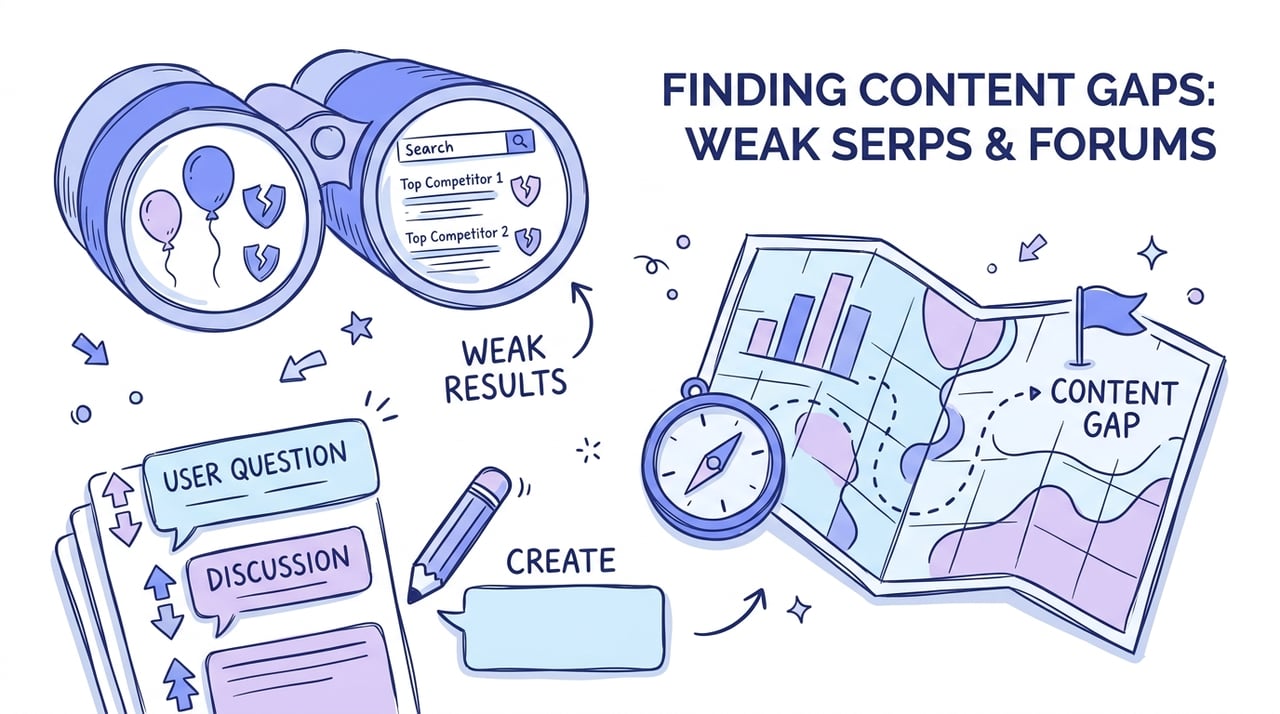
Forums like Reddit and Quora act as high-confidence signals for user needs that aren't being met.
Strategic alignment with AI answer engines is now a main driver for conversions.
Phase 1: Redefining Your 'True' SERP Competitors
Your real competition isn't just the company selling the same software. In the 2026 search world, your competitors are media sites, niche blogs, and big community forums that take the top three spots.
Start your audit by using Google Search Console to see where your own performance lags behind the rest of the market. Watch the "Discussions and Forums" block in search results for your main topics.
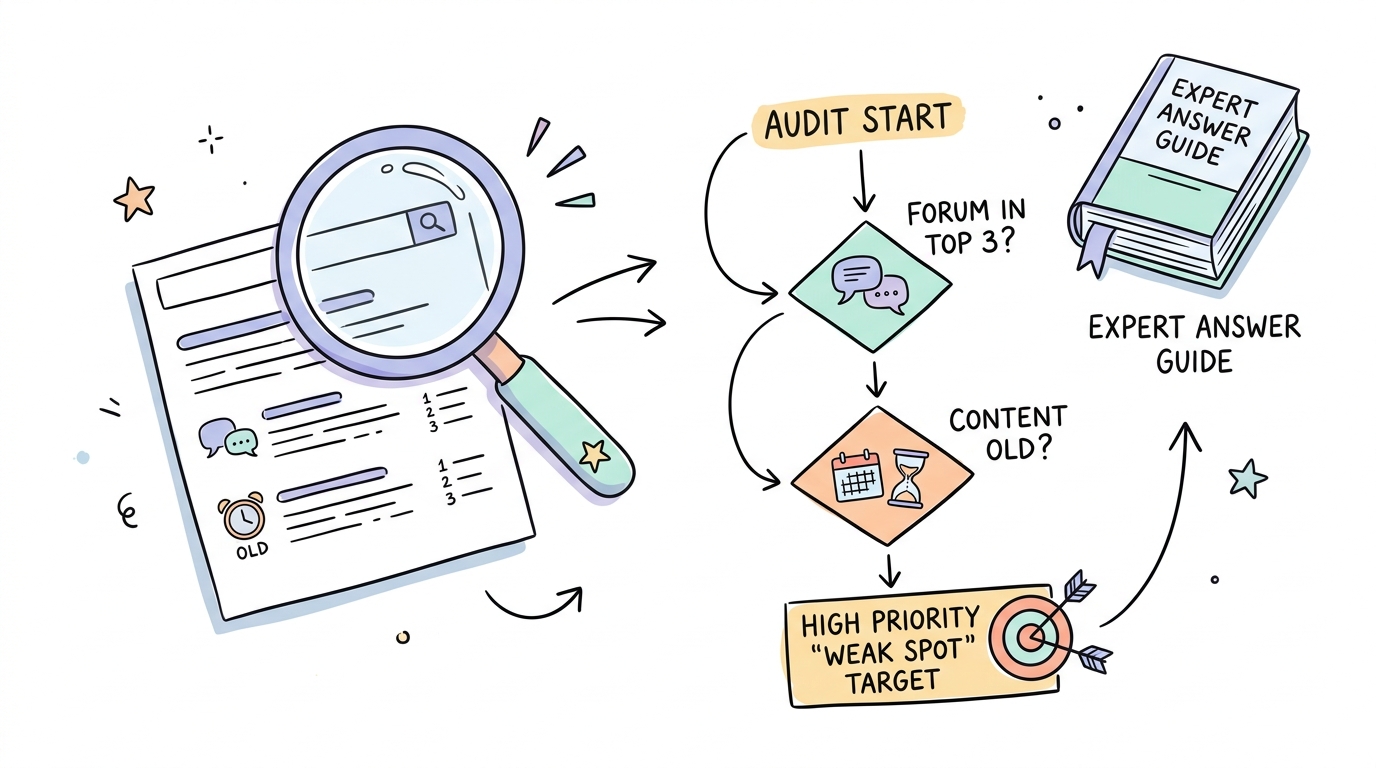
Here is a walkthrough of the main steps:
Rule: If a forum thread ranks in the top three for a commercial search, it's a direct signal that existing web content is failing the user. This is your best chance to take that spot.
Phase 2: Perform Domain-Level Keyword Mapping
The fastest way to find big traffic wins is to look for the "Three-to-One" overlap. This means finding keywords where at least three of your competitors rank in the top ten while your site is nowhere to be found.
Tools like the Semrush Keyword Gap Tool are vital for this. You can quickly map your domain against a few rivals to see exactly where they are taking clicks that you should have.
While volume matters, you have to filter these results by intent first. A keyword with 100 searches that leads to a sale is worth more than 10,000 searches that just end in a bounce.
The Ahrefs Content Gap Analysis tool lets you look into specific subfolders. This helps you see if a competitor is winning on a certain product line or educational topic that you missed in your site structure.
Phase 3: The 'Weak Spot' Audit for Forum Displacement
A "Weak Spot" is any search result filled with old content, thin user posts, or forum threads. These are easy wins for 2026 SEO because they prove people want a professional, clear answer.
Using the LowFruits Weak Spot Finder, you can filter results to find keywords where sites with low authority or high forum presence are winning. These spots are weak and easy to grab if you give people a better resource.
Reddit and Quora results are the best signs of a content gap. When users go to forums, it's usually because the top articles are too generic or too salesy to trust.
Decision Rules
If forums (Reddit or Quora) are in the top 3, prioritize making a clear, structured guide with expert tips.
If competitors have high authority but content older than 2 years, target them with new data and a better layout.
If the gap is in "AI Visibility," focus on structured data and short "answer-first" paragraphs.
If all top results are video, fix the format gap by making a short video to embed.
Phase 4: Engineer Your Information Gain Hook
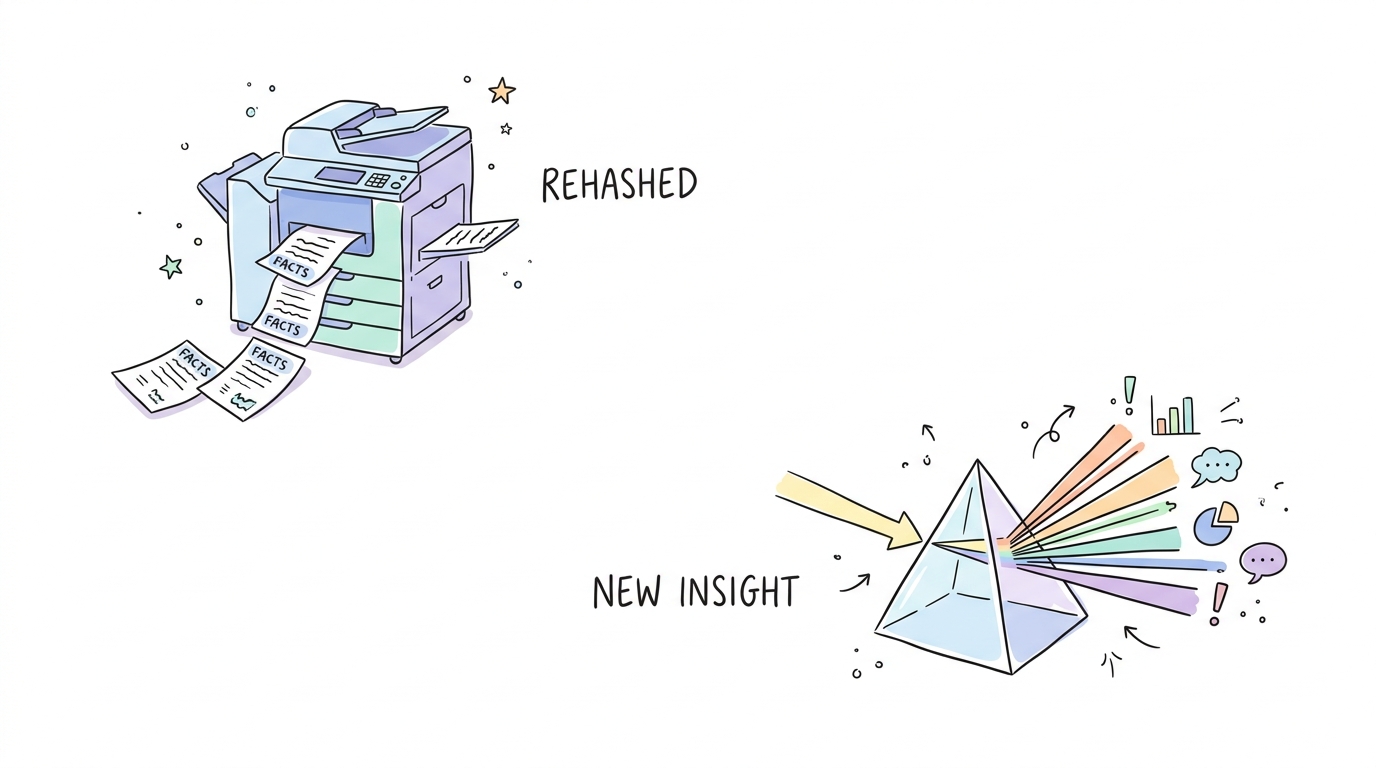
Information Gain is the unique value you add to the web that isn't already in the top results. In a world of AI summaries, unique data and personal experience are the only things that keep rankings steady.
The most valuable gap often isn't a missing keyword but a missing perspective. If you're just rewriting what the top three results say, you aren't closing a gap. You're just adding to the noise.
Think about what proprietary data, case studies, or different opinions you can share. This is what makes your content worth citing for both human readers and AI models.
Example
A B2B SaaS company saw Reddit threads ranking for "best CRM for small law firms." Instead of a basic list, they made a comparison guide using real user reviews from their own database. They hit the number one rank in three weeks. This worked because they gave specific, structured data that the forums didn't have.
Phase 5: Optimize for AI Visibility (AEO/GEO)
In 2026, being invisible in AI Overviews and LLM citations is a big risk. Content gap analysis now includes checking if competitors are being cited by ChatGPT or Perplexity for your topics.
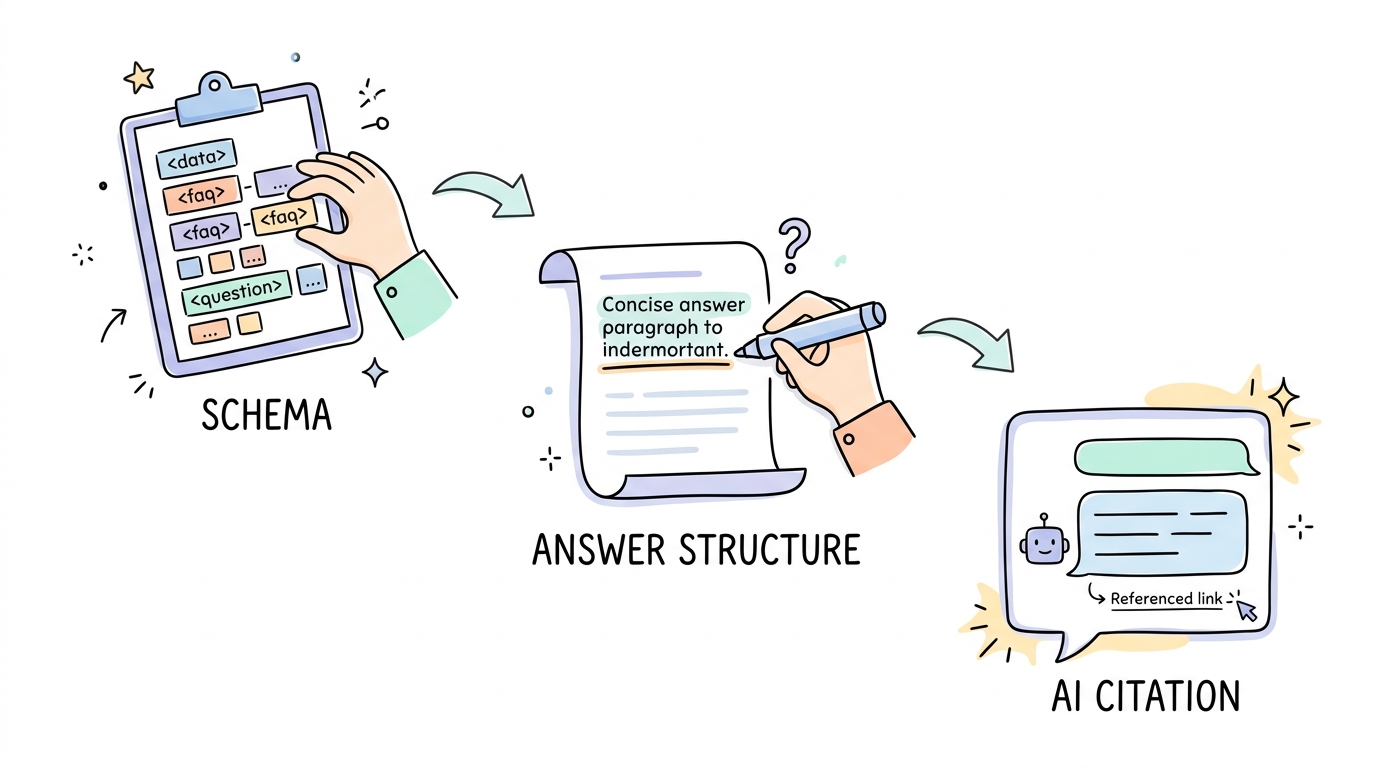
Content built with clear headings and FAQ sections gets nearly triple the citations. To win these spots, you need an "answer-first" style that gives the AI a clear piece of text to pull.
Use FAQ schema to point out the most important questions and answers. This helps search engines see the exact value of your page. It also makes it more likely you'll show up in a featured snippet or AI answer.
AI Readiness Checklist
Use H3 headers for specific user questions.
Give the answer in the first 2 sentences of the paragraph.
Add valid FAQ or How-to schema.
Include 2 or more unique points of Information Gain for LLMs to cite.
Check all markup with the Rich Results Test tool.
Prioritizing Your Targets: The Opportunity Matrix
Not all gaps are worth filling immediately. Use this matrix to score your opportunities based on the potential ROI and the ease of ranking against the current SERP holders.
Opportunity Scorecard
Gap Type
Priority
Why It Matters
Best Action
Forum in Top 3
High
High confidence user need
Create expert guide
AI Visibility Gap
High
Competitors getting citations
Add FAQ schema
Outdated Content
Medium
High DA site is vulnerable
Update with fresh data
Format Gap
Medium
SERP wants video/tools
Build specific asset
Missing Keyword
Low
High volume but no intent
Monitor for now
5 Common Mistakes to Avoid in Your Audit
Many teams treat gap analysis as a one-time job rather than a regular habit. This leads to missing "Hidden Gems" found in forum results and focusing too much on vanity numbers.
Targeting by volume only: Missing low-volume keywords that actually make money.
Creating 'me-too' content: Giving nothing new that an AI couldn't already figure out.
Ignoring forums: Not seeing Reddit and Quora as signs of a need for better content.
Ignoring SERP competitors: Only looking at business rivals instead of media sites.
Stale audits: Doing the work once a year instead of every three months.
Pitfall: Making content that is slightly longer but provides no new Information Gain won't help you rank in 2026. AI models and search engines now value unique info over word count.
Building Your Quarterly Gap Rhythm
SEO success in 2026 belongs to those who see search as a mix of different perspectives. By closing gaps in Information Gain and AI Visibility, you keep your brand relevant as search changes.
Start by checking that the ranking pages for your target keywords have a lower authority score than your own site. This ensures you can actually take the spot you want.
Check site authority against competitors.
Make sure there are at least 2 unique points of Information Gain per piece.
Check FAQ schema for AI use.
Set your next audit for 90 days from now.
Find your first "Weak Spot" in the search results and start drafting your expert guide today.
 Kitful