BlogThe 2026 Schema Blueprint: Optimizing Structured Data for Google AI Overview Citations
The 2026 Schema Blueprint: Optimizing Structured Data for Google AI Overview Citations
Optimize your technical SEO for the AI-era. Learn the precise JSON-LD configurations and entity-linking strategies required to secure highly visible Google AI Overview citations.
•9 min read
The old search playbook has a major flaw. Most content creators worry about word counts and keyword density, but they completely ignore how AI models actually read information. Right now, only 12.4% of websites use clean, validated schema markup for AI Overviews. That means nearly nine out of ten sites leave their technical visibility entirely to chance.
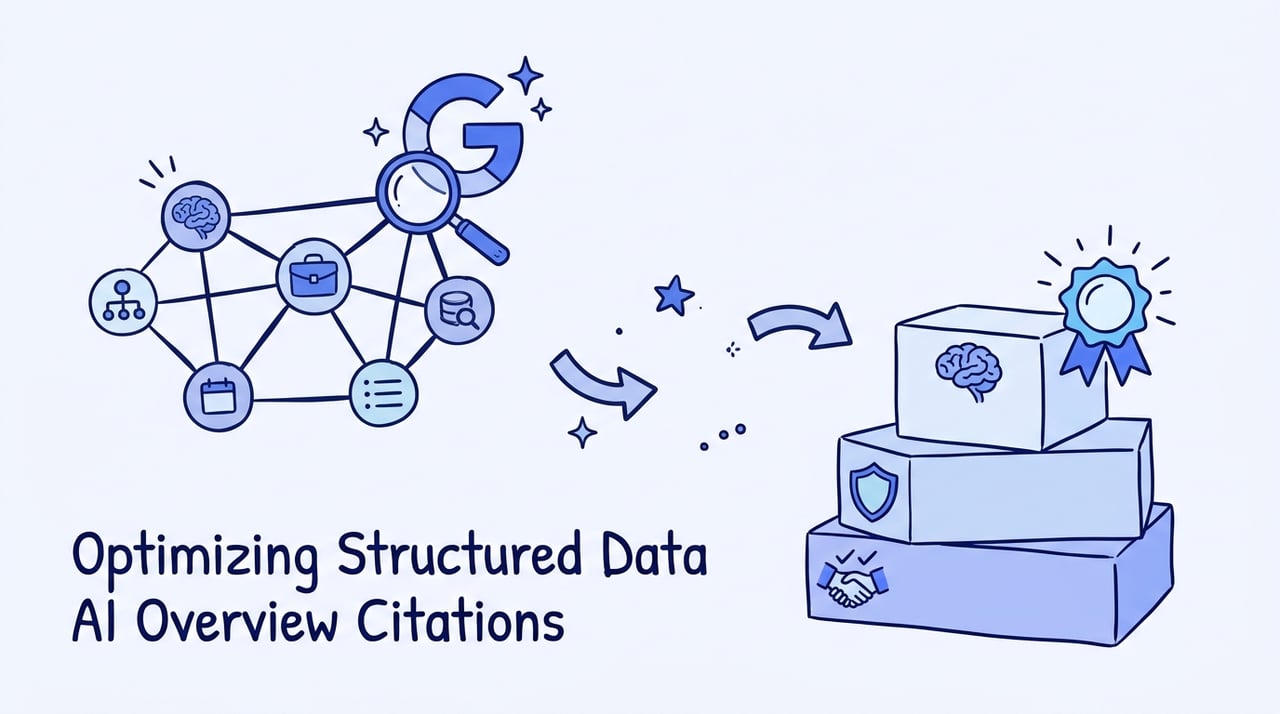
In the era of Gemini and chat-based search, schema isn't just for winning review stars or shiny rich snippets. It is the direct pipeline to Retrieval-Augmented Generation (RAG) search engines. When you turn plain text into machine-readable data, your pages are 3.4 times more likely to get cited in generative search results.
If you ignore this setup, you leave your organic traffic exposed. Setting it up helps make your site a trusted database that AI engines simply can't ignore.
The 2026 Schema Blueprint: Key Takeaways
Here is a quick summary of the main steps in this plan:
Map Entity Authority: Connect your brand directly to trusted databases like Wikidata using exact sameAs properties.
Deploy High-Citation Schemas: Use FAQPage, HowTo, and Person markup to feed Gemini clean Q&As and step-by-step guides.
Audit Code Continuously: Make sure AI bots can access your JSON-LD code without any errors.
How Google Gemini Uses Schema as an LLM Map
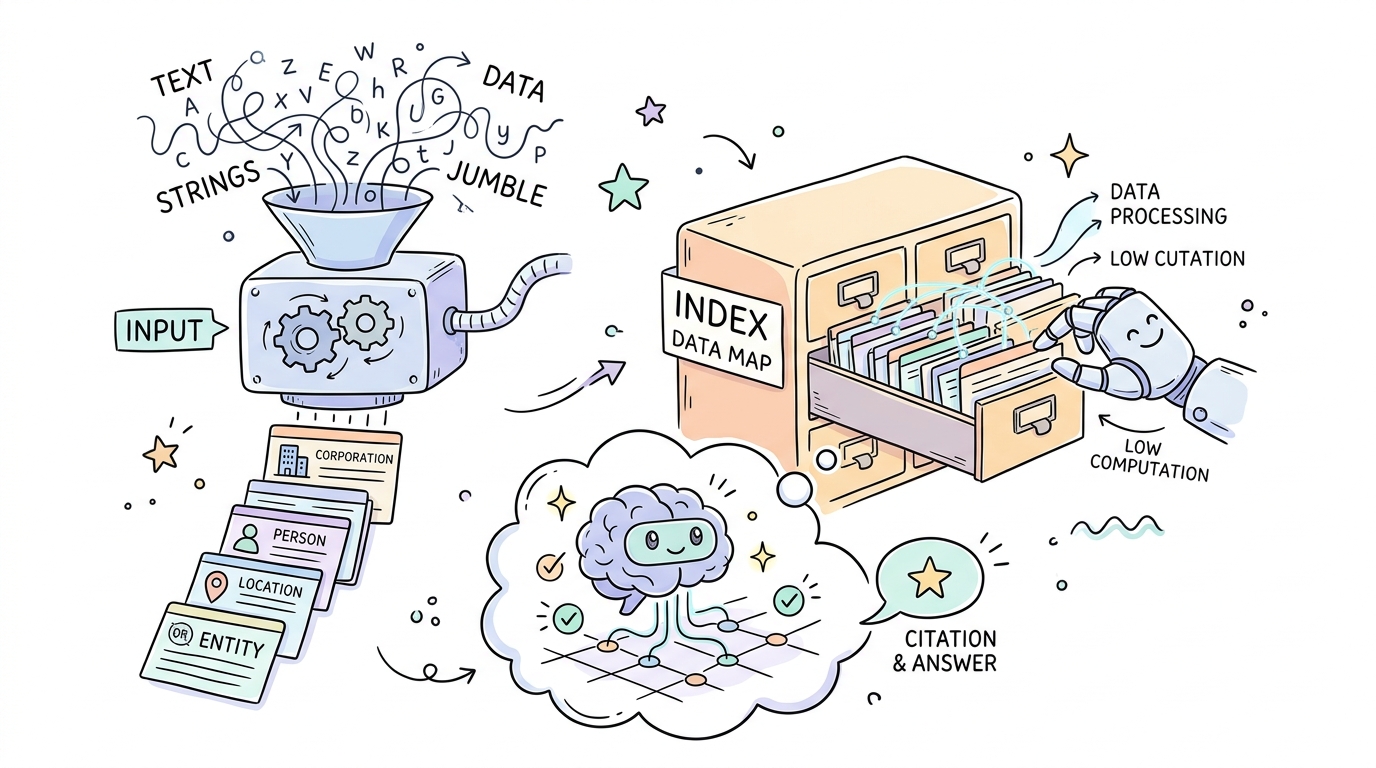
AI models don't read websites the way humans do. Search engines have to translate messy strings of text into structured entities, which are real things with clear relationships, to build their knowledge graphs. Think of structured data as a digital card catalog.
When Google Gemini builds an AI Overview, it uses Retrieval-Augmented Generation (RAG). RAG engines search an index, pull relevant text, and write a summary. When you wrap your content in clear JSON-LD schema, the engine doesn't have to guess the context. It takes less computing power to read your site, which makes your content the easiest choice to cite.
You can get up to a 50% boost in generative search visibility by setting up schema. Normal ranking factors still matter, but structured data makes it much easier for search bots to find and use your content.
Here is a practical video walkthrough that covers how to optimize content and get featured in Google's AI Overviews:
Using this framework is key. To build a clean schema map, developers should follow the standards on Google Developers Search Central.
With only 12.4% of websites currently using clean, validated schema, early adopters get a massive technical head start.
The High-Citation Schema Matrix: Essential Types to Deploy
To get cited in AI Overviews, you need to use structured code that fits how Gemini gathers data. Here are the main schema types you should set up and what they do.
FAQPage Schema
This markup turns simple Q&A blocks into clear inputs for search engines. It gets cited often because AI Overviews constantly pull fast answers for conversational searches.
Best For: Conversational questions and quick answer summaries.
Tradeoff: It can answer the user's question right on the search page, which might lower your clicks even as it builds brand awareness.
HowTo Schema
This type organizes step-by-step instructions. It lets AI models read and cite complicated guides while keeping the steps in the right order.
Best For: Tutorials, technical guides, and how-to articles.
Tradeoff: You have to use strict list structures that match the text on your page exactly.
Article and Author Schema
This combination links authors and their credentials. It gives search engines clear proof of who wrote the content, which helps support your site's credibility.
Best For: Blogs, news, and technical articles.
Tradeoff: You have to keep author profiles and social links updated regularly.
Organization Schema
This defines your main brand. By using sameAs properties, it connects your company to known entities in Google's Knowledge Graph.
Best For: Brand authority and setting up your business identity.
Tradeoff: You need to keep it consistent across all your social channels and sites to avoid confusing search engines.
Product Schema
This shares details like prices, star ratings, stock levels, and shipping costs. It is highly important for getting cited in shopping search results.
Best For: E-commerce, review sites, and product directories.
Tradeoff: You have to sync your inventory and prices in real time to avoid validation errors.
ProfilePage Schema
This verifies authors by linking directly to their social profiles and portfolios. It serves as external proof of who they are.
Best For: Author bios and expert pages.
Tradeoff: It won't bring in much direct traffic, but it is a strong trust signal.
Implementing Entity-Linked JSON-LD: A Step-by-Step Playbook
To earn citations, your structured data must be deeply connected rather than fragmented. This process requires nesting schemas to build a single, logical entity map.
Let's look at how this plays out in the real world. A detailed Wix.com case study proved that deploying connected, entity-linked schema markup resulted in a 19.72% direct increase in AI Overview visibility. Without this deep linking, their pages remained isolated blocks of text that AI crawlers frequently bypassed.
Step 1: Map the Brand Entity Hierarchy
Begin by defining your organization. Connect your company directly to external authority nodes like Wikidata, official social handles, and business profiles using the sameAs property. This anchors your brand within Google's Knowledge Graph.
Step 2: Deploy Format-Specific JSON-LD
Configure specific schemas matching your page templates. Do not apply a generic article schema to a tutorial. Use HowTo markup for guides and FAQPage markup for Q&As to ensure clean, structured data ingestion.
Step 3: Verify E-E-A-T Programmatically
Inject comprehensive Person and ProfilePage schemas. Map authors to their existing credentials, such as personal websites or LinkedIn accounts, to build trust with search engines.
Step 4: Front-Load AI-Ready Answers
Construct a direct answer block of roughly 50 words immediately below your main headers. Use an "X is Y" structure. This provides a highly clean text block that AI models can extract instantly alongside your JSON-LD.
Here is a valid JSON-LD code snippet illustrating how to nest an Organization, its Author, and their social profiles:
Always test your code using the Google Rich Results Test. This step confirms that search bots can read your structured markup without parser exceptions.
Tip: Never mix local business properties directly into a pure editorial article schema. Keep these schemas separate or clearly nested to avoid sending conflicting signals to search crawlers.
Scaling Defensibility: Programmatic SEO and Policy Compliance
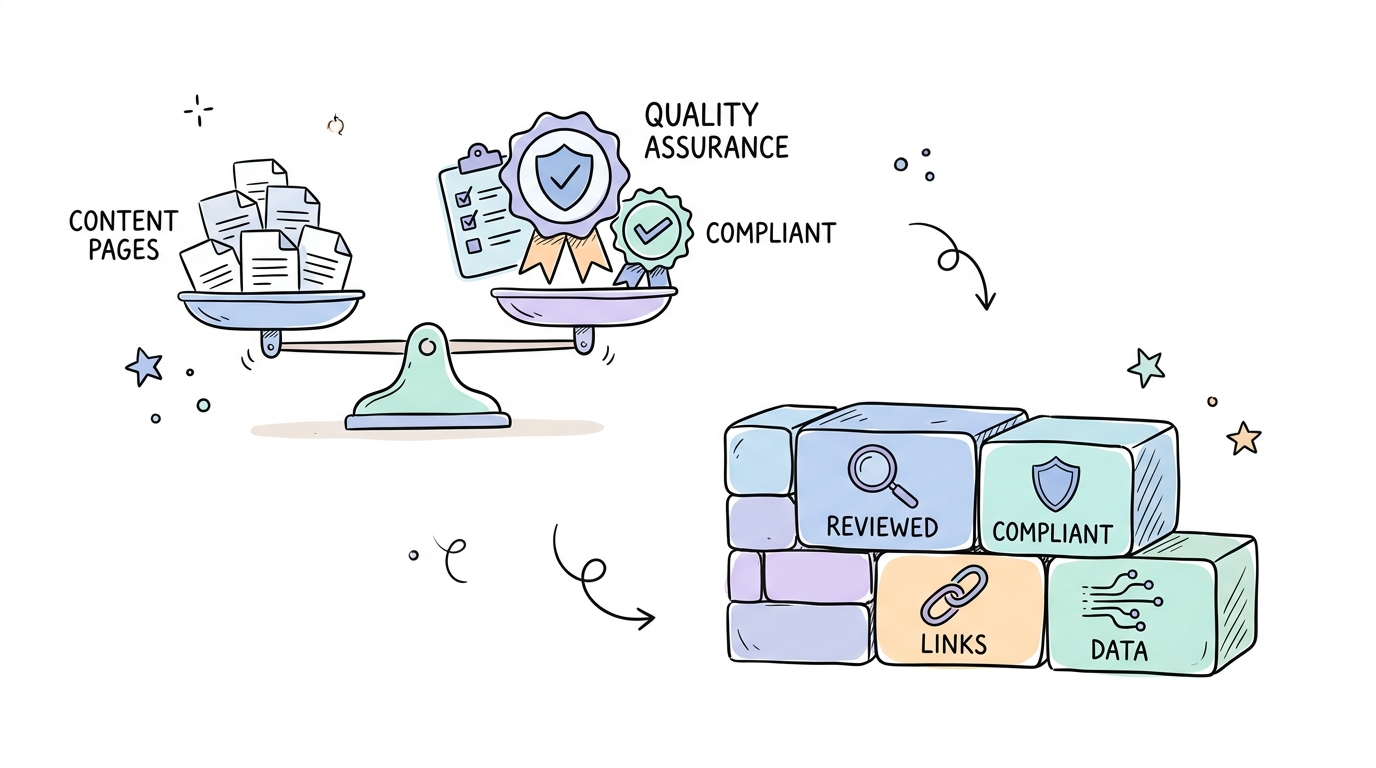
To scale programmatic SEO in 2026, you must avoid lazy, templated pages. Search engines easily spot content whipped up from simple spreadsheets. If you want to keep an edge, you have to build data-rich templates that focus on unique information.
A good programmatic setup uses real-time API pricing, dynamic FAQ schema, and three to five unique internal links on every page. This approach works well for search engines and gives real value to users. For instance, automated tools like Kitful AI can write search-ready articles in over 50 languages and handle direct publishing, though you still have to manage custom internal links yourself. Combining these tools with your own unique data will help grow your search presence.
You also need to follow Google's updated rules on Site Reputation Abuse. If you host unmoderated guest posts or sponsored content just to piggyback on another site's authority, you will get hit with manual penalties.
If you are building programmatic pages, then make sure every template is at least 60% unique and has 5 different data points to get past spam filters.
If you are going up against high-authority sites on health or finance topics, then prioritize detailed Person schema linked to external databases like Wikidata or Crunchbase.
If you are working on local directories, then add LocalBusiness schema with exact coordinates right inside your category pages.
Pitfall: Blocking AI crawlers like GPTBot, ClaudeBot, or PerplexityBot in your robots.txt file stops them from reading your site. That completely ruins your chances of getting cited in conversational search.
SEO vs. GEO: Comparing Strategic Search Priorities
Strategic search has bifurcated into traditional SEO and Generative Engine Optimization (GEO). Understanding how these systems differ helps clarify where to allocate your technical resources.
Featured Snippets extract an exact quote from a single high-ranking web page to answer a specific query. In contrast, AI Overviews leverage advanced LLMs to synthesize an entirely new, multi-source paragraph from several distinct pages. This requires a fundamental shift in how we structure content.
Strategic Dimension
Traditional SEO
Generative Engine Optimization (GEO)
Primary Goal
Maximize search engine ranking positions to win direct clicks.
Earn AI citations and brand impressions in conversational answers.
Key Tactics
Focus on meta tags, keyword densities, and backlink velocity.
Prioritize machine-readable structure and brand entity validation.
Target Nodes
Classic blue search engine results page hyperlinks.
Multi-source syntheses, AI summaries, and chat follow-ups.
Performance Metrics
Organic click-through rate and traditional impressions.
Citation share of voice and conversational brand mentions.
Auditing Your Code: Validation and Verification Protocols
Once your schema is live, you have to keep an eye on it. Small syntax errors can stop search bots from reading your structured data at all.
Ensure your team uses a direct check-up process:
Run your URLs through the schema validator to check for formatting errors.
Keep an eye on your Google Search Console reports to spot issues across groups of pages.
Double-check your robots.txt file to make sure you are not blocking search bots from reading your JSON-LD code.
Try running live search queries in Gemini, ChatGPT, and Perplexity to see if your brand is getting cited correctly.
Frequently Asked Questions: AI Overviews & Schema
Does schema markup improve AI Overview visibility?
Yes, pages with clean JSON-LD are 3.4 times more likely to be cited in generative answers. It gives AI models the clear data they need to verify and cite sources.
What types of schema are best for Google AI Overviews?
FAQPage, HowTo, Article, Author, and Organization schemas work best. These types match up with the natural, question-based searches that usually trigger AI Overviews.
Has Google's policy on programmatic SEO changed?
Yes, lazy programmatic pages without unique details now trigger Google's spam penalties. To rank well, your pages need real-time data, unique internal links, and error-free schema.
The Defensible SEO Roadmap for 2026
Search has changed for good. To win in the era of generative AI, you have to stop thinking of your site as just articles and start building a database machines can easily read.
Defining your brand as a real-world entity, not just tweaking basic page formatting, is how you earn AI Overview citations. Make sure you don't make simple mistakes like leaving out "Last updated" dates or blocking AI bots in your robots.txt file.
By building a connected, entity-linked schema plan, you protect your search traffic with a strong technical moat. Start checking your structured data today to secure your place in conversational search.
 Kitful