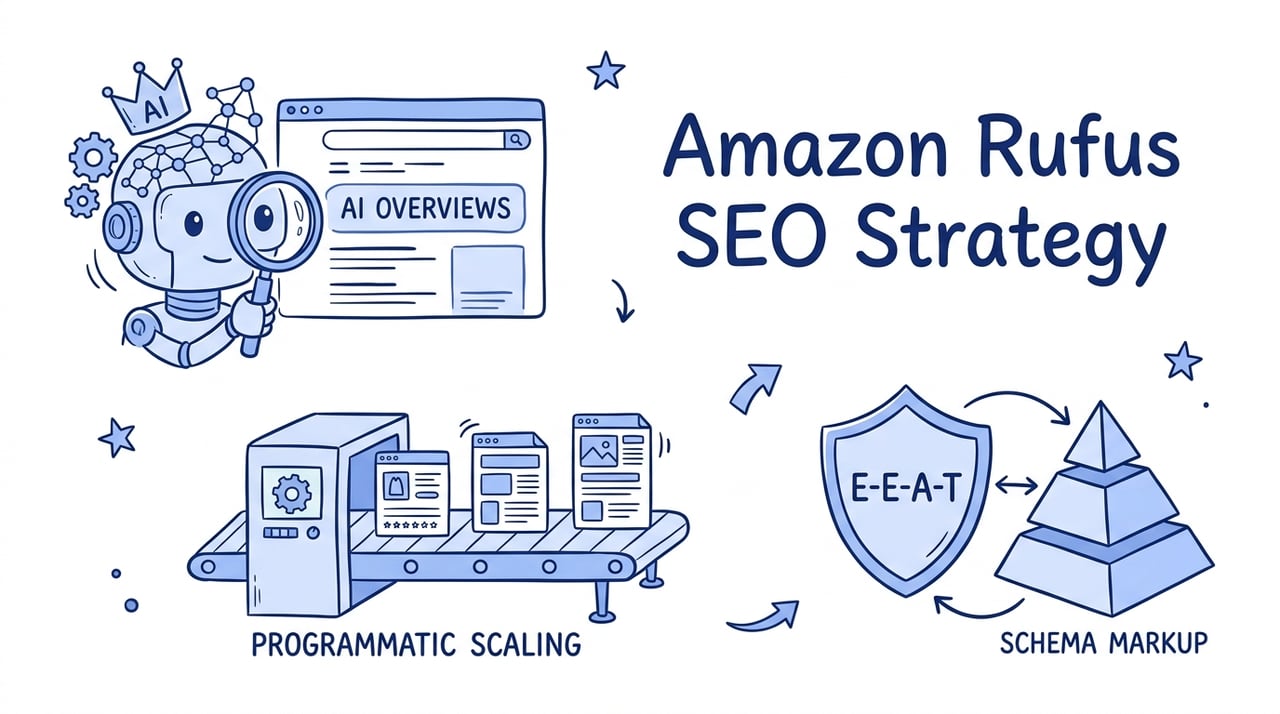
Keyword math is officially dead. If you are still stuffing titles with high-volume strings and crossing your fingers, you are optimizing for a ghost.
By 2026, the Amazon search algorithm has turned into a tool called Rufus that values actual meaning over keyword density. This AI SEO strategy for Amazon Associates 2026 focuses on listings that work as clear data systems. These are winning, while old SEO tricks are getting filtered out.
The 2026 SEO Blueprint At A Glance
- Listing Engineering: Moving past keywords to make product data that machines can read easily.
- EEAT-First Scaling: Using AI helped by experts to build authority without getting hit by spam filters.
- Link Reasoning Architecture: Organizing internal links to help both AI agents and regular people.
These steps make sure your brand isn't just found. They help you get picked and suggested by AI agents all over the web.
From A9 To Rufus: Understanding The 2026 Paradigm Shift
The move from A9 to Rufus is a change from matching words to knowing what a user wants. Rufus does more than just find your product. It reads reviews, A+ content, and Q&A sections to decide if you are the right answer for a buyer's problem.
About 15-20% of mobile shopper searches now go through Rufus.
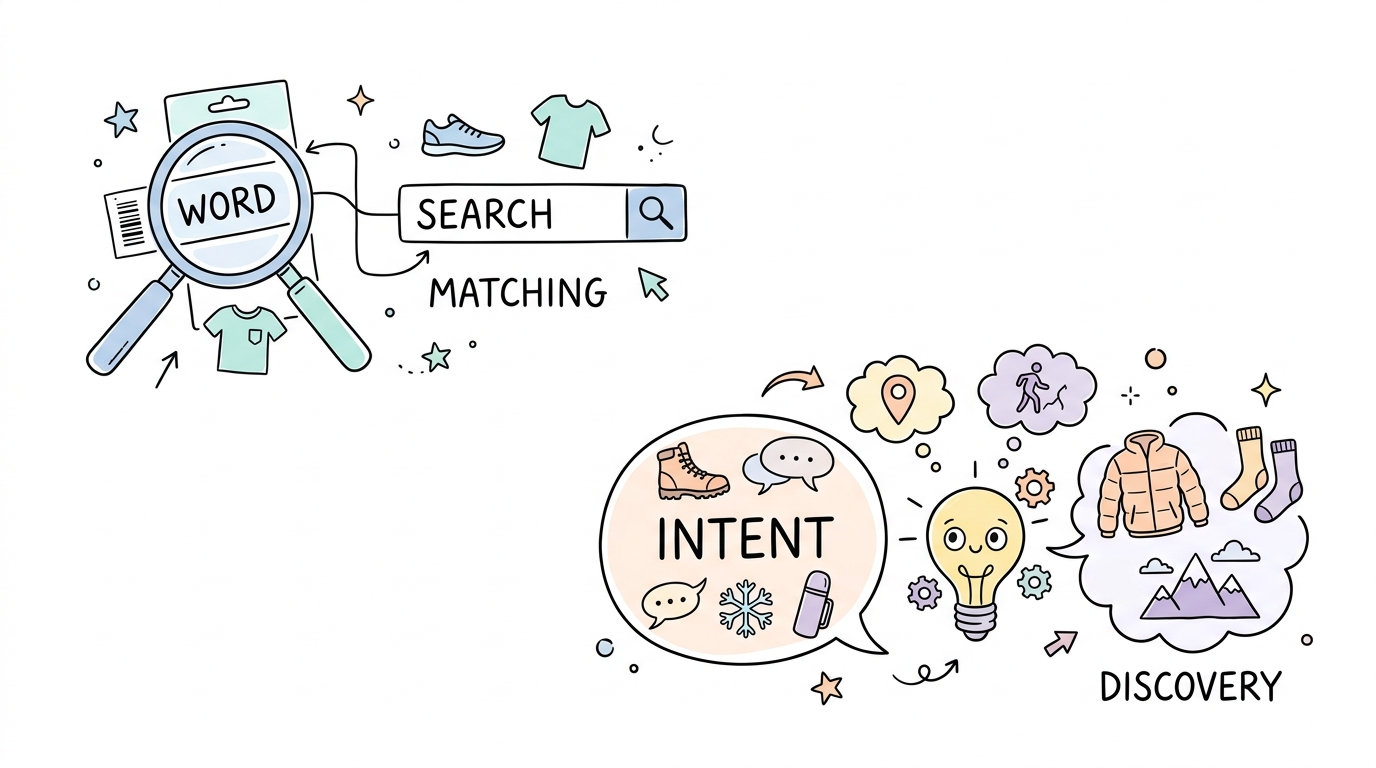
This change means your A+ content isn't just for looks anymore. Rufus reads every word in your A+ modules. It uses this as a main source of product facts to help it talk to customers.
The 5-Checkpoint EEAT Workflow For AI Scaling
Making content in 2026 requires a clear line between cheap AI spam and content handled by people. Using AI with expert help is the only way to stay safe from the wave of unedited summaries that Google now marks as content abuse.
A strict workflow lets you keep quality high while making more content. You can use tools like Kitful AI for the first research and drafts, as long as you add real expertise at the end.
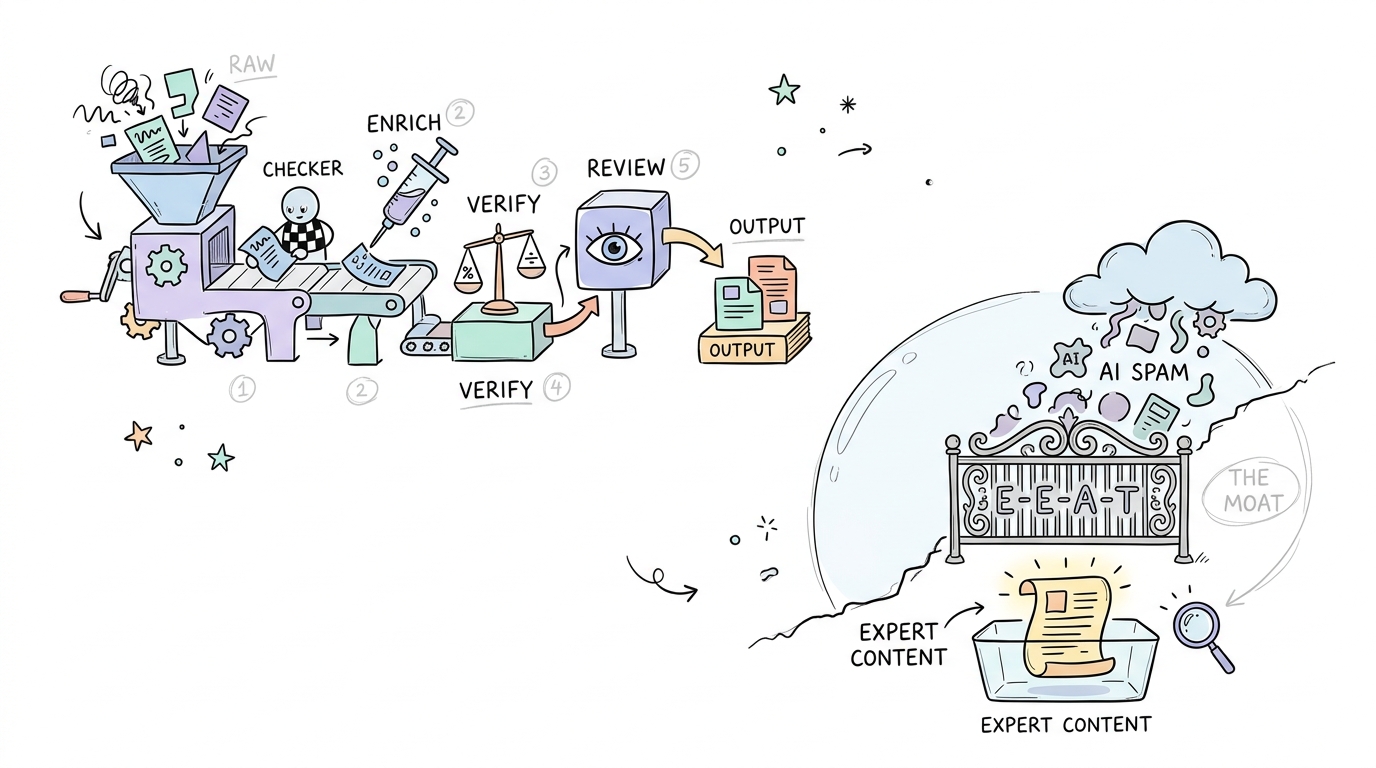
- Research Verification: Check your starting data against the Search Query Performance reports in Seller Central.
- Expertise Injection: Add your own thoughts, real photos, or test data that an AI can't just make up.
- Fact-Checking: Double-check technical specs and claims against the real product manual.
- EEAT Audit: Make sure the author profile and site history show you know the topic well.
- Final Review: Read through it yourself to make sure the tone stays sharp and sounds human.
- Check all AI drafts for technical errors
- Add original photos of the product in use to every review
- Link authors to real social or professional pages
- Cut out any generic pros and cons that don't talk about the specific product
Note: Use Amazon Brand Analytics to find the exact phrases shoppers use right before they buy.
Listing Engineering: Technical SEO For Multimodal Discovery
Listing engineering is the practice of treating your Amazon page like a set of technical papers. Rufus uses Optical Character Recognition (OCR) to read your pictures. This makes the text you put on images more important for AI discovery than ever before.
Example
A shoe brand saw that users often asked about arch support. Instead of just a bullet point, they made a graphic with big text saying Superior Arch Support for Flat Feet. Rufus read that text. This led to a 3.2x increase in recommendations for that specific customer need.
Change your bullet points into claims you can prove instead of just marketing talk. Use phrases backed by data that answer the questions found in your Search Query Performance reports.
Rule: Do not use keyword-stuffed titles that confuse AI systems. Being clear is always better than having a high volume of words.
Advanced Schema: Building Domain-Level Knowledge Graphs
To be cited by AI Overviews, your site must provide machine-readable proof of authority. Pages with valid structured data have a 3.2x higher chance of being cited than those without it.
Using Gemini to generate JSON-LD schema is a standard move, but you must validate it through a syntax firewall like Pydantic. This prevents hallucinations from breaking your site's technical SEO.
// filepath: /content/schema/product-node.json
{
  "@context": "https://schema.org",
  "@type": "Product",
  "name": "Pro-Level Running Shoe",
  "brand": {
    "@type": "Brand",
    "name": "SpeedTech",
    "sameAs": "https://www.wikidata.org/wiki/Q12345"
  },
  "review": {
    "@type": "Review",
    "author": {
      "@type": "Person",
      "name": "Jane Doe",
      "sameAs": "https://twitter.com/janedoe_expert"
    }
  }
}
Connecting your brand and authors to Wikidata entity nodes via sameAs properties is the fastest way to verify authority. This creates a link in the global knowledge graph that AI agents use to verify your credentials.
Pitfall: Mismatched data between your Schema markup and on-page visible content will trigger a 'Spammy Structured Data' flag.
The Link Reasoning Architecture (LRA) Framework
the Link Reasoning Architecture (LRA) helps AI models understand how your pages relate to each other. You start by building an Authority Spine. This is a big main page that covers a wide topic in detail.
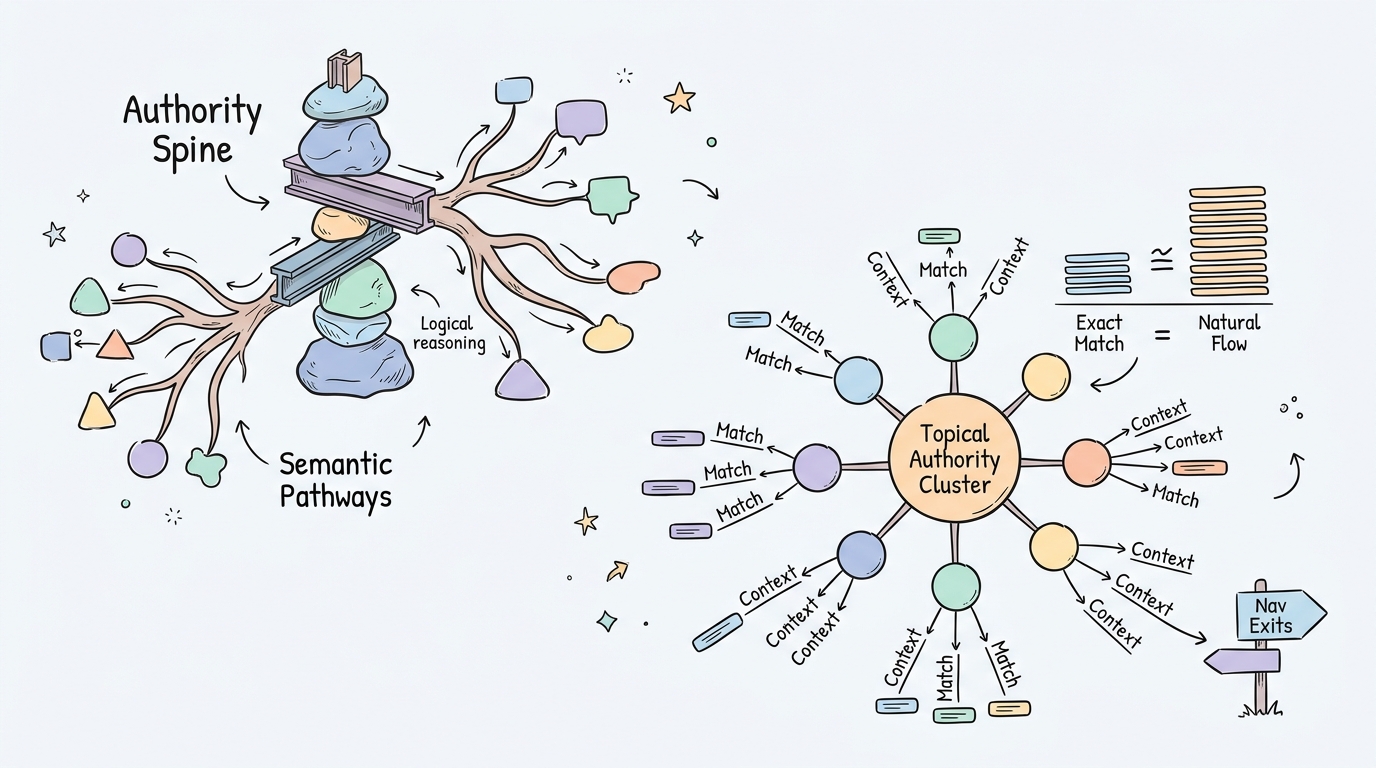
From there, you create Semantic Pathways. You do this by linking smaller, specific pages back to the main page using different link text. In 2026, keeping a 15-25% exact-match link text ratio is the best way to rank without looking like you are gaming the system.
- If you want Rufus to find you: focus on Q&A and images with clear text.
- If you are making many pages: make sure every page is useful to avoid being flagged for spam.
- If you are building authority: use the LRA setup to link your pages back to a central hub.
This setup lets search engines follow a logical path. It shows you have covered a whole topic rather than just posting random affiliate links.
Google Site Reputation Abuse & Policy Defense
Google's 2026 rules are tough on sites that don't offer original value. Putting affiliate content on third-party subdomains is now a big risk. It can lead to a Site Reputation Abuse penalty.
If you have a bunch of thin AI reviews, you should combine them. Merging 500 low-quality pages into 50 expert Comparison Hubs can help you get back traffic lost in recent updates.
Rule: Every page on your site needs a reason to exist other than just having an affiliate link.
SEO Strategy Comparison: Traditional vs. 2026 AI-Era
This table summarizes the shift toward a structured knowledge approach for modern search environments.
The Future Is Recommendation, Not Ranking
The future of SEO isn't about fighting for the first blue link. It is about being the suggestion that Rufus gives a shopper during a chat.
By using the LRA framework and mastering listing engineering, you make your brand a trusted source. Start by checking your top 10 listings for images with readable text today.
AI SEO For Associates: Frequently Asked Questions
How does Rufus impact Amazon Associate commissions?
Rufus can help people buy more by answering questions directly. But it might also skip some old ways people clicked affiliate links. Focus on being the top recommendation to stay relevant.
Will AI-generated content get my site penalized in 2026?
It will if it is unedited and lacks new value. Google likes content that shows real expertise, even if AI helped write the first version.
What is Listing Engineering?
It is how you set up your product data, photos, and A+ content so AI agents can read them easily. This includes using text in images and claims you can back up with data.
How do I use Wikidata for SEO?
Connect your brand or author profiles to Wikidata entries using the sameAs schema code. This helps AI models confirm who you are and that you know what you're talking about.
 Kitful