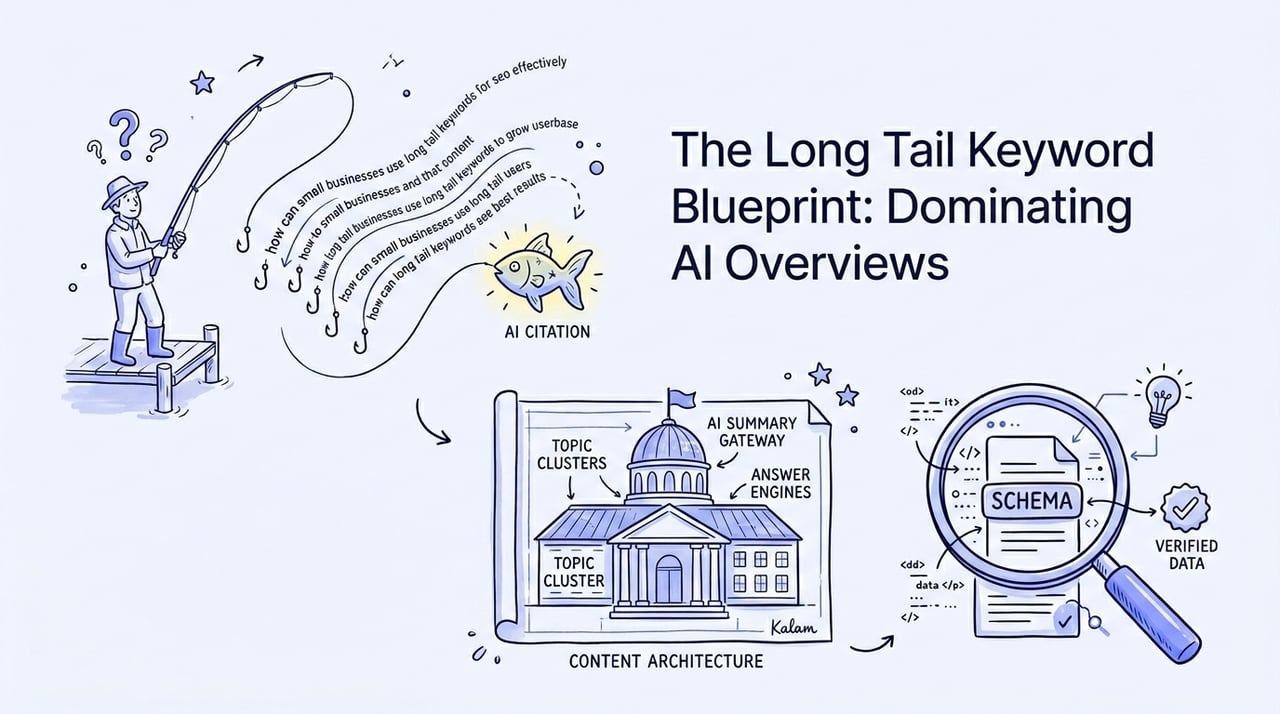
The old SEO playbook is officially burning. Your organic click-through rate just took a 34.5% hit because Google decided to answer questions directly on the search page.
Traditional head terms are becoming zero-click graveyards. Nearly 55% of all searches now trigger an AI Overview, shifting the goal from ranking first to being cited as a source.
To survive, you must pivot from high-volume keywords to deep-intent phrases that demand a generative response.
The AI Overview Strategy At A Glance
Winning in 2026 requires a total mental shift. Visibility is no longer about blue links; it is about search inclusion and source worthiness.
Here is the core strategy for dominating the AI-driven search landscape:
- Target queries with 4 to 8 words to maximize trigger rates.
- Prioritize source worthiness by answering questions in the first two sentences.
- Capitalize on high-intent traffic that converts 23x better than standard visitors.
- Monitor citations from positions 21 through 100 to find hidden opportunities.
- Build semantic depth rather than focusing on keyword density.
Why Long Tail Keywords Trigger Google’s AI Overviews
Google uses generative AI to synthesize complex information when simple answers will not suffice. Informational intent drives 99.2% of all AI Overviews, making deep-dive content more valuable than ever.
99.2% of keywords triggering AI Overviews have informational intent.
The length of the user's query is the strongest predictor of whether an AI response will appear. Queries with 4 or more words trigger generative results 60% of the time, according to the Ahrefs: AI Overview Search Intent Study.
Step 1: Identify High-Probability AIO Keywords
Finding the right keywords starts with looking for existing AI footprints. Use the SERP feature filters in your SEO tools to isolate queries that already trigger generative summaries.
Aim for phrases with a Keyword Difficulty around 12 to find the path of least resistance.
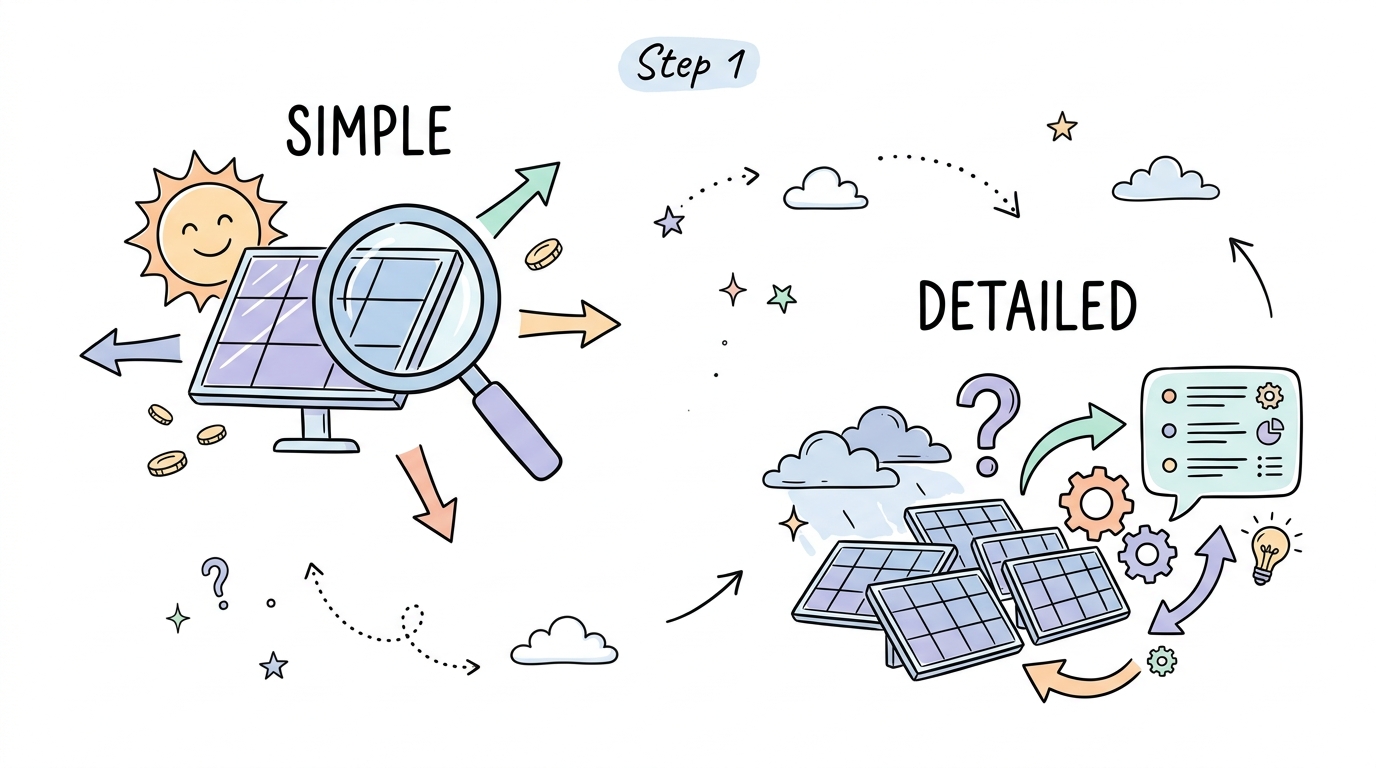
Tools like AnswerThePublic are goldmines for these conversational long-tail phrases. Identify the specific 'how' and 'why' questions your audience asks during their research phase.
Tip: Focus on the '8+ Word' queries specifically. These have a 7x higher likelihood of triggering an AIO response compared to short-tail terms.
Step 2: Architect Your Content For Source Worthiness
Once you have your keywords, you must change how you build the page. AI systems prioritize content that is structured for immediate extraction and factual clarity.
Lead every section with a direct answer. This 2-sentence summary should live at the very top of your article or under an H2.
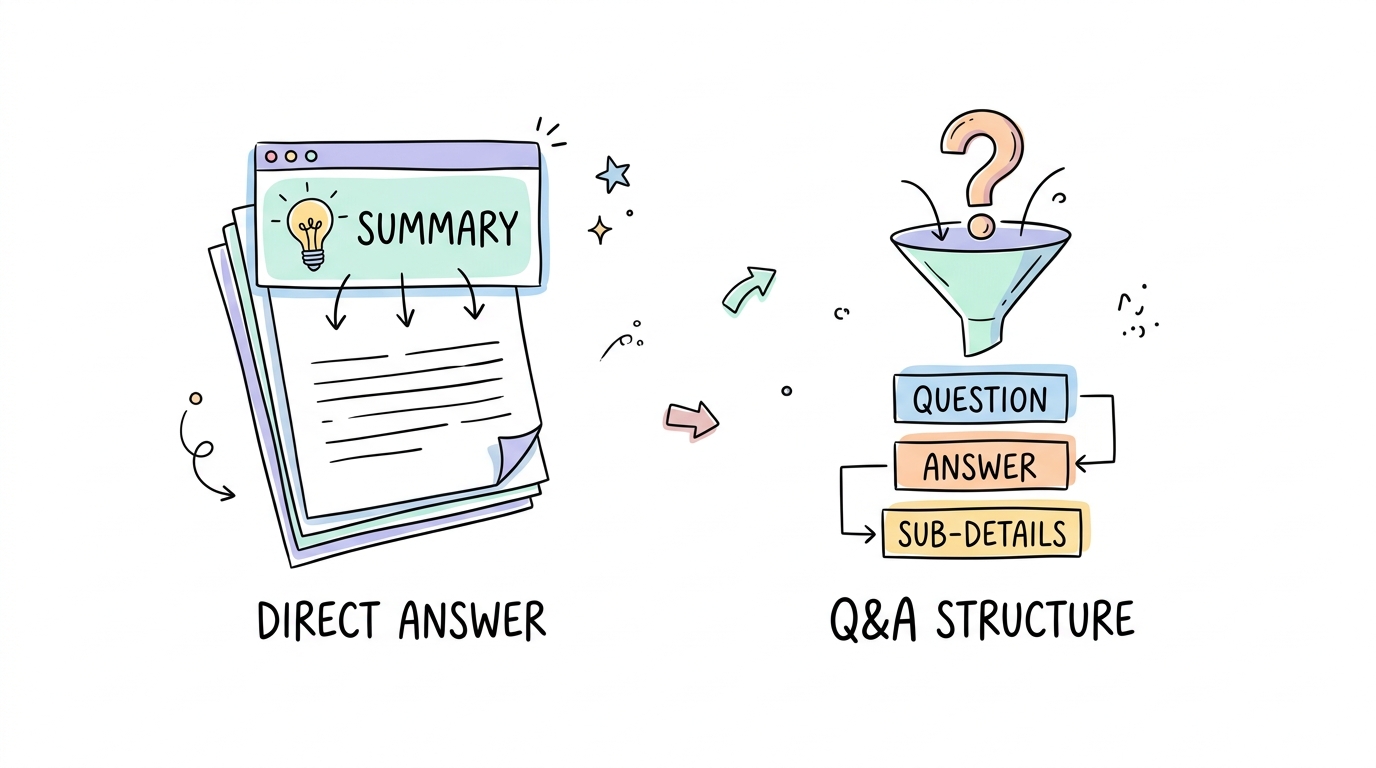
Structure your body text with H2 questions and H3 sub-answers to mirror how humans naturally prompt AI. This modular architecture makes it easier for the LLM to parse and cite your site as a primary source.
As noted by Brainz Digital, AI extracts clear, concise information. If the answer is buried deep in your prose, it is a missed citation.
Rule: Place the primary answer within the first 200 words of the page to ensure the crawler identifies it as a direct hit for the query.
Example
Query: how to optimize solar panel efficiency in cloudy climates
Answer block: To optimize solar panel efficiency in cloudy climates, installers should use monocrystalline panels and incorporate power optimizers. These tools allow each panel to operate independently, maximizing output during low-light conditions.
Step 3: Implement The Schema Advantage
Technical signals are the bridge between your content and the AI's understanding. Structured data markup acts as a roadmap for LLMs to identify specific facts and procedures.
Use Article, FAQPage, and HowTo schema to label your data points clearly. You can verify your implementation using the Google Rich Results Test Tool to ensure the code is error-free.
Correct markup is often the difference between a simple link and a featured citation.
{
  "@context": "https://schema.org",
  "@type": "FAQPage",
  "mainEntity": [{
    "@type": "Question",
    "name": "Why do long tail keywords trigger AI Overviews?",
    "acceptedAnswer": {
      "@type": "Answer",
      "text": "Long tail keywords provide the semantic depth and specific intent that AI systems need to synthesize a generative answer."
    }
  }]
}
Maintain Authority Through Freshness And Clusters
Authority is not a static score. Update your content every 6 to 8 weeks to signal freshness to the search index.
AI systems prioritize recent data, especially for industries that change rapidly like tech or finance. Build topical authority by creating clusters of interlinked articles around a central pillar.
Since the AIO launch, citations from pages in positions 21 to 100 have increased by 200%.
- If you are targeting a broad definition, focus on brand visibility within the AI snapshot.
- If you are targeting a complex process, use HowTo schema to secure a step-by-step citation.
- If your CTR is low despite high impressions, move your answer blocks higher on the page.
Traditional SEO vs. AI Overview Optimization
The transition to generative search requires a change in how we define success. We are moving from a world of keyword frequency to a world of semantic depth.
Here is how the old methods compare to the modern AI-first approach:
You cannot manage what you cannot measure. Dedicated AI tracking tools are now essential for understanding your share of the generative search market.
Use these platforms to track where your brand appears in AI snapshots:
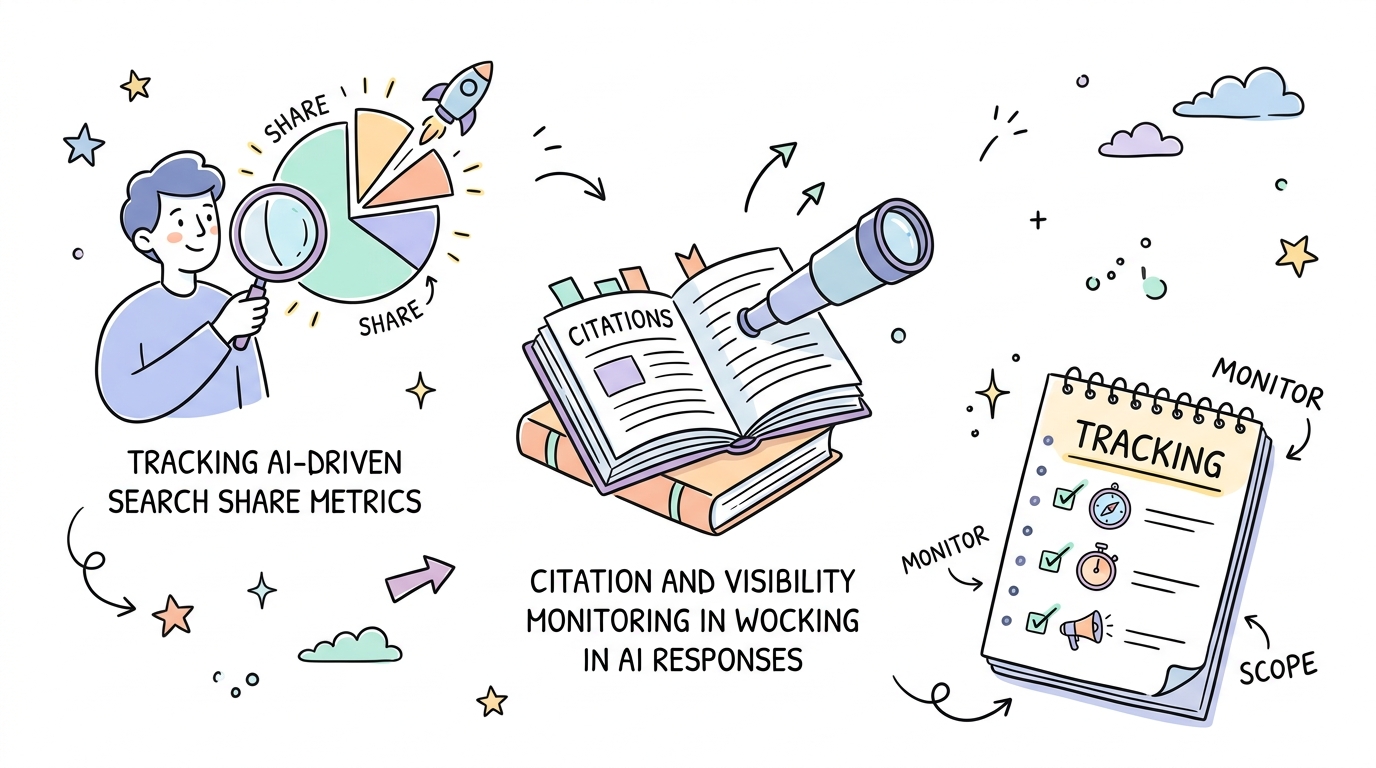
- Semrush AI Toolkit: Best for monitoring specific citation occurrences across thousands of keywords.
- Otterly.AI: A specialized tool for tracking brand visibility and sentiment within AI-generated responses.
- Profound: Provides advanced metrics on search share across different AI models and engines.
- Ahrefs: Offers powerful intent and SERP feature filtering to find AIO opportunities early.
Tip: Set up monthly alerts for your most important long-tail keywords to catch new AI Overview triggers before your competitors do.
Avoid These Common AI-SEO Mistakes
Most SEO failures in the SGE era come from sticking to old habits. Targeting high-volume head terms exclusively is a recipe for zero-click disappointment.
These broad terms are the easiest for AI to answer without needing to send traffic to your site. Avoid burying your main point under layers of introductory fluff.
If the AI cannot find the answer in the first few paragraphs, it will cite a competitor who got straight to the point.
Pitfall: Neglecting question-based subheadings (H2 and H3) is a critical error that prevents the LLM from mapping your content to natural user prompts.
Embracing The Zero-Click Future
The search landscape is getting more crowded, but the opportunities for high-value traffic are growing. As Thistle Media notes, visibility is no longer just about ranking first; it is about being referenced and trusted by AI systems.
While click volumes might shift, those who do click through are pre-qualified and ready to act. These visitors convert at 23x the rate of standard searchers.
To keep up with the latest requirements, review the Google Search Central: AI Overviews Documentation regularly. That is the only way to stay ahead in the zero-click era.
 Kitful