 Kitful
Using an AI Topical Map Builder for E-Commerce: The Cigars Case Study
Discover how e-commerce stores in specialized niches like cigars can use AI topical map generators to systematically connect informational guides with product categories, building search authority and lifting organic conversions.

A cigar store can publish helpful articles and still send almost none of that search value to the pages that sell cigars. A query for ai topical map builder cigars recorded 16 impressions in Search Console, a small but clear sign that store owners are looking for a better way to plan this work.
The problem is structural. A normal blog can build depth around information, while an e-commerce site has to connect product pages, commercial category pages, and educational guides. Isolated posts about wrappers or humidor care leave those paths disconnected.
A topical map gives each page a job. It groups the subjects buyers search, connects them to the relevant collection, and exposes gaps around the catalog. That gives a niche retailer a usable route into searches where major marketplaces often have broader, flatter pages.
Key Takeaways for Cigar E-Commerce Topical Mapping
Start with the store structure, then plan the articles around it.
- Build commercial pillars for product collections such as Maduro Cigars, Humidors, and Cigar Cutters.
- Place comparisons beneath each pillar, then attach educational guides to the comparison or category they support.
- Link every guide to the relevant collection page instead of leaving useful content isolated under
/blog/. - Use a map builder to reduce manual clustering work that can take 10+ hours to a 30-45 second architecture review.
Understanding E-Commerce Content Architecture: The 3-Tier Model
Use three connected levels. The first level holds the category a shopper can buy from, the second answers commercial questions, and the third handles the education that brings new buyers into the site.
- Tier 1, category pillars: Commercial collection pages such as Maduro Cigars and Cabinet Humidors.
- Tier 2, comparisons: Pages such as Connecticut Broadleaf vs. Nicaraguan Maduro that help a buyer narrow a choice.
- Tier 3, informational guides: Articles such as How to Season a Wooden Humidor that answer a focused question and point back to a relevant collection.
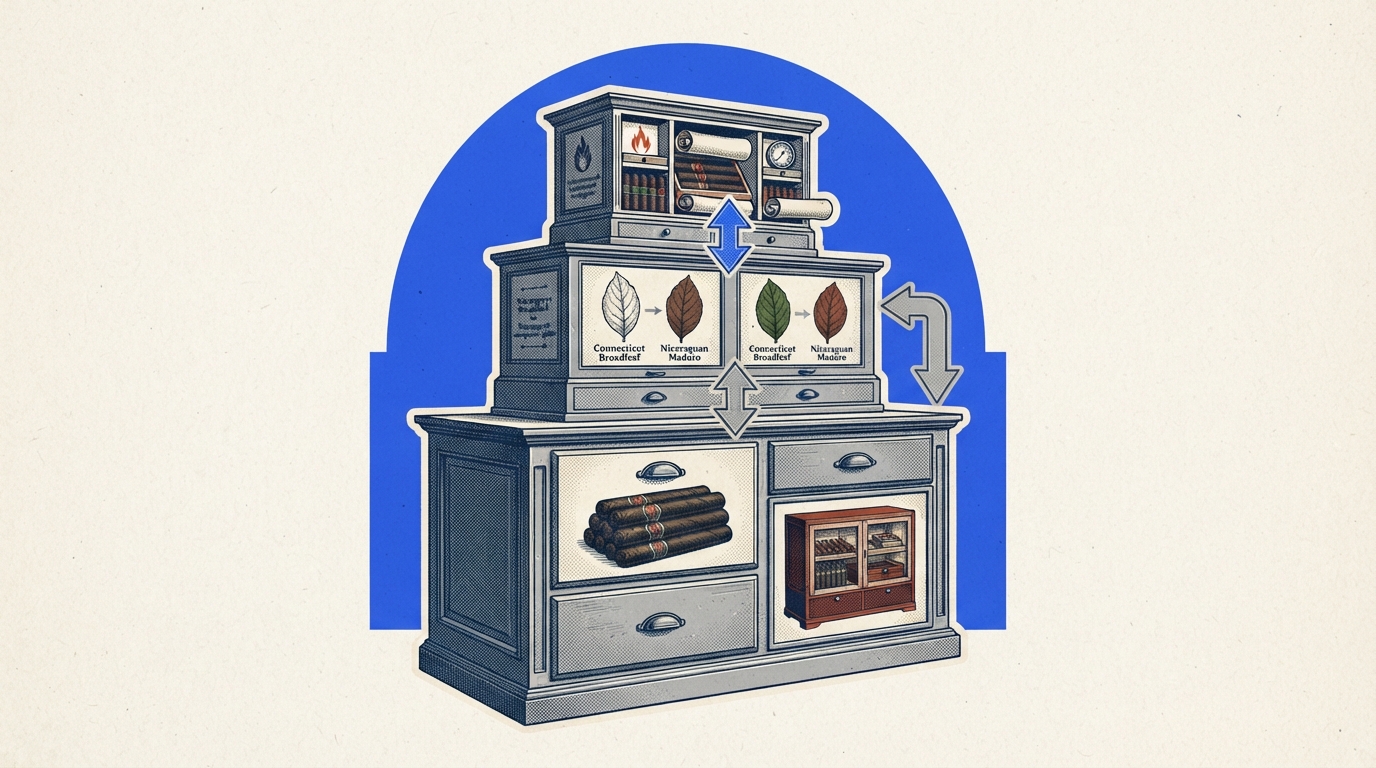
The arrows should run both ways. A collection page can surface useful guides in a resource or FAQ area, while each guide should send readers to the collection that fits its subject. This gives search engines a clear relationship between a wrapper, a cigar size, a maintenance need, and the products sold.
This walkthrough gives useful context on building a semantic taxonomy for an online store.
A new cigar retailer, for example, can start with a Maduro Cigars collection, create a wrapper comparison beneath it, and then publish a bourbon-pairing guide that links to the collection. The guide earns its place because it creates a path for a reader who began with a pairing question and now needs cigars to try.
Step 1: Feed Seed Niche Facets into the AI Map Builder
Begin with the catalog. Enter the broad categories shoppers use, then add the details that make cigar inventory searchable in a meaningful way.
- Add primary categories such as cigars, humidors, and cutters.
- Add product facets that appear in the catalog, including wrapper, vitola, and origin.
- Review the resulting page groups for subjects the store does not yet cover.
- Mark gaps that can support a category page, rather than collecting article ideas with no destination.
Kitful AI Topical Map Generator analyzes existing domain architecture and live search data in 30-45 seconds. That makes it useful when the first task is finding the missing connections between current category pages and supporting content.
For a cigar catalog, start with Maduro Cigars, Humidors, and Cigar Cutters. Then add facets such as Connecticut Broadleaf, Robusto, or Nicaragua where those terms match real inventory. The output should reflect the store's catalog, not a generic list of cigar topics.
Near the end of the review, use topical map generator tools to check whether the map reveals an unsupported category or a cluster that needs a dedicated collection page.
Step 2: Extract Entity Nodes and Intent-Based Clusters
Group by buyer language. The useful clusters describe the actual parts of a cigar purchase, then assign each cluster an intent before scheduling content.
Topiq extracts 50+ Knowledge Graph entities per topical map and mines 30+ conversational queries per seed topic. For a cigar store, entity groups can include wrapper types, vitolas, and origins.
- Wrapper: Maduro, Habano, and Connecticut.
- Vitola: Robusto, Toro, and Churchill.
- Origin: Nicaragua and the Dominican Republic.
- Humidor care: Humidor, humidity, seasoning, and hygrometer.
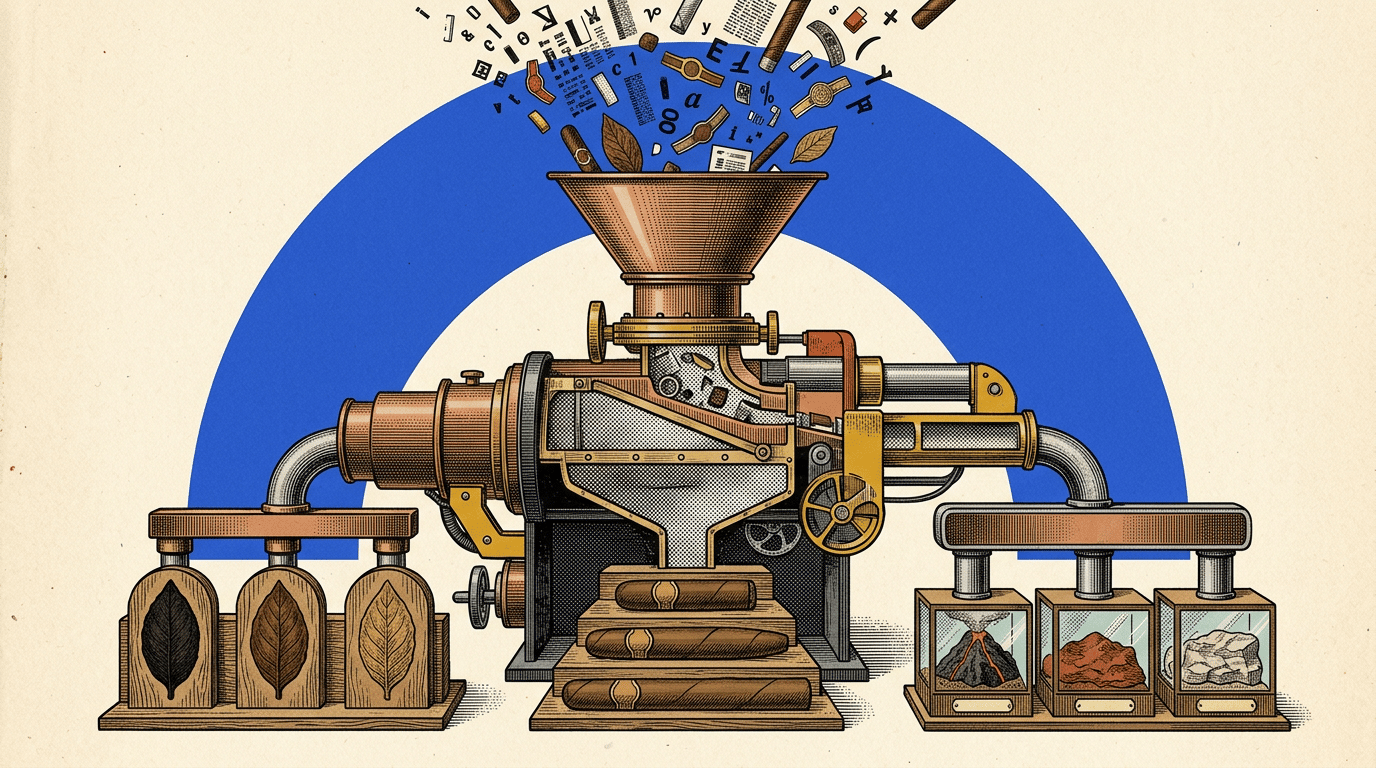
Tag each resulting cluster by the visitor's purpose:
- TOFU: Educational questions, such as how to season a wooden humidor.
- MOFU: Research questions, such as Connecticut Broadleaf vs. Nicaraguan Maduro.
- BOFU: Pages that help someone select a product category or compare purchase-ready options.
Put BOFU comparison briefs first when the store needs shoppers with buying intent. Then use MOFU and TOFU content to cover the questions that lead into those comparisons and collections.
A shopper searching a wrapper comparison has already moved beyond a broad history lesson. Give that person a comparison page with links to the matching cigar collection, then build the deeper educational articles around the same wrapper entities.
Step 3: Align Informational Clusters to Commercial Category Pillars
Attach every guide to a commercial parent. A Tier 3 article should support one category or comparison page with a distinct question, clear internal links, and no duplicate target intent.
Take a guide called Ideal Humidity Levels for Maduro Cigars. Its parent is the Maduro Cigars collection, so the guide should link to that collection in the part of the article where a reader is choosing cigars to store or smoke. It can also link to a humidor or hygrometer category when that relationship fits the page.
Use this planning sequence:
- Choose the Tier 1 collection the article supports.
- Define one narrow sub-question for the article.
- Check that another planned page does not answer the same search intent.
- Add a contextual route back to the collection and, where useful, a relevant Tier 2 comparison.
Keep the relationship specific. A guide on seasoning a wooden humidor belongs with humidors. A guide comparing Connecticut Broadleaf and Nicaraguan Maduro belongs beneath the cigar collection it helps shoppers assess.
Keyword cannibalization starts when two pages pursue the same question with slightly different titles. Give one page the wrapper comparison and another the pairing angle, then let each send traffic toward the appropriate category.
Step 4: Establish Internal Link Traversal and Execute Content
Links make the map usable. Every informational post needs a route toward the pages that sell the relevant products, and category pages need routes back to the guides that answer buyer questions.
Use these publishing rules:
- Add 1-2 contextual internal links from each Tier 3 guide to its Tier 1 collection or a relevant Tier 2 subcategory.
- Link from a category page down to supporting guides through an expandable FAQ or resource section.
- Use anchor text that names the destination subject, such as
Maduro Cigarsfor a Maduro collection. - Publish bottom-of-funnel comparisons and category buyer guides before broad history articles.
- Check each planned page against the rest of the map to avoid duplicate search intent.
A humidor maintenance guide can link up to Humidors and Hygrometers where the reader needs equipment. The Humidors category can then point down to that guide for shoppers who need help with seasoning or humidity care.
Before publishing, verify three things:
- Every supporting article has at least one direct link to a relevant commercial category.
- Search engines index the cluster articles.
- Traffic from those articles has a clear path to the target product pages.
That reciprocal structure stops the blog from becoming a separate publication and turns it into support for the catalog.
Top AI Topical Map Generators for E-Commerce Stores
These tools cover different parts of the mapping job. Pick the one that matches the work you need to do first, whether that is reviewing an existing site, generating a large keyword set, extracting entities, or getting a free set of article ideas.

1. Kitful AI Topical Map Generator
Kitful AI Topical Map Generator reviews domain content and live search data to produce gap-focused pillar-and-cluster maps. It suits stores that need to connect an existing catalog to missing support content quickly.
Pros
- Analyzes domain architecture and live search data
- Produces gap-focused pillar-and-cluster maps
- Builds a map in 30-45 seconds
Pricing
- No price listed
Why Choose Kitful AI Topical Map Generator Over Other Tools?
Choose it for a fast review of an existing store's architecture and content gaps. Its domain-focused approach fits a retailer with category pages already in place.
2. Topical Map AI
Topical Map AI generates clustered keywords with intent tags, content briefs, and interactive node graphs. It fits teams that need a high-volume set of mapped topics across many planned content clusters.
Pros
- Generates 800-1,200 keywords per map in 60 seconds
- Includes intent tagging and content briefs
- Includes interactive node graphs
Pricing
- Starter ($56/month): 30 maps
- Pro ($104/month): 100 maps
- Business ($179/month): 200 maps
- Agency ($374/month): 500 maps
- AppSumo Tier 1 ($69): Lifetime license
- AppSumo Tier 2 ($149): Lifetime license
- AppSumo Tier 3 ($299): Lifetime license
- AppSumo Tier 4 ($449): Lifetime license
- AppSumo: 60-day money-back guarantee on lifetime licenses
Why Choose Topical Map AI Over Other Tools?
Choose it when the content calendar needs many keyword clusters and briefs. The Starter plan's cost works out to about $1.87 per map when all 30 maps are used.
3. Topiq
Topiq centers its reports on Knowledge Graph entities, conversational queries, and BOFU-first content briefs. It fits a cigar store that wants entity-level clusters around wrappers, vitolas, and buyer questions.
Pros
- Extracts 50+ Knowledge Graph entities per map
- Mines 30+ conversational queries per seed topic
- Organizes maps into BOFU-first content briefs
Pricing
- Full map report ($29): One report
Why Choose Topiq Over Other Tools?
Choose it when entity extraction is the immediate priority. It gives a direct route from product attributes to question-led cluster ideas.
4. SERPView Topical Map Generator
SERPView Topical Map Generator turns seed terms into long-tail article ideas with intent labels and structured JSON export. It suits a store that wants a free starting point for planning topic clusters.
Pros
- Produces 30-60 long-tail article ideas
- Labels target keyword intent
- Exports structured JSON
Pricing
- Free: AI topical map generation
Why Choose SERPView Topical Map Generator Over Other Tools?
Choose it for a free first pass from a seed term to article ideas. For price context, Semrush is listed at $139/month, Ahrefs at $129/month, and MarketMuse at $149/month.
Frequently Asked Questions About E-Commerce Topical Mapping
Why Is Topical Mapping Different For E-Commerce Than Blogs?
E-commerce mapping connects informational guides to commercial categories and product pages. A blog can organize articles beneath informational hubs, while a store also has to account for transactional pages and category collections.
How Do Entity Clusters Like Maduros Or Vitolas Improve Product Page Rankings?
Entity clusters organize content around attributes shoppers use, such as wrapper type, vitola, and origin. Supporting pages can then link directly to the category that contains matching products.
What Is The 3-Tier Architecture For E-Commerce Topical Authority?
Tier 1 holds commercial category pillars. Tier 2 covers comparisons and subcategories, while Tier 3 answers focused educational questions that support the upper levels.
How Fast Can An AI Topical Map Generator Build An E-Commerce Content Map?
The timing varies by product. Kitful AI states that it analyzes domain architecture and live search data and builds a gap-focused map in 30-45 seconds.
Build Your E-Commerce Topical Authority Today
Build the map around the catalog first, then give every comparison and guide a direct path back to a relevant collection page. Start with the pages closest to a purchase, check for duplicate intent, and publish outward from there.
Use Kitful AI Topical Map Generator to review the store structure, identify gaps, and turn disconnected cigar content into a connected category system today.